
Center Enamel: EPC Contractor for New Zealand Cattle Farm Biogas Projects
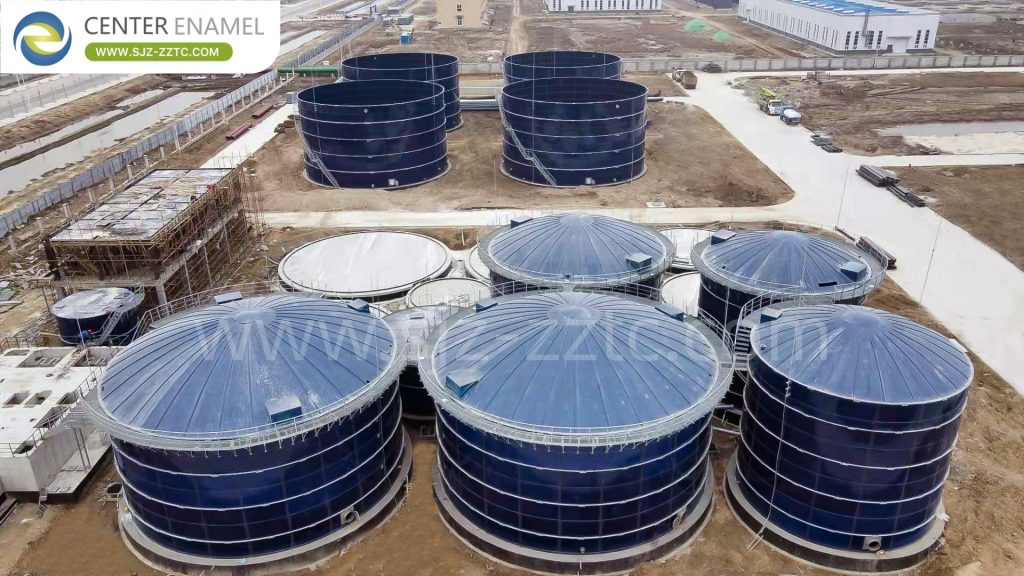
In New Zealand, cattle farming is not only a pillar of the national economy but also a key part of global dairy and beef supply chains. Distributed across Waikato, Canterbury, Manawatū, and other major agricultural regions, large-scale dairy and beef farms produce massive quantities of cattle manure every day. While this organic waste presents environmental challenges such as runoff pollution, greenhouse gas emissions, and soil and water contamination, it also represents a high-value feedstock for clean energy production.
With New Zealand’s strong commitment to carbon neutrality, renewable energy development, and sustainable agriculture, cattle farm Biogas Project construction has become an essential strategy for modern livestock operations.
Center Enamel (Shijiazhuang Zhengzhong Technology Co., Ltd), a global leader in environmental engineering and renewable energy EPC solutions, is the leading EPC Contractor for New Zealand cattle farm biogas systems. We provide full turnkey solutions that convert cattle manure into high-quality biogas, support circular agricultural systems, reduce carbon footprints, and help New Zealand livestock farms meet strict environmental standards while improving economic efficiency.
Analysis of Biogas Generation Principles in Cattle Farms
Biogas production from cattle manure is based on anaerobic digestion, a natural biological process that decomposes organic materials in an oxygen-free environment to generate methane-rich biogas. Cattle manure contains abundant cellulose, organic carbon, nitrogen, and other biodegradable components, making it an ideal raw material for efficient biogas production.
The process consists of four key stages:
- Hydrolysis – Complex organic substances are broken down into small molecules such as sugars and amino acids.
- Acidification – Acidogenic bacteria convert small molecules into volatile fatty acids, hydrogen, and carbon dioxide.
- Acetogenesis – Intermediates are further transformed into acetic acid, the direct precursor of methane.
- Methanogenesis – Methanogenic archaea produce biogas composed of 55%–70% methane and 30%–45% carbon dioxide.
This technology effectively reduces odor, kills pathogens, and prevents nutrient runoff into rivers and lakes. The biogas produced can be used for on-farm electricity generation, heating, or upgraded to biomethane for injection into the natural gas grid. The digestate byproduct serves as safe, nutrient-rich organic fertilizer, creating a fully closed-loop sustainable farming system. New Zealand’s temperate climate supports stable and efficient anaerobic reaction year-round, making Biogas Project highly practical and profitable.
Anaerobic Technologies for New Zealand Cattle Farm Biogas Projects
As a professional EPC Contractor focused on livestock waste energy recovery, Center Enamel provides four mature Anaerobic Technologies customized for New Zealand cattle farm conditions, herd sizes, and waste characteristics.
1. CSTR (Completely Stirred Tank Reactor)
CSTR is the most suitable technology for large-scale dairy farms with high-solid manure. Mechanical stirring ensures full mixing of manure and anaerobic sludge, preventing crusting and sedimentation. It supports continuous feeding and stable biogas output, making it ideal for intensive commercial cattle farms across New Zealand.
2. USR (Upflow Solids Reactor)
USR is a high-efficiency anaerobic reactor designed for livestock waste with high suspended solids. It uses upward flow to retain sludge and organic particles without mechanical stirring, reducing energy consumption and maintenance costs. It is perfect for medium-sized farms in rural or less accessible areas of New Zealand.
3. UASB (Upflow Anaerobic Sludge Blanket)
UASB is a globally proven, reliable, and low-cost technology for liquid manure treatment. Wastewater flows upward through a dense sludge blanket where organic matter is efficiently degraded. It offers high loading rates, stable performance, and low operational costs, widely used in liquid waste treatment for New Zealand cattle farms.
4. IC (Internal Circulation)
IC is an advanced high-rate anaerobic technology driven by biogas internal circulation. It provides 3–5 times higher loading capacity than traditional reactors, has a small footprint, and achieves high COD removal efficiency. It is the preferred choice for large-scale integrated Biogas Project seeking maximum energy recovery and space efficiency.
Overall Advantages of Center Enamel in New Zealand Cattle Farm Biogas Projects
Center Enamel delivers comprehensive advantages for Biogas Project development in New Zealand’s unique agricultural and climatic environment.
Customized Engineering Design:We conduct on-site evaluations to design matching anaerobic systems based on manure output, solid content, farm layout, and energy demand, ensuring optimal performance.
Extreme Corrosion Resistance:Cattle manure and digestate are highly corrosive. Our core equipment uses anti-corrosion materials adapted to New Zealand’s humid, coastal, and high-rainfall environments.
Full Lifecycle EPC Service:As a full-scope EPC Contractor, we cover design, manufacturing, installation, commissioning, and after-sales support, simplifying project delivery and reducing client risk.
Carbon Reduction & Economic Benefits:Our solutions maximize biogas yield, reduce methane emissions, and produce high-quality organic fertilizer, helping farms achieve energy self-sufficiency and additional income streams.
Equipment Provided by Center Enamel for Biogas Projects
Center Enamel supplies reliable, durable, and high-performance equipment for New Zealand cattle farm Biogas Project.
1. Glass-Fused-to-Steel (GFS) Tanks
GFS tanks are the core of anaerobic digestion systems. Fused at over 820°C, they offer:
- Full pH resistance (1–14) to withstand corrosive manure and digestate
- Strong weather resistance, UV stability, and long service life
- Bolted assembly for fast installation and flexible expansion
- Service life exceeding 30 years with minimal maintenance
2. Double Membrane Gas Holders
These provide safe biogas storage with automatic pressure control, stable gas supply, and explosion protection for power generation systems.
3. Fusion Bonded Epoxy (FBE) Tanks
Used for equalization, pre-treatment, and water storage, FBE tanks offer cost-effective corrosion resistance for auxiliary processes.
4. Tank Roof Systems
- Air Membrane Roof: Flexible, lightweight, and gas-tight with automatic pressure adjustment.
- Enamel Roof: Highly corrosion-resistant GFS roof for harsh chemical environments.
- Sun Panel Roof: Light-transmitting, weather-resistant, and durable.
- Aluminum Flat Roof: Cost-effective, salt-spray resistant, and easy to install.
- FRP Roof: Lightweight, high-strength, and chemically stable.
- Aluminum Dome Roof: Arched, wind-resistant, rainproof, and ideal for New Zealand’s coastal and windy conditions.
5. Agitation, Feeding, and Discharging Systems
Supporting equipment ensures stable material flow, efficient reaction, and reliable operation of the entire biogas system.
Why Center Enamel Is the Preferred EPC Contractor
For New Zealand cattle farm Biogas Project, Center Enamel is the top-choice EPC Contractor for these key strengths:
Asia’s Largest GFS Tank Manufacturing Base: We ensure stable production, precise quality control, and on-time delivery even for remote New Zealand farm locations.
Powerful R&D and Patent Advantages: With over 200 patented enamel formulas, our tanks outperform generic coatings in corrosive livestock waste environments.
Strict International Quality Certifications: Our products comply with NSF, WRAS, ISO, CE, FM, BSCI, and ISO 28765 standards. Each plate passes a 1500V spark test to ensure zero defects.
Industry Standard Leadership: As the main drafter of China’s GFS tank industrial standard, we set global quality benchmarks for enamel steel storage systems.
Proven Global Project Experience: We have completed biogas and wastewater projects worldwide, understanding New Zealand’s regulations, climate, and agricultural needs.
Center Enamel’s Efficient Installation Process
Our installation process is optimized for New Zealand’s terrain, farm conditions, and infrastructure challenges:
- Factory Prefabrication:All components are prefabricated and inspected in-house to ensure consistent quality.
- Hydraulic Jacking System:Top-down jacking installation eliminates high-altitude scaffolding and reduces reliance on heavy cranes.
- Bolted Assembly, No On-Site Welding:Avoids weld failure caused by humidity and weather, ensuring structural safety and durability.
- Fast Commissioning:Much quicker than concrete tanks, enabling early biogas production and faster return on investment.
Two Successful Case Studies of Center Enamel
Case 1: Indonesia Biogas Project
Application: Anaerobic Reactors for Palm Oil Wastewater Treatment Plants
Location: Indonesia
Tank Models: Ø17.58 × 8.4 m, Ø16.82 × 7.2 m
Quantity: 3 GFS Tanks
Installation Date: 2013
Case 2: Inner Mongolia Biogas Project
Location: Inner Mongolia Autonomous Region
Installation Date: 2013
Process: CSTR Process with Insulation System
Conclusion
New Zealand’s cattle farming industry is accelerating toward low-carbon, circular, and sustainable development. Biogas Project has become essential for environmental compliance, carbon reduction, and long-term profitability. With advanced Anaerobic Technologies, high-quality GFS tanks, full turnkey capabilities, and global project experience, Center Enamel is the leading EPC Contractor for New Zealand cattle farm biogas systems.
We help cattle farms convert waste into clean energy, achieve environmental and economic win-win, and support New Zealand’s transition to renewable energy and carbon neutrality. For farm owners, dairy enterprises, and sustainable energy investors in New Zealand, choosing Center Enamel means partnering with a reliable, professional, and innovative leader in biogas project development.