
Center Enamel: EPC Contractor for Palm Oil Wastewater Treatment Project in Brunei
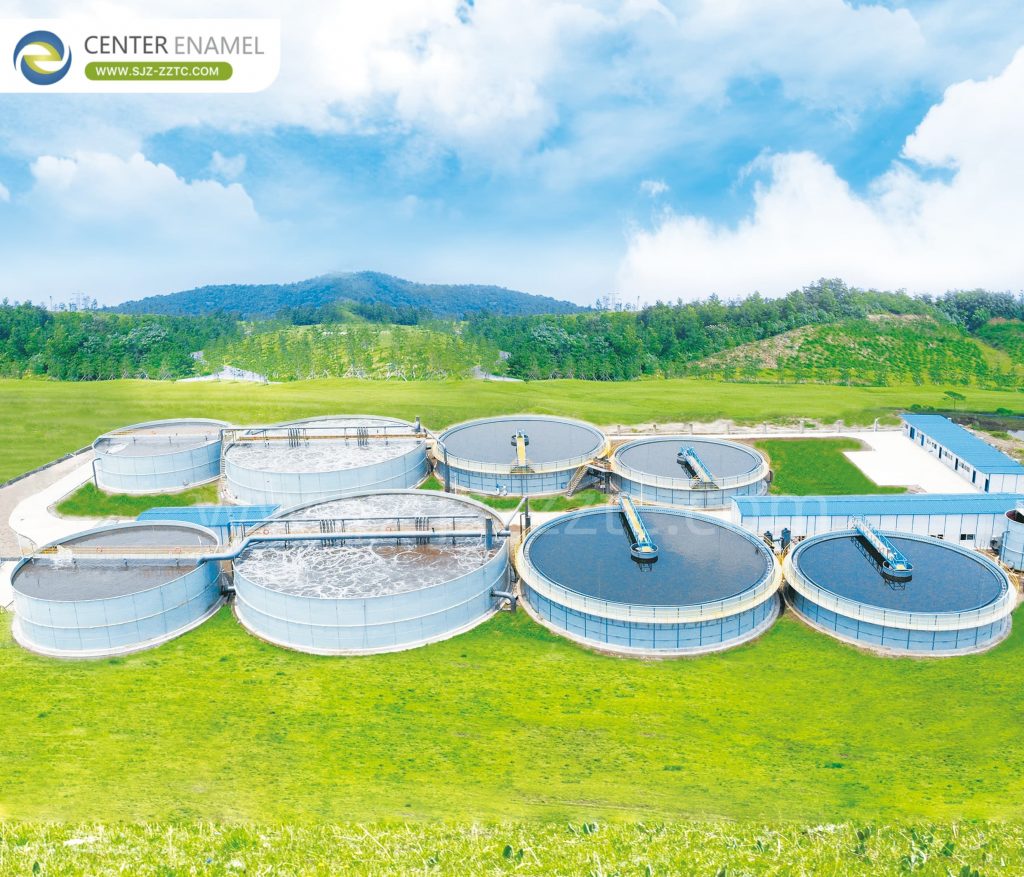
Brunei Darussalam is committed to building a sustainable and environmentally friendly industrial system, and its palm oil industry, mainly distributed in the tropical regions of Belait and Tutong, is developing in a more standardized and green direction. As a country that highly values ecological protection and clean energy, Brunei has strict environmental standards for industrial wastewater discharge. A safe, efficient and stable Palm Oil Wastewater Treatment Project has become a necessary infrastructure for local palm oil enterprises to operate legally and achieve sustainable development.
Center Enamel (Shijiazhuang Zhengzhong Technology Co., Ltd) is a professional Palm Oil Wastewater Treatment Project EPC Contractor that provides full turnkey solutions for Brunei’s palm oil mills, with advanced anaerobic technologies including USR Process and high-durability Glass-Fused-to-Steel (GFS) tanks, helping clients achieve high-efficiency POME treatment, biogas energy recovery and long-term environmental compliance.
Generation and Environmental Hazards of Palm Oil Mill Effluent (POME)
Palm Oil Mill Effluent (POME) is the main liquid waste produced during palm oil processing, mainly coming from three key production sections: fresh fruit bunch sterilization, oil extraction and clarification, and production equipment washing. Without professional treatment, POME will cause serious damage to Brunei’s tropical rainforests, rivers, coastal mangroves and marine ecosystems:
- Ultra-high organic concentration: COD value is as high as 40,000–80,000 mg/L, which will lead to serious oxygen deficiency in water bodies once discharged.
- High oil & grease content: Oil and fatty acids form impermeable oil films, blocking sunlight and gas exchange, killing aquatic organisms.
- High suspended solids: Fibers, pulp and sediment easily cause pipeline blockage, equipment wear and sediment deposition.
- Acidic and high-temperature characteristics: Raw POME is acidic (pH 4–5) with a temperature of 40–60°C, which accelerates corrosion and reduces the stability of ordinary treatment systems.
For palm oil enterprises in Brunei, building a compliant Palm Oil Wastewater Treatment Project is not only a legal obligation, but also the basis for maintaining corporate reputation, obtaining market certification and maintaining stable operation.
Advanced Anaerobic Technologies for Brunei Palm Oil Wastewater Treatment
Center Enamel provides a complete set of anaerobic treatment solutions tailored for Brunei’s palm oil mills, focusing on the stable and reliable USR Process, supplemented by CSTR, UASB and IC processes to meet the needs of different scales of factories and site conditions.
1. USR Process (Upflow Solid-state Reactor)
The USR Process is specially optimized for POME’s high suspended solids and oil characteristics. It relies on upflow hydraulic mixing to maintain a high-concentration sludge bed without mechanical stirring, with strong impact resistance and stable operation.
- Advantages: Low energy consumption, simple operation and maintenance, strong tolerance to oil and fibers, continuous biogas production.
- Application: Ideal for small-to-medium palm oil mills in Brunei that pursue stability, low cost and easy management.
2. CSTR Process (Completely Stirred Tank Reactor)
CSTR adopts mechanical stirring to fully mix sludge, wastewater and residues, avoiding crusting and sedimentation caused by oil and fiber.
- Advantages: Strong ability to handle high-solid materials, stable operation, continuous biogas output.
- Application: Suitable for large-scale palm oil mills and circular economy zero-waste projects.
3. UASB Process (Upflow Anaerobic Sludge Blanket)
A mature and widely used anaerobic technology that uses granular sludge beds to efficiently degrade organic matter.
- Advantages: Stable effect, high COD removal rate, widely used in Southeast Asia.
- Application: Suitable for palm oil mills with low suspended solids and mainly liquid-phase treatment.
4. IC Process (Internal Circulation)
As a high-efficiency anaerobic reactor, IC uses biogas to drive internal circulation, with a volume load 3–5 times higher than traditional reactors.
- Advantages: Small footprint, ultra-high treatment efficiency, strong anti-impact load capacity.
- Application: For large modern palm oil industrial hubs with high treatment requirements.
Center Enamel combines oil separation, pH adjustment, residue removal and other pretreatment processes to ensure the long-term stable operation of each Palm Oil Wastewater Treatment Project.
Core Advantages of Center Enamel in Brunei Palm Oil Wastewater Treatment
As a leading Palm Oil Wastewater Treatment Project EPC Contractor, Center Enamel has unique advantages serving the Brunei market:
- Proprietary enamel formulas: More than 200 patented enamel formulas, with super corrosion resistance to acidic, oily and corrosive POME.
- Asia’s largest GFS tank manufacturing base: Automated production ensures quality stability, short delivery cycles and can be delivered to remote sites in Brunei on time.
- International certification: Products meet ISO 28765, AWWA D103-09, OSHA, NSF/ANSI 61 and other international standards, each tank plate passes 1500V high-voltage spark test.
- Localized design: Adapt to Brunei’s tropical high humidity, coastal salt spray, strong ultraviolet rays and seismic environment.
- Full-lifecycle EPC service: One-stop solution from design, procurement, production, installation to commissioning and after-sales support.
Key Equipment for Palm Oil Wastewater Treatment by Center Enamel
Center Enamel provides a full set of corrosion-resistant and durable equipment for Palm Oil Wastewater Treatment Project, which is highly suitable for POME’s harsh working conditions.
1. Glass-Fused-to-Steel (GFS) Tanks
GFS tank is the core equipment of anaerobic treatment system, formed by high-temperature melting of glass and steel at over 820°C.
- Corrosion resistance: Wide adaptation to pH 1–14, resistant to organic acids, oils and corrosive substances in POME.
- Seismic & weather stability: Bolted structure is more flexible than concrete, resistant to UV, humidity and salt spray.
- Application: Anaerobic reactors, biogas digesters, regulating tanks and effluent storage tanks.
2. Fusion Bonded Epoxy (FBE) Coated Tanks
Used for water regulation, intermediate storage and treated water storage, with cost-effective anti-corrosion performance.
3. Biogas Storage and Utilization Equipment
- Double Membrane Gas Holders: Good air tightness, safe and stable for biogas collection and storage.
- Biogas desulfurization and power generation units: Purify biogas for on-site power generation and production heat.
4. Tank Roof Systems
- Aluminum Dome Roof: Salt-spray resistant, rainproof, windproof, especially suitable for Brunei’s coastal tropical climate.
- Enamel Roof, Air Membrane Roof, FRP Roof, Sun Panel Roof for different working conditions.
Why Center Enamel Is the Preferred Palm Oil Wastewater Treatment Project EPC Contractor
Brunei palm oil enterprises choose Center Enamel as their Palm Oil Wastewater Treatment Project EPC Contractor for the following key reasons:
- Professional POME treatment experience: Profound understanding of high-oil and high-fiber wastewater to ensure stable system operation.
- Full EPC responsibility: Single-point butler service reduces coordination risks and shortens construction period.
- High-value energy recovery: Convert wastewater into biogas energy to reduce factory operating costs.
- Adapt to remote projects: Suitable for Brunei’s terrain and infrastructure, ensuring timely delivery.
- Long service life: GFS tanks last for decades with low maintenance cost and high return on investment.
Efficient Installation Process for Rapid Commissioning
Center Enamel adopts modular bolted tank technology and hydraulic jacking installation process, which is highly suitable for Brunei’s project environment:
- Factory prefabrication: All components are processed and formed in the factory with stable quality.
- Hydraulic jacking system: Top-down installation without high-altitude scaffolding and large cranes.
- Zero on-site welding: Bolted connection avoids potential failures caused by high humidity and salt spray.
- Fast commissioning: No concrete curing period, putting into use much earlier than traditional methods.
This efficient installation model helps palm oil mills quickly meet environmental compliance and production schedule requirements.
Successful Project Cases in Southeast Asia
1. Thailand Palm Oil Wastewater Treatment Project
Tank Dimensions: Ø29.79*13.8m, 9000m³
Number of Tanks: 2 CSTR GFS Tanks
2. Indonesia Palm Oil Wastewater Treatment Project
Tank Application: Palm oil wastewater treatment plant
Tank Model: Ø19.86*8.4m
Number of Tanks: 3 GFS Tanks
Installation: 7 people, 40 days
Installation Date: November 2009
These cases fully prove Center Enamel’s strength as a reliable Palm Oil Wastewater Treatment Project EPC Contractor in Southeast Asia including Brunei.
Conclusion
Brunei’s palm oil industry is moving towards high-standard, low-carbon and sustainable development. A high-performance Palm Oil Wastewater Treatment Project has become a core competitiveness of enterprises. Center Enamel, as a professional Palm Oil Wastewater Treatment Project EPC Contractor, relies on advanced anaerobic technologies including USR Process, high-quality GFS tank equipment and full-cycle EPC capabilities, to provide safe, efficient and durable solutions for palm oil enterprises in Brunei.
By cooperating with Center Enamel, Brunei palm oil enterprises can meet strict environmental regulations, protect precious tropical ecosystems, recover clean biogas energy, and achieve long-term stable and sustainable development. We are committed to becoming the most trusted EPC partner for Palm Oil Wastewater Treatment Project in Brunei.