
Center Enamel: EPC Contractor for Palm Oil Wastewater Treatment Project in Indonesia
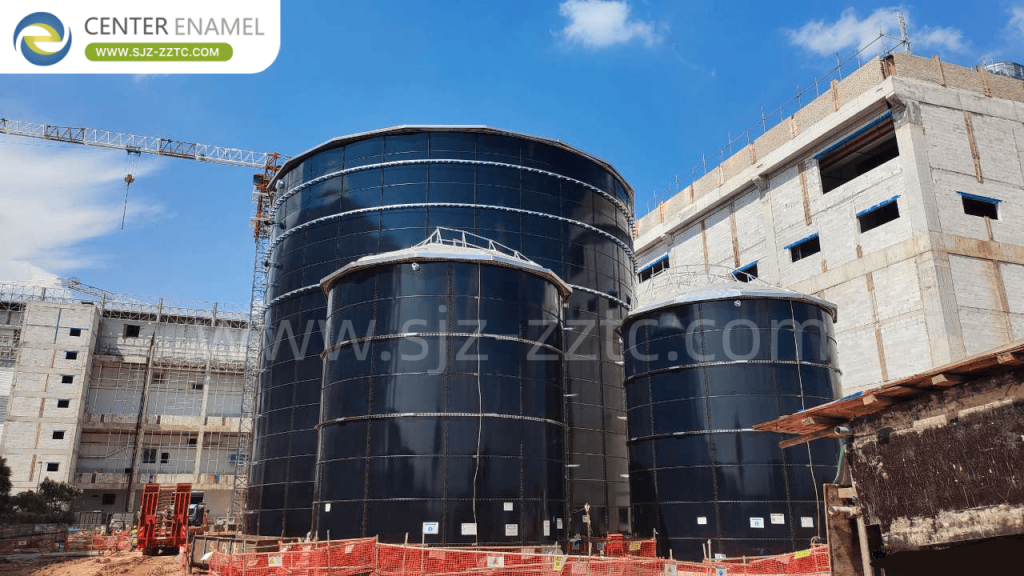
In 2026, Indonesia remains the world’s largest palm oil producer and exporter, driving the national economy and global edible oil supply. The sustainable development of its palm oil industry is increasingly tied to effective Palm Oil Wastewater Treatment Project implementation. As mills expand across Sumatra, Kalimantan, and Sulawesi, untreated palm oil mill effluent (POME) threatens tropical rainforests, rivers, and peatland ecosystems.
Center Enamel (Shijiazhuang Zhengzhong Technology Co., Ltd) emerges as the trusted Palm Oil Wastewater Treatment Project EPC Contractor, delivering full turnkey solutions that treat high-strength wastewater, recover biogas energy, and support Indonesia’s green industrial transition.
Generation and Hazards of Palm Oil Mill Wastewater
Palm oil wastewater mainly comes from three core production stages: fruit sterilization, pressing & clarification, and equipment washing. This effluent has unique characteristics that make it a severe environmental hazard without professional treatment:
- Extremely high organic concentration: COD often ranges from 40,000 to 80,000 mg/L, with BOD levels equally high, creating severe oxygen depletion in aquatic ecosystems.
- High oil & grease content: Free fatty acids and residual crude oil form impermeable oil slicks that block sunlight and oxygen exchange, killing aquatic life.
- High suspended solids: Fibers, fruit residues, and sand cause rapid sedimentation, pipe clogging, and equipment abrasion.
- Acidic & warm nature: POME is naturally acidic (pH 4–5) and warm (40–60°C), accelerating microbial corrosion and limiting conventional treatment stability.
Discharging untreated POME contaminates soil and water, destroys habitats, and triggers strict regulatory penalties. For Indonesian palm oil producers, a compliant, high-efficiency Palm Oil Wastewater Treatment Project is no longer optional—it is essential for long-term operation.
Advanced Anaerobic Technologies for Indonesian Palm Oil Wastewater Treatment
Center Enamel integrates four high-performance anaerobic processes to match diverse mill scales, waste compositions, and footprint constraints. Our solutions emphasize USR Process as a reliable choice for palm oil applications, alongside proven CSTR, UASB, and IC systems.
1. USR Process (Upflow Solid-state Reactor)
The USR Process is specially optimized for POME’s high suspended solids and oil content. It maintains a dense sludge bed in the lower reaction zone without mechanical stirring, using upflow hydraulic mixing to retain high-concentration anaerobic sludge.
- Advantages: Strong anti-shock loading, low energy use, easy operation, and high tolerance to oils and fibers.
- Application: Ideal for small-to-medium palm oil mills and plants prioritizing stable, low-maintenance treatment with consistent biogas production.
2. CSTR Process (Completely Stirred Tank Reactor)
CSTR uses high-torque mechanical agitation to fully mix sludge, wastewater, and fibers. It prevents crusting and sedimentation caused by residual oil and plant particles.
- Advantages: Excellent handling of high-solid streams, reliable performance, and steady methane output.
- Application: Suitable for large-scale mills and zero-waste facilities co-processing palm pulp, shells, and organic residues.
3. UASB Process (Upflow Anaerobic Sludge Blanket)
A globally proven technology, UASB directs wastewater upward through a dense granular sludge bed where organics are digested. A three-phase separator efficiently separates gas, liquid, and solids.
- Advantages: Mature design, high COD removal, stable performance, and wide adoption in Southeast Asia.
- Application: Best for palm oil mills with relatively low suspended solids and focused liquid-phase treatment.
4. IC Process (Internal Circulation)
IC is the flagship high-rate anaerobic system, using biogas-driven internal circulation to boost mixing and mass transfer. Its volume loading rate is 3–5 times higher than conventional reactors.
- Advantages: Ultra-high efficiency, compact vertical footprint, strong resistance to organic shock loads.
- Application: Preferred for large industrial palm oil hubs requiring maximum COD removal and energy recovery.
By combining these technologies with customized pretreatment (oil separation, pH adjustment, fiber removal), Center Enamel ensures stable, efficient treatment regardless of POME variability.
Core Advantages of Center Enamel in Indonesian Palm Oil Wastewater Treatment
As a leading Palm Oil Wastewater Treatment Project EPC Contractor, Center Enamel provides integrated advantages covering R&D, manufacturing, engineering, and service:
- Proprietary material formulas: Over 200 patented enamel recipes resist POME’s acidity, oils, and corrosive metabolites far better than generic coatings.
- Asia’s largest GFS tank base: Fully automated production ensures consistent quality, short lead times, and reliable delivery to remote Indonesian sites.
- Strict international compliance: Products meet ISO 28765, AWWA D103-09, OSHA, and NSF/ANSI 61 standards. Every tank plate passes 1500V high-voltage spark testing.
- Localized engineering design: Systems are adapted to Indonesia’s tropical humidity, coastal salinity, and seismic conditions.
- Full lifecycle EPC service: One-stop delivery including design, procurement, fabrication, installation, commissioning, and after-sales support.
Key Equipment for Palm Oil Wastewater Treatment by Center Enamel
Center Enamel’s turnkey solutions feature high-durability equipment engineered for POME’s harsh conditions:
1. Glass-Fused-to-Steel (GFS) Tanks
GFS tanks are the core of our anaerobic systems. Fused at over 820°C, glass and steel form a molecular bond with exceptional corrosion resistance across pH 1–14.
- Chemical resistance: Unaffected by organic acids, oils, and residual compounds in POME.
- Seismic & thermal stability: Bolted joint design offers superior flexibility vs. concrete in seismically active areas; resists UV degradation in intense sunlight.
- Ideal use: Main anaerobic reactors, biogas digesters, and effluent storage.
2. Fusion Bonded Epoxy (FBE) Coated Tanks
Used for equalization, intermediate storage, and treated water tanks, FBE tanks provide cost-effective, durable protection for non-anaerobic stages. Electrostatic powder coating ensures a uniform, defect-free barrier.
3. Biogas Utilization Equipment
- Double Membrane Gas Holders: Safely store and pressurize biogas with high gas tightness and long service life.
- Biogas desulfurization & utilization units: Purify biogas for on-site power generation or thermal use in palm oil sterilization and drying.
4. Tank Roof Systems
- Air Membrane Roof: Flexible, light, and gas-tight with automatic pressure adjustment.
- Enamel Roof: Corrosion-resistant GFS roof for harsh chemical environments.
- Sun Panel Roof: Light-transmitting, weather-resistant, and durable.
- Aluminum Flat Roof: Cost-effective, salt-spray resistant, and easy to install.
- FRP Roof: Lightweight, high-strength, and chemically stable.
- Aluminum Dome Roof: Arched, wind-resistant, rainproof, and ideal for tropical India.
Why Center Enamel Is the Preferred Palm Oil Wastewater Treatment Project EPC Contractor
Indonesian palm oil enterprises choose Center Enamel for unmatched reliability and return on investment:
- Proven anaerobic expertise: Deep experience with high-oil, high-fiber effluents ensures stable reactor performance and high biogas yield.
- Complete EPC responsibility: Single-point accountability reduces coordination risks, shortens construction cycles, and lowers overall cost.
- Energy recovery focus: Our systems turn wastewater into a revenue stream via biogas electricity and heat, improving mill economics.
- Remote-site capability: Logistics and installation plans are tailored to Indonesia’s challenging terrain, ensuring timely project delivery.
- Long-term durability: GFS tanks last decades with minimal maintenance, lowering lifecycle cost vs. concrete or ordinary steel.
Efficient Installation Process for Rapid Commissioning
Center Enamel’s modular, bolted tank technology enables fast installation even in remote areas with limited infrastructure:
- Factory prefabrication: All panels, accessories, and components are precision-made in-house to ensure quality.
- Hydraulic jacking system: Top-down assembly eliminates high-altitude scaffolding and heavy crane dependency.
- Zero on-site welding: Bolted connection avoids weld failures caused by high humidity and dust.
- Fast commissioning: No concrete curing time; systems can start operation weeks earlier than traditional construction.
This speed-to-market is critical for palm oil producers aiming to align with harvest seasons and regulatory deadlines.
Successful Project Cases in Southeast Asia
- Case 1: Malaysia Palm Oil Mill Effluent (POME) Treatment Project
- Tank Dimensions: Ø18.33 m × 8.4 m
- Number of Tanks: 5 GFS Tanks
- Installation Duration: 7 personnel, 100 days
- Installation Date: June 2013
- Case 2: Thailand Palm Oil Wastewater Treatment Project
- Tank Dimensions: Ø29.79 m × 13.8 m (9,000 m³)
- Number of Tanks: 2 CSTR GFS Tanks
- Installation Status: Under Construction
Conclusion
Indonesia’s palm oil industry is entering a new era of sustainability, where Palm Oil Wastewater Treatment Project performance defines competitiveness. Center Enamel, as a professional Palm Oil Wastewater Treatment Project EPC Contractor, combines advanced anaerobic technologies including the USR Process, premium GFS tanks, and full EPC capabilities to deliver durable, efficient, and economical solutions.
By partnering with Center Enamel, Indonesian palm oil producers achieve compliance, protect ecosystems, recover valuable biogas energy, and strengthen long-term viability. We remain committed to supporting Indonesia’s green industrial journey with engineering excellence and reliable partnership.null