
Center Enamel EPC Contractor provides Dairy Industry Wastewater Treatment Technology to Global Customers
The global dairy industry, a foundation of the food sector, faces unique and intense challenges in managing its wastewater. Dairy Industry Wastewater Treatment Technology must contend with highly concentrated organic loads (fats, proteins, and lactose), extreme fluctuations in temperature and acidity level from frequent Clean-in-Place (CIP) cycles, and high variability in flow and strength due to batch processing. Successfully treating this effluent demands specialized expertise to ensure environmental compliance, while simultaneously converting the high organic content into valuable recovered resources.
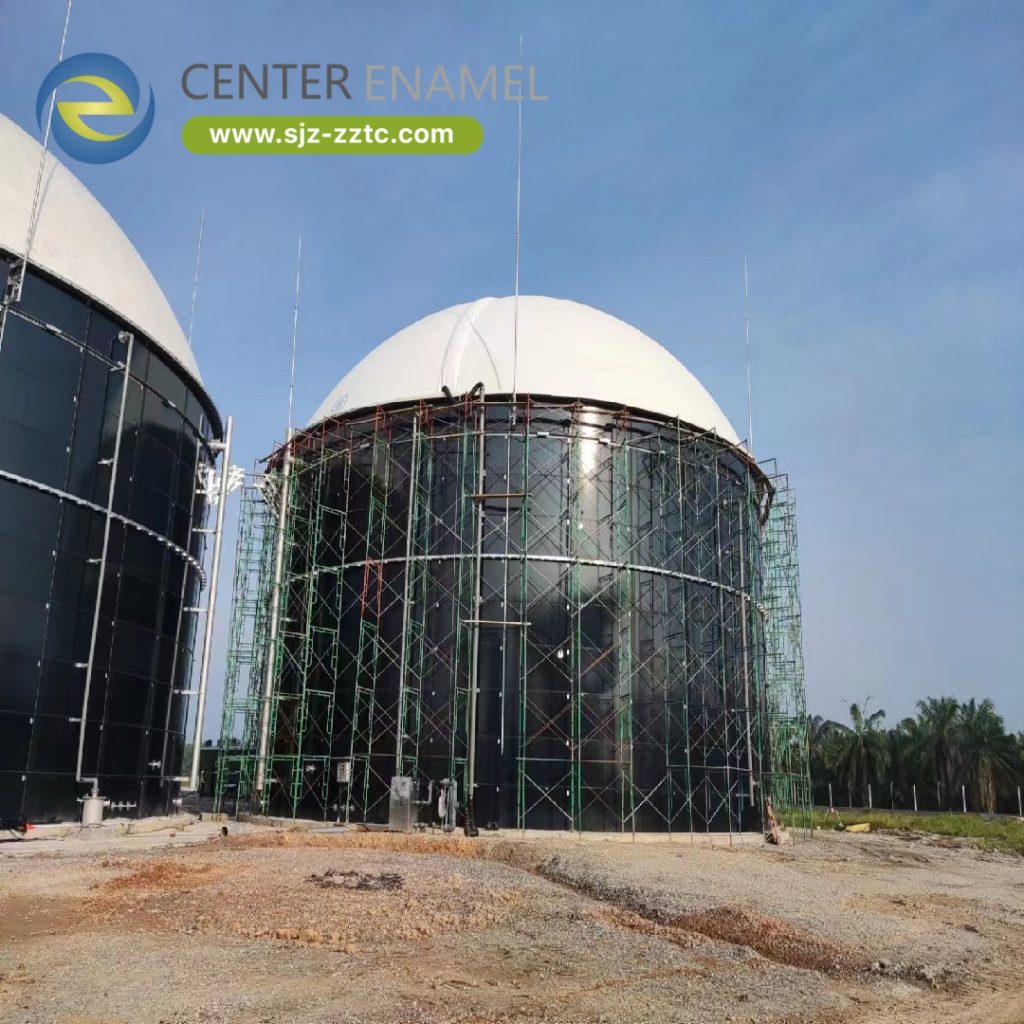
Shijiazhuang Zhengzhong Technology Co., Ltd (Center Enamel) is the trusted EPC Contractor (Engineering, Procurement, and Construction) for the international dairy sector. We provide complete, integrated solutions, managing the entire project lifecycle—from detailed process engineering and critical equipment procurement to guaranteed on-site construction and commissioning. Our single point of responsibility (SPOR) model is paramount for mitigating the high complexity, regulatory risk, and tight operational timelines associated with modern dairy facilities.
Our EPC advantage integrates superior containment—leveraging the chemical resilience of Glass-Fused-to-Steel (GFS) tanks and the specialized durability of Stainless Steel Tanks—with high-rate fat and solids separation, anaerobic digestion, and biological nutrient removal. This ensures every Dairy Industry Wastewater Treatment Technology solution is engineered for longevity, profitable biogas and water reclamation, and rigorous compliance.
The EPC Contractor Advantage in Dairy Operations
For dairy processors facing expansion, regulatory upgrades, or the construction of new facilities, partnering with a specialized EPC Contractor like Center Enamel offers critical operational and financial benefits.
1. Single Point of Responsibility (SPOR) for Guaranteed Performance
Risk Mitigation: As the single EPC Contractor, Center Enamel contractually guarantees the final system's performance metrics, including organic load reduction and effluent quality. This single accountability eliminates coordination failures and provides certainty in budget and timeline, which is crucial for the continuous operations of a dairy plant.
Integrated Process Design: Our engineers, specialized in Dairy Industry Wastewater Treatment Technology, design the entire system with material efficiency and operational stability as primary goals. We ensure the containment material is perfectly matched to the challenging combination of high fats, fluctuating temperatures, and aggressive cleaning chemicals.
Speed to Operation: We manage all stages, from foundation design to commissioning, accelerating the project schedule and minimizing disruption to the core dairy production business.
2. Specialized Process Expertise for Dairy Effluent
Managing High Fat and Solids: Fats and oils (FOG) must be effectively separated to prevent fouling of downstream biological reactors. Our EPC design integrates robust pre-treatment, often involving Dissolved Air Flotation (DAF), before the effluent enters the GFS reactors.
Acidity Level Control and Temperature Fluctuations: Dairy CIP cycles introduce both extremely high temperatures and strong acids/caustics, leading to rapid and extreme shifts in the effluent's acidity level. We incorporate precise neutralization stages in GFS vessels to stabilize the acidity level, protecting the biological cultures and the containment assets.
Nutrient Management: The high concentration of protein and lactose requires advanced biological nutrient removal (BNR) to meet strict limits for nitrogen and phosphorus, preventing potential environmental impact.
Tailored Containment: Optimal Material Selection by the EPC Contractor
Effective Dairy Industry Wastewater Treatment Technology requires containment that can withstand the corrosive mix of organic acids, cleaning agents, and high operational temperatures. Center Enamel's EPC delivery strategically selects the most suitable material for each process step.
1. Glass-Fused-to-Steel (GFS) for Critical High-Rate Reactors
GFS tanks are the superior choice for critical, high-value dairy reactors:
High-Rate Anaerobic Digestion: This core technology relies on GFS reactors to withstand the high concentration of organic acids, fats, and fluctuating temperatures of the anaerobic process. The inert glass surface resists chemical corrosion, ensuring the structural integrity of this major energy asset over decades.
Neutralization and Equalization: GFS is ideal for reaction vessels where concentrated chemicals are used to rapidly neutralize the effluent and manage flow surges, resisting the corrosive attack from both strong cleaning agents and organic acids.
Aeration and Biological Basins: GFS provides the durable, non-corrosive structure required for continuous, high-intensity aeration and biological activity, promoting a stable environment for nutrient removal.
2. Stainless Steel and Epoxy Coated Steel Tanks for Supportive Infrastructure
For specialized or non-critical storage, Center Enamel specifies complementary materials:
Stainless Steel Tanks: Often required for storing specific cleaning chemicals, high-purity utility water, or for processes requiring absolute non-reactivity, ensuring the highest standards of hygiene and material compatibility are met.
Epoxy Coated Steel Tanks: Used for non-critical storage roles like flow equalization, final effluent storage, or general utility water. Their fast assembly and durable coating provide a budget-conscious yet reliable solution for large-volume storage, complementing the core GFS vessels.
3. Advanced Aluminum Dome Roofs for Protection
Maintaining the purity of stored water and controlling emissions are vital in a food processing environment. Aluminum Dome Roofs are integrated into the EPC design for specific containment units:
Clean Water Protection: For the storage of reclaimed water or clean effluent, the aluminum cover acts as a highly effective barrier against external airborne contamination and dust, preserving the quality of the recovered resource for reuse in non-potable dairy processes.
Odor and Emission Control: Over equalization or pre-treatment tanks, the dome roof provides a permanent, low-maintenance seal to capture odors and volatile compounds from the dairy effluent, ensuring the facility meets local nuisance and safety regulations.
Core Dairy Industry Wastewater Treatment Technology and Resource Recovery
Our EPC expertise focuses on integrating state-of-the-art processes into our durable containment systems to achieve the dual goals of resource recovery (biogas and water) and strict environmental compliance.
1. Biogas Recovery and Energy Independence
The high organic load (lactose and proteins) of dairy waste makes it an exceptionally efficient feedstock for anaerobic digestion and subsequent biogas capture, often allowing the dairy to achieve significant energy cost savings and sustainability goals.
High-Rate Anaerobic Digestion: GFS reactors are utilized for high-rate anaerobic systems, maximizing the conversion of organic load into methane gas.
Double Membrane Roofs for Gas Security: We utilize the Double Membrane Roof as the core biogas storage solution atop the anaerobic digesters. This engineered component:
Safely Stores Methane: Provides a flexible, gas-tight volume to manage variable biogas production, maximizing its use for on-site heat and power generation, or for feeding into the grid.
Eliminates Fugitive Emissions: Ensures a sealed system for environmental and safety compliance, critical for an EPC Contractor providing guaranteed performance in a food-grade environment.
2. Pre-Treatment and Solids Management
Effective pre-treatment is essential due to the high fat, oil, and grease (FOG) content:
Flotation and Separation: Dissolved Air Flotation (DAF) or chemical coagulation and settling systems are employed to remove FOG and suspended solids, protecting downstream biological reactors from clogging and shock loads.
Acidity Level Adjustment: Integrated GFS neutralization tanks manage the extreme acidity level swings from CIP chemicals, providing a stable, neutral environment for biological life.
3. Biological Nutrient Removal (BNR) and Polishing
Advanced Dairy Industry Wastewater Treatment Technology requires rigorous nutrient removal to prevent aquatic pollution:
Aerobic and Anoxic Processes: Sequencing Batch Reactors (SBR) or Activated Sludge processes, contained within GFS tanks, are used to biologically convert and remove excess nitrogen and phosphorus.
Water Reclamation: Tertiary membrane filtration and disinfection systems are integrated to polish the effluent to a quality suitable for internal reuse in non-potable dairy applications, such as equipment washdown and cooling tower makeup water, significantly lowering the freshwater footprint.
Project Cases: Center Enamel's Global EPC Commitment
Center Enamel's success as an EPC Contractor is demonstrated by our track record in delivering complex, high-volume projects worldwide, often in challenging industrial and organic processing environments highly relevant to the dairy sector. These projects rely on our ability to provide integrated design, material expertise (GFS, Epoxy, Stainless Steel), and guaranteed performance.
The following non-fictitious cases, directly sourced from our accurate project portfolio, highlight our expertise in delivering large-scale, resilient industrial and organic solutions:
Anhui Industrial Wastewater Project: This large-scale installation required the successful deployment of 3 units for treating complex industrial organic effluents, often including food and beverage waste. The high capacity and robust performance of the GFS and supporting containment vessels confirms our capability as a primary EPC Contractor to manage large-scale procurement and on-site construction for critical industrial wastewater infrastructure with high precision and guaranteed structural integrity. The installation utilized 3 units with a substantial total capacity.
Hubei Wuhan Industrial Wastewater Project: This significant project involved the integration of 2 units for treating diverse industrial process water in a major food and manufacturing hub. The requirement for large, durable containment validates our EPC Contractor proficiency in designing and constructing integrated wastewater facilities that endure chemical variability and support the complex, multi-stage nature of Dairy Industry Wastewater Treatment Technology. The installation utilized 2 units with a substantial total capacity.
Shandong Industrial Wastewater Project: This project utilized 2 units of very large capacity, demonstrating our ability to deliver high-volume containment solutions for the storage and treatment of industrial organic waste. The successful installation confirms our expertise in delivering the durable, resilient tanks required for large-scale, continuous flow dairy operations. The installation utilized 2 units with a substantial total capacity.
Choosing Center Enamel as Your EPC Contractor
For the global dairy industry, the pursuit of sustainable production, environmental compliance, and reduced operating costs is optimally achieved through integrated, single-source project delivery. Choosing an experienced EPC Contractor specializing in Dairy Industry Wastewater Treatment Technology is the most reliable strategy for mitigating risk and guaranteeing resource recovery.
Shijiazhuang Zhengzhong Technology Co., Ltd (Center Enamel) offers the complete solution:
Engineering Certainty: Process design optimized for resource recovery (biogas, water) and high-load management.
Procurement Excellence: Utilization of the right containment material—from the resilient Glass-Fused-to-Steel (GFS) for reactors to specialized Stainless Steel Tanks for hygiene.
Construction Reliability: Global experience in rapid, safe, and quality-controlled installation of all system components, including specialized Aluminum Dome Roofs and Double Membrane Roofs.
Partner with Center Enamel to secure a reliable, high-performing wastewater asset delivered on time, within budget, and guaranteed to meet the needs of the modern, sustainable dairy industry.