
Center Enamel EPC Contractor provides Papermaking Wastewater Treatment Technology to Global Customers
The global papermaking and processing industry is defined by demanding production schedules and the generation of a wastewater stream that is notoriously difficult to manage. Papermaking Wastewater Treatment Technology must address high concentrations of fiber solids, intense color from residual chemicals, high levels of organic matter, and significant fluctuations in temperature and acidity level. The effluent is characterized by its high volume and complex chemical composition, necessitating a multi-stage treatment approach that guarantees environmental compliance while maximizing water and energy efficiency.
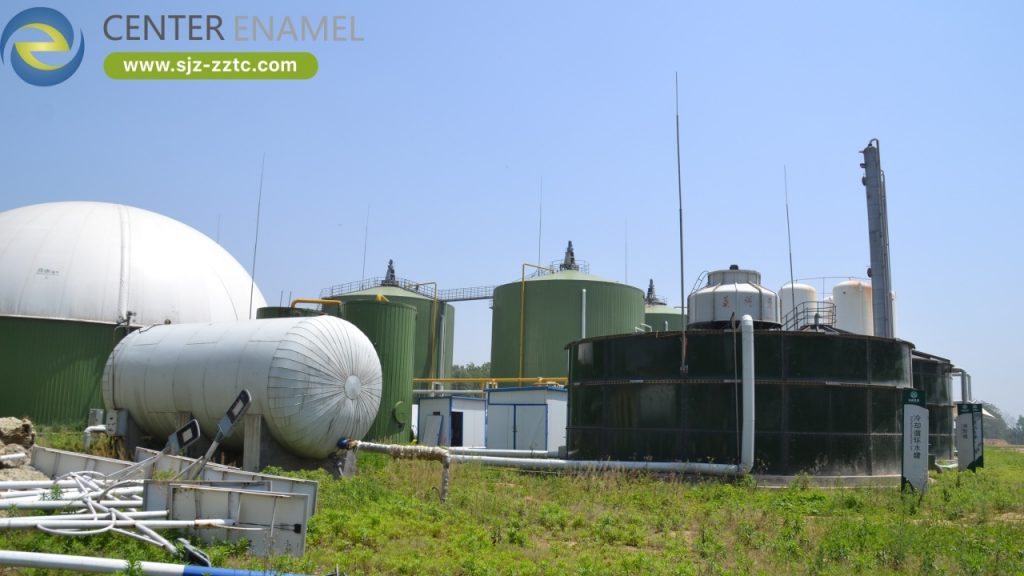
Shijiazhuang Zhengzhong Technology Co., Ltd (Center Enamel) is the premier EPC Contractor (Engineering, Procurement, and Construction) for the international papermaking sector. We provide complete, integrated solutions, managing the entire project lifecycle—from detailed process engineering and critical material procurement to guaranteed on-site construction and commissioning. Our single point of responsibility (SPOR) model is paramount for mitigating the high financial and regulatory risks associated with complex effluent treatment, ensuring clients receive a high-performance, compliant asset.
Our EPC advantage integrates superior containment—leveraging the chemical resilience of Glass-Fused-to-Steel (GFS) tanks and the versatile application of Epoxy Coated Steel Tanks—with multi-stage separation, biological treatment, and tertiary polishing processes. This ensures every Papermaking Wastewater Treatment Technology solution is engineered for durability, effective color and solids removal, and successful resource recovery.
The EPC Contractor Mandate in Papermaking
The intense environmental scrutiny faced by the papermaking industry mandates that wastewater projects be executed with absolute precision and guaranteed results. Center Enamel’s role as the EPC Contractor provides this critical assurance.
1. Single Point of Responsibility (SPOR) for Guaranteed Compliance
Performance Guarantee: As the single EPC Contractor, Center Enamel contractually guarantees that the final treatment system will meet all specific discharge limits, including rigorous standards for color, total suspended solids, and residual organic matter. This commitment is vital for maintaining operating licenses and avoiding steep penalties.
Risk and Schedule Certainty: We provide a comprehensive, fixed-price contract and a precise timeline, eliminating the client's risk of scope creep, budget overruns, and scheduling delays common in multi-vendor projects. This focus allows mill operators to concentrate on production, not project management.
Integrated Process Design: Our in-house engineers, specializing in Papermaking Wastewater Treatment Technology, ensure that all complex stages—from fiber separation and chemical neutralization to advanced color removal—are perfectly harmonized, utilizing containment materials that are chemically compatible with the challenging effluent.
2. Navigating PME’s Technical Challenges
Effective PME treatment requires managing specific, aggressive characteristics unique to fiber processing:
High Solids and Color: The high load of fiber fines and lignin derivatives necessitates robust primary separation and specialized chemical or physical processes for effective color removal.
Temperature and Acidity Level: The use of strong processing chemicals and hot water leads to effluent with highly variable temperature and extreme acidity level fluctuations, demanding containment materials with exceptional thermal and chemical resistance.
High Flow Volume: Papermaking is a massive water consumer, meaning the treatment system must handle high hydraulic loads continuously without structural or operational failure.
Tailored Containment: Optimal Material Selection by the EPC Contractor
The successful delivery of Papermaking Wastewater Treatment Technology relies on containment engineered to endure the intense chemical, thermal, and physical stress of PME. Center Enamel’s EPC solution strategically deploys materials for longevity and cost optimization.
1. Glass-Fused-to-Steel (GFS) for Critical and Corrosive Vessels
GFS tanks are the essential foundation for processes involving extreme chemical or thermal stress, or those requiring high structural integrity:
Primary Clarification and Sedimentation: GFS tanks provide the structural integrity and internal corrosion resistance needed for large-volume vessels handling high loads of abrasive suspended solids and fluctuating acidity levels typical of primary effluent.
Biological Reactors (Aeration): GFS containment supports continuous, high-intensity aeration and biological activity. The inert glass surface resists chemical attack from residual pulping agents and organic acids, promoting stable biological performance.
Neutralization and Chemical Storage: GFS is ideal for storage and reaction vessels where concentrated acids and bases are used to manage the effluent acidity level, ensuring long-term vessel safety and integrity.
2. Epoxy Coated Steel Tanks for Supportive Infrastructure
For non-critical storage, flow equalization, and utility roles, Epoxy Coated Steel Tanks are specified for their cost-effectiveness and rapid deployment:
Equalization Basins: These large tanks manage the hydraulic and organic load variations of PME before the main process. Epoxy tanks offer a reliable, cost-efficient solution for this crucial buffering stage.
Sludge Thickeners: Used for the final handling of dewatered sludge, Epoxy tanks provide strong structural containment in a durable coating, maximizing system efficiency.
3. Specialized FRP and Stainless Steel Applications
For specialized chemical handling, such as specific dosing or highly corrosive reagent storage, Center Enamel's EPC scope includes the integration of Fiberglass Reinforced Plastic (FRP) or Stainless Steel Tanks where chemical compatibility or regulatory requirements dictate their use, ensuring a complete and safe containment solution.
Advanced Applications for Energy and Water Reclamation
Center Enamel integrates advanced technological components and recovery systems into our durable containment solutions, fulfilling the modern papermaking mill's need for both compliance and maximum resource recovery.
1. Emission Control and Clean Water Protection with Aluminum Dome Roofs
In the papermaking environment, controlling chemical odors and protecting treated water purity are mandatory for both site safety and environmental responsibility.
Odor and Volatile Containment: Aluminum Dome Roofs provide a secure, gas-tight cover over pre-treatment and equalization basins. This structure effectively controls offensive odors and volatile compounds from the PME, ensuring a safer work environment and community compliance.
Clean Water Integrity: For storage tanks holding recycled process water or clean effluent, the aluminum cover acts as a non-corrosive, permanent shield against external airborne contamination and dust, preserving the purity of the recovered resource for reuse in critical mill operations.
Maintenance Advantage: The lightweight, corrosion-resistant aluminum structure ensures a long, maintenance-free life, which is paramount in aggressive industrial atmospheres.
2. Sludge and Biogas Management
Papermaking sludge, rich in organic fibers and residual compounds, can be effectively managed for volume reduction and energy capture.
Anaerobic Sludge Digestion: Where organic content is sufficient, anaerobic digestion is utilized to reduce the volume of residual PME sludge while producing valuable biogas.
Double Membrane Roofs for Gas Security: The Double Membrane Roof is seamlessly integrated atop the GFS digesters. It provides the flexible, gas-tight volume necessary to safely store the recovered methane gas, allowing the mill to utilize it for on-site heat or power generation, significantly offsetting energy consumption. The sealed nature of the roof also provides superior environmental protection.
3. Tertiary Treatment for Color and Water Reclamation
Meeting modern discharge standards and maximizing water reuse requires advanced tertiary polishing, which is seamlessly integrated into our EPC delivery:
Color Removal: Specialized chemical coagulation, flocculation, or advanced oxidation processes are designed into the flow train to remove persistent color-causing lignin compounds.
Membrane Filtration: Advanced filtration systems (Ultrafiltration or Reverse Osmosis) are incorporated to achieve the highest level of purification, allowing the mill to reclaim significant volumes of water for internal reuse in non-critical processes, reducing the mill's freshwater footprint.
Project Cases: Center Enamel's Global EPC Commitment to Complex Industrial Waste
Center Enamel's success as an EPC Contractor in high-complexity industrial and chemical environments directly validates our capability to deliver advanced Papermaking Wastewater Treatment Technology. Our portfolio showcases material durability, successful integration of multi-stage processes, and assured compliance in the face of chemical toxicity and high organic load.
The following non-fictitious cases, directly sourced from our accurate project portfolio, highlight our expertise in delivering large-scale, resilient industrial solutions:
Hunan Industrial Wastewater Project: This large-scale installation required the successful deployment of 3 units for treating complex industrial effluents, often including high-load organic and chemical streams similar to papermaking waste. The robust performance of our containment solutions confirms our capacity as a primary EPC Contractor to manage large-scale logistics and deliver highly durable, high-capacity solutions for critical industrial infrastructure. The installation utilized 3 units with a substantial total capacity.
Hebei Industrial Wastewater Project: This project involved the integration of 4 units for treating diverse industrial process water. The need for multiple, specialized containment vessels validates our EPC Contractor proficiency in designing and constructing integrated wastewater facilities that endure chemical variability and continuous high-flow operation, which is critical in a papermaking environment. The installation utilized 4 units with a substantial total capacity.
Fujian Quanzhou Industrial Wastewater Project: This significant project required the integration of 3 units into a complex industrial treatment facility located in a region known for high-volume processing. This demonstrates our EPC Contractor capacity to deliver highly specialized containment solutions necessary for phased and complex industrial processes like Papermaking Wastewater Treatment Technology under various climatic and regulatory conditions. The installation utilized 3 units with a substantial total capacity.
Choosing the Specialized EPC Partner for Papermaking
For the global papermaking industry, achieving sustainable operation and strict environmental compliance hinges on highly effective wastewater management that maximizes water reuse and minimizes environmental impact. This complex task requires an EPC Contractor with deep industrial experience and material science expertise.
Choosing Center Enamel for your Papermaking Wastewater Treatment Technology ensures:
Risk-Free Delivery: Single-point accountability guarantees system performance, budget adherence, and color and organic compound compliance.
Optimized Material Science: Strategic deployment of chemically resistant Glass-Fused-to-Steel (GFS) for corrosive reactors, complemented by cost-effective Epoxy Coated Steel Tanks and specialized Stainless Steel Tanks.
Resource Maximization: Seamless integration of Double Membrane Roofs for profitable energy generation and Aluminum Dome Roofs for clean water preservation and emission control.
Partner with Center Enamel to secure a reliable, high-performing wastewater asset delivered on time, within budget, and engineered to meet the stringent demands of the modern papermaking industry.