
Center Enamel EPC Services: Wastewater Solutions for Anaerobic Digestion for Textile Waste Treatment
The global textile manufacturing industry is at a critical crossroads. As one of the most resource-intensive sectors, the management of industrial effluents and solid residues has moved beyond simple regulatory compliance to become a primary pillar of corporate resilience. Central to this evolution is the implementation of Anaerobic Digestion of Textile Waste Treatment—a sophisticated biological process that converts organic pollutants and fibers into renewable biogas. However, the success of such projects depends entirely on the quality of the infrastructure and the integration of the process.
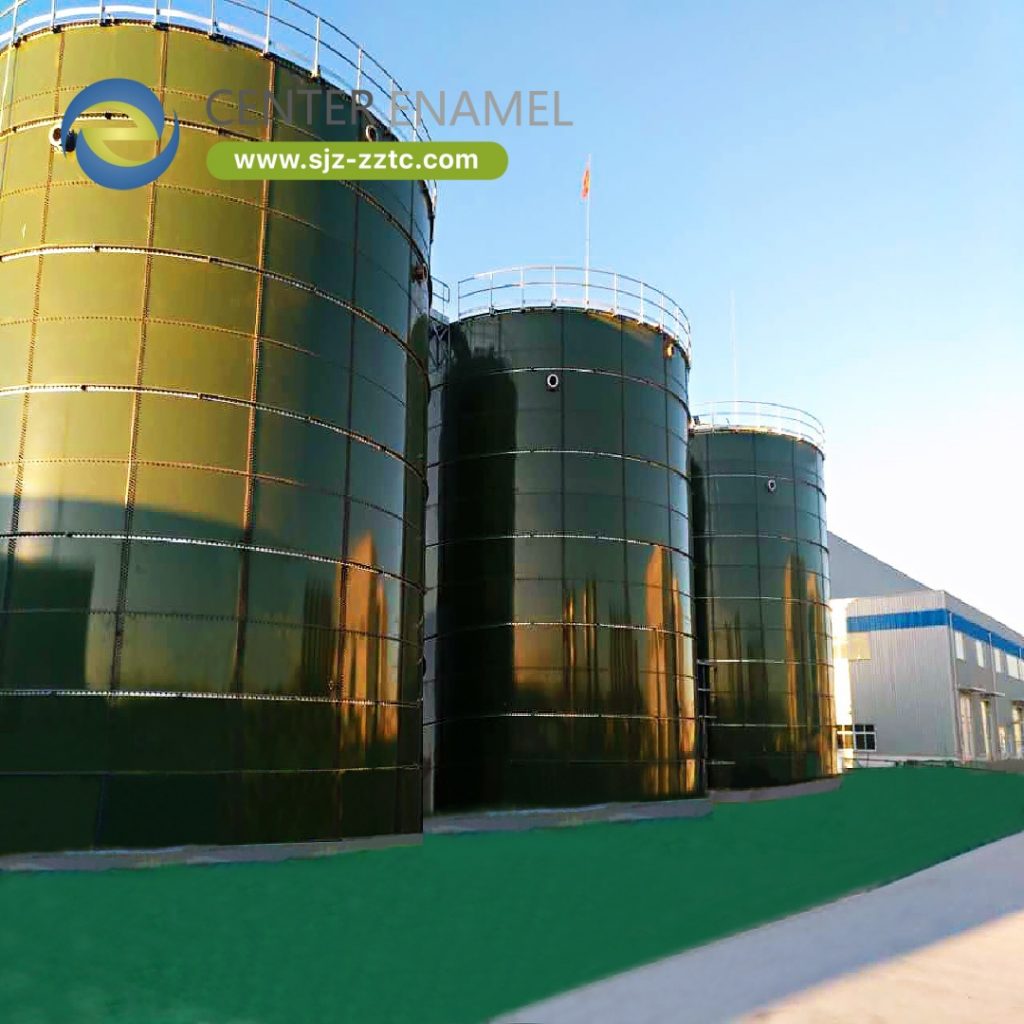
Shijiazhuang Zhengzhong Technology Co., Ltd, operating under the world-renowned brand Center Enamel, stands as a global pioneer in providing the specialized Center Enamel EPC Services necessary for this transition. With over thirty years of innovation and a project footprint extending to more than one hundred countries, we provide the turnkey containment and processing solutions that make high-efficiency biological recovery a reality. Our expertise lies in the integration of Glass-Fused-to-Steel (GFS) technology, high-performance Epoxy Coated Tanks, and advanced Double Membrane Roofs, creating a cohesive system designed to withstand the aggressive chemical nature of textile effluents while maximizing energy yields.
Technical Foundations of Anaerobic Digestion of Textile Waste Treatment
To optimize the Anaerobic Digestion of Textile Waste Treatment, it is essential to understand the specific chemical and physical characteristics of the feedstock. Textile waste—ranging from liquid dye effluents to solid fiber residues—possesses unique challenges that require precise engineering.
1. High Organic Loading and Decolorization
Textile processing involves the heavy use of dyes, sizing agents, and surfactants, leading to a waste stream rich in complex organic molecules. This organic load represents a massive potential for methane production. In the anaerobic environment, specialized microorganisms perform reductive cleavage of dye molecules, which significantly reduces color intensity—a task that is often difficult to achieve through aerobic processes alone. When managed through professional Center Enamel EPC Services, these organic components are metabolized to produce biogas, which can be utilized to generate steam for dyeing vats or electricity for factory operations.
2. Chemical Complexity and Corrosion Management
The dyeing and finishing process utilizes various fixatives and chemical auxiliaries. Consequently, textile waste can exhibit significant fluctuations in alkalinity and salinity. During anaerobic treatment, the breakdown of these compounds can create a highly corrosive internal atmosphere containing hydrogen sulfide and ammonia. If not managed through superior containment and gas storage technology, this environment can be destructive to standard infrastructure. Center Enamel’s solutions utilize inert surfaces and specialized gas-handling systems to mitigate these risks without the need for excessive chemical additives.
Core Technology: The Double Membrane Roof System
In the Anaerobic Digestion of Textile Waste Treatment, the efficient capture, storage, and pressure regulation of the produced biogas are the most critical factors for achieving a positive return on investment. Center Enamel’s Double Membrane Roofs are engineered as a dynamic, integrated gas management solution that leads the industry in safety and flexibility.
1. Advanced Structural Mechanics and Dual-Layer Architecture
The Double Membrane Roof is a sophisticated pressurized system consisting of two high-specification membranes working in synergy:
The Inner Membrane: This layer serves as the primary seal for the anaerobic digestion process. It is in direct contact with the biogas produced during the treatment process. Its flexible nature allows it to expand and contract freely based on the real-time gas production rate and the consumption rate of the downstream power units. This "variable-volume" functionality ensures that the reactor maintains a consistent internal pressure, preventing mechanical stress on the tank structure.
The Outer Membrane: This layer is constantly pressurized by an automated, high-performance blower system. It forms a rigid, permanent aerodynamic dome that protects the inner gas-storage membrane. This outer shell serves as the primary defense against external environmental forces, such as wind pressure, heavy rainfall, and snow accumulation.
2. Material Science and Chemical Resistance
Industrial biogas from textile waste is notoriously aggressive. Our membranes are manufactured from high-tenacity polyester fabrics with specialized multi-layer coatings:
Gas Permeability Resistance: The inner membrane features a specialized coating that minimizes gas loss, ensuring every cubic meter of renewable energy is captured.
Industrial Corrosion Protection: The fabric is engineered to be chemically inert, resisting the acidic and alkaline vapors common in industrial anaerobic environments.
Environmental Durability: The outer membrane is UV-stabilized and features an anti-static, self-cleaning surface, ensuring the roof maintains its structural integrity across diverse global climates.
3. EPC Integration: Intelligent Safety and Pressure Control
As part of the Center Enamel EPC Services, we integrate a comprehensive suite of monitoring devices into the roof system:
Automated Air Management: Sensors monitor the air pressure between the membranes, and the blower system adjusts automatically to maintain optimal tension.
Volume Monitoring: High-precision sensors track the height of the inner membrane, providing real-time data on biogas storage levels.
Multi-Stage Safety Relief: Integrated safety valves ensure that any unexpected pressure spikes are managed safely, protecting both the roof and the reactor from mechanical failure.
Containment Infrastructure: GFS and Epoxy Coated Tank Solutions
In the Anaerobic Digestion of Textile Waste Treatment, the physical containment system must be as robust as the biological process. Center Enamel provides a multi-layered infrastructure approach where the tank and the roof function as a single, optimized energy recovery unit.
1. Glass-Fused-to-Steel (GFS) Technology: The Premier Choice
Our flagship GFS tanks are the global benchmark for the core anaerobic reactor. By fusing high-tech glass enamel to specialized steel at temperatures exceeding eight hundred degrees, we create a material that combines the strength of steel with the chemical inertness of glass.
Superior Chemical Resistance: The glass interior is completely impervious to the organic acids and corrosive gases generated during digestion.
Rapid Modular Construction: The bolted design allows for significantly faster installation times compared to traditional concrete, minimizing operational disruption at active factory sites.
2. Epoxy Coated Tanks: High-Performance Industrial Storage
As a critical part of our infrastructure portfolio, Center Enamel EPC Services include high-specification Epoxy Coated Tanks for various stages of the treatment train.
Advanced Coating Technology: Our epoxy tanks utilize a high-specification electrostatic powder coating process. This results in a smooth, durable finish that provides excellent resistance against a wide range of industrial chemicals found in textile effluents.
Versatile Application: These tanks are ideal for equalization, pre-treatment, or the storage of treated effluent. They offer a cost-effective yet highly durable alternative for processes where high corrosion resistance is essential.
Quality and Reliability: Every tank is manufactured under strict factory-controlled conditions to ensure consistent coating thickness and superior bond strength.
3. Aluminum Dome Roofs: Efficient Secondary Containment
For the storage of treated effluent or recovered process water, Center Enamel offers specialized Aluminum Dome Roofs. These self-supporting geodesic structures are used where gas capture is not the primary requirement. Constructed from high-strength aluminum alloy, they are naturally resistant to corrosion and require no internal support columns, providing a maintenance-free solution for secondary storage.
Sustainability, Economics, and ROI for the Textile Sector
Implementing Anaerobic Digestion of Textile Waste Treatment through Center Enamel EPC Services is a strategic investment that delivers tangible commercial value:
Energy Recovery and Cost Offset: By converting organic pollutants into biogas, textile mills can significantly reduce their reliance on purchased fossil fuels.
Decolorization and Treatment Efficiency: Anaerobic treatment provides a superior first step in the treatment train, breaking down complex dyes that are resistant to aerobic bacteria.
ESG and Supply Chain Transparency: Implementing advanced energy recovery systems allows manufacturers to qualify for international carbon credits and aligns them with global Environmental, Social, and Governance (ESG) standards.
Global Project Excellence: Center Enamel in Action
Our expertise in providing containment for complex industrial waste is proven through successful installations:
Shandong Heze Biogas Project This major regional initiative utilized 3 units of our high-performance GFS tanks. The project successfully transforms concentrated organic residues into a stable energy stream, demonstrating the reliability of our integrated gas storage systems and reactor technology.
Inner Mongolia Hinggan League Bio-Natural Gas Project In a region characterized by extreme temperature fluctuations, this installation integrated 4 units of our bolted steel tanks. These vessels and their Double Membrane Roofs provide the stable environment necessary for the high-efficiency production of bio-natural gas, proving the resilience of our engineering against extreme snow loads.
Jiangsu Xuzhou Biogas Project This project involved the deployment of 4 units of our advanced containment technology. It serves as a model for how Center Enamel EPC Services, featuring GFS and high-durability coatings, can be used to rapidly build essential infrastructure for modern industrial wastewater management.
Leading the Textile Industry’s Energy Transition
The implementation of advanced Anaerobic Digestion of Textile Waste Treatment represents a transformative step toward a more sustainable and profitable textile industry. By converting an industrial byproduct into a renewable energy asset, manufacturers can protect their local environment while securing their energy future.
At Shijiazhuang Zhengzhong Technology Co., Ltd (Center Enamel), we are dedicated to providing the innovation and engineering excellence that make these projects a success. From our premier GFS tanks and high-performance Epoxy Coated Tanks to our specialized Double Membrane Roofs and Aluminum Dome Roofs, we offer a total containment solution designed for the future of industrial sustainability.