
Center Enamel Provides Efficient UASB Reactor for Philippines Landfill Leachate Treatment Project
Landfill leachate, which is the liquid that percolates through waste in landfills, is one of the most challenging pollutants in the waste management industry. The Philippines, like many countries in Southeast Asia, is facing increasing landfill waste, resulting in a growing problem of leachate contamination. This toxic effluent contains high levels of organic matter, heavy metals, and other pollutants, which can severely impact soil and water quality if not treated properly. To tackle this issue, Center Enamel has stepped in with its cutting-edge Upflow Anaerobic Sludge Blanket (UASB) Reactor technology. Known for its efficiency and effectiveness, the UASB Reactor is ideal for treating landfill leachate by utilizing anaerobic biological processes that break down organic contaminants while reducing the environmental impact.
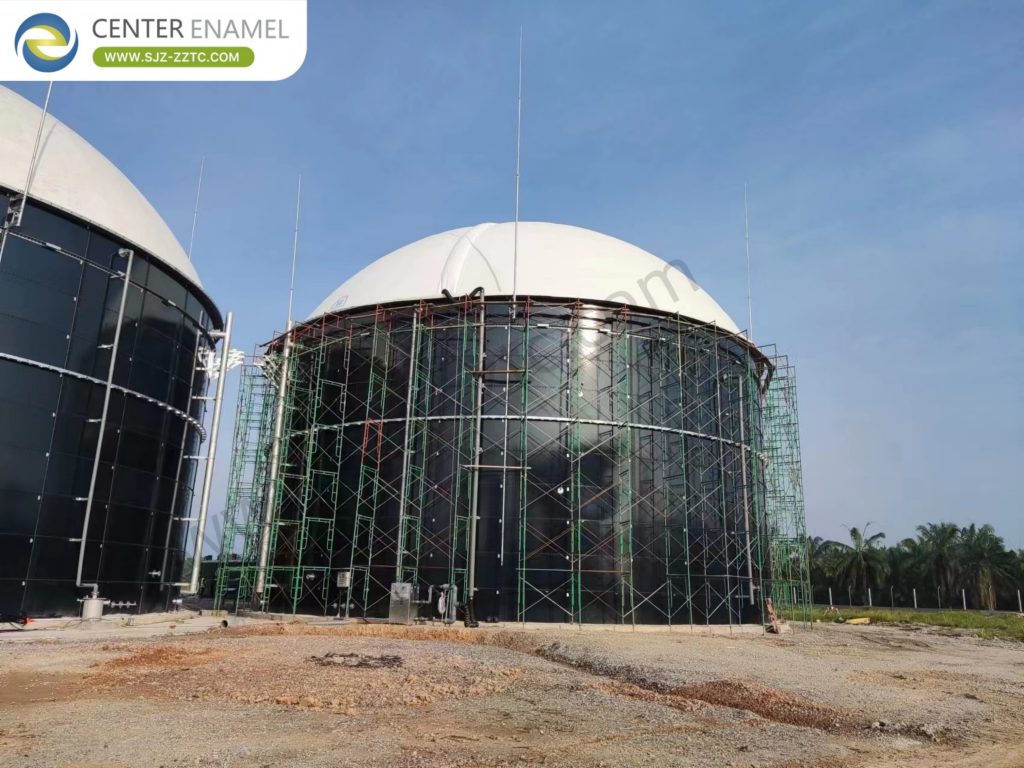
The Unique Challenge of Landfill Leachate
Landfills are a significant environmental issue in many countries, including the Philippines. As urbanization accelerates, the generation of solid waste continues to rise, leading to the growth of landfill sites. Landfill leachate, which is produced when rainwater seeps through the waste in landfills, can contain a complex cocktail of dangerous pollutants such as ammonia, heavy metals, and very high concentrations of organic materials. These pollutants can seep into groundwater or contaminate nearby rivers and lakes, creating long-term environmental damage.
Traditional treatment methods, such as activated sludge systems or chemical treatments, are often insufficient for the complex and highly variable composition of landfill leachate. The high concentration of organic matter and suspended solids can overwhelm conventional aerobic systems, leading to inefficient treatment and high operational costs. This is where an advanced anaerobic technology like the UASB Reactor offers a more efficient, cost-effective, and environmentally friendly approach to leachate treatment.
How Center Enamel's UASB Reactor Works
Center Enamel's Upflow Anaerobic Sludge Blanket (UASB) Reactor is a sophisticated anaerobic treatment technology designed to handle high-strength wastewater. The core of the system is a dense "blanket" of microbial granules, a community of microorganisms that form a sludge bed at the bottom of the reactor. Wastewater, in this case landfill leachate, is introduced from the bottom of the tank and flows upward through this granular blanket.
As the leachate percolates through the microbial bed, the microorganisms break down the organic pollutants. The upward flow, combined with the settling properties of the dense granules, ensures excellent contact between the pollutants and the microorganisms. As the microorganisms metabolize the organic matter, they produce biogas, a mixture of methane and carbon dioxide. The biogas bubbles help to mix the sludge and wastewater as they rise to the top of the reactor, where a gas-solid-liquid separator captures the biogas and allows the treated water to flow out of the system. This process effectively reduces the Chemical Oxygen Demand and Biological Oxygen Demand levels in the leachate, preparing it for further treatment or safe discharge.
Advantages of the UASB Reactor for Leachate Treatment
The UASB Reactor's design offers several distinct advantages in treating the unique and challenging characteristics of landfill leachate.
High Organic Load Capacity: The UASB Reactor is specifically designed to handle wastewater with very high organic loads, which is a key characteristic of landfill leachate. The high concentration of active microorganisms within the granular blanket allows the system to process a large amount of organic matter in a compact space, making it exceptionally efficient.
Energy Efficiency and Recovery: The anaerobic treatment process is highly energy-efficient as it does not require constant aeration like aerobic systems. Furthermore, the biogas generated is a valuable resource. It can be captured and used as a renewable energy source for on-site power generation or heating, offsetting the operational costs of the facility and contributing to a sustainable circular economy.
Compact and Modular Design: The compact design of the UASB Reactor is ideal for landfill sites that often have limited space for new infrastructure. The modular nature of the system also allows for easy scalability and installation in various site conditions, making it a versatile solution for different project sizes.
Reduced Sludge Production: Compared to traditional aerobic treatment methods, the UASB Reactor produces significantly less sludge. This is a major economic and logistical advantage, as it reduces the costs associated with the disposal or further treatment of sludge.
Project Cases
Our extensive project portfolio showcases our unparalleled experience in delivering high-performance solutions for diverse industrial clients.
| Project | Application | Tank Capacity |
| Landfill Leachate Treatment Project in a North American Country | Landfill leachate treatment facility | 1,200 m³ (1 tank) |
| Biogas Engineering Project in a Chinese City | Biogas engineering | 1,210 m³ (1 tank) |
| Livestock Wastewater Treatment Project in a Latin American Country | Large-scale livestock farm wastewater | 1,023 m³ (1 tank) |
| Municipal Wastewater Treatment Project in a Middle Eastern Country | Municipal wastewater treatment infrastructure | 1,210 m³ (1 tank) |
| Firefighting Water Project in a Southeast Asian Country | Fire protection water storage | 1,210 m³ (1 tank) |
| Dry Bulk Storage Project in a European Country | Dry bulk storage for a major facility | 1,800 m³ (1 tank) |
Why Choose Center Enamel for Leachate Solutions?
Center Enamel has been at the forefront of wastewater treatment solutions for decades. Our UASB Reactor technology is a testament to our commitment to innovation and sustainability. We have successfully delivered wastewater treatment solutions in numerous countries, with a proven track record of meeting the toughest environmental challenges. We offer tailored solutions to meet the specific needs of each landfill site, ensuring optimal performance in a variety of geographical and environmental conditions. Our commitment to sustainability, high-quality engineering, and comprehensive project support makes us the ideal partner for landfill leachate management.
A Sustainable Approach to Landfill Leachate Treatment
The success of our UASB Reactor in the Philippines demonstrates its potential as a reliable, cost-effective, and environmentally friendly technology for landfill leachate treatment. As the Philippines continues to grapple with the environmental challenges of landfill waste management, the need for efficient and sustainable leachate treatment solutions becomes increasingly critical. By integrating cutting-edge anaerobic treatment systems like the UASB Reactor, landfills can reduce their environmental impact, improve sustainability, and contribute to a cleaner, healthier environment for future generations.
Frequently Asked Questions (FAQ)
Q1: Why is a UASB reactor particularly suitable for landfill leachate treatment compared to aerobic systems?
Landfill leachate is characterized by high organic loads and variable composition, which can easily overwhelm conventional aerobic treatment systems. Aerobic systems require continuous mechanical aeration—consuming large amounts of electricity—and are sensitive to toxic shocks and ammonia inhibition. The UASB reactor, by contrast, operates anaerobically without aeration, tolerates high organic loading rates, and adapts well to fluctuations in leachate quality. Additionally, the UASB produces valuable biogas as a byproduct, turning a treatment cost into an energy recovery opportunity.
Q2: What is the typical COD removal efficiency of a UASB reactor treating landfill leachate?
For landfill leachate with moderate to high organic strength, a well-designed and properly operated UASB reactor typically achieves 60–85% COD removal, depending on factors such as leachate age, temperature, organic loading rate, and hydraulic retention time. Young leachate (high BOD/COD ratio) tends to yield higher removal efficiencies, while older leachate with higher ammonia and recalcitrant compounds may require additional post-treatment stages such as aerobic polishing or membrane filtration to meet stringent discharge standards.
Q3: What post-treatment steps are typically required after a UASB reactor for landfill leachate?
While the UASB reactor excels at removing organic matter (COD/BOD), it has limited capability for ammonia nitrogen removal and pathogen reduction. Therefore, a complete leachate treatment train typically includes aerobic post-treatment (e.g., activated sludge, MBBR, or SBR) for nitrification, followed by optional clarification, disinfection (e.g., UV or chlorination), and in some cases, reverse osmosis or nanofiltration for heavy metal and salt removal. Center Enamel offers integrated solutions that combine UASB with downstream polishing stages to meet local environmental discharge regulations.