
Center Enamel provides turnkey solutions for Laos Food Processing Wastewater Treatment Project
In 2026, the Lao PDR is executing its 10th Five-Year National Socio-Economic Development Plan (2026–2030), prioritizing agro-processing diversification across Champasak, Savannakhet, and Vientiane Capital. This industrial expansion is governed by the Preliminary Integrated Water Resources Management Action Plan, which mandates strict wastewater discharge permits from the Ministry of Natural Resources and Environment (MoNRE) for all new food processing facilities. Food processing effluent—characterized by high BOD/COD, suspended solids, and fats, oils, and grease (FOG)—poses a critical bottleneck to facility approval when treated with conventional lagoon systems.
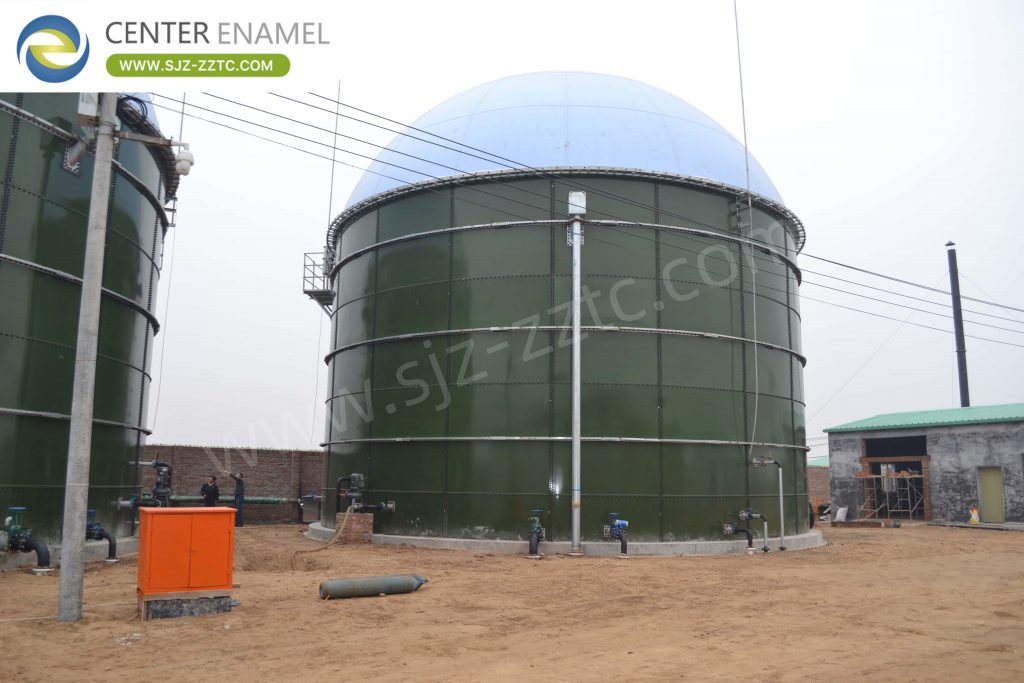
Center Enamel (Shijiazhuang Zhengzhong Technology Co., Ltd) addresses this compliance challenge through turnkey Engineering, Procurement, and Construction (EPC) delivery of modular wastewater treatment infrastructure. The scope encompasses full-process design, proprietary Glass-Fused-to-Steel (GFS) tank manufacturing, anaerobic and aerobic biological treatment integration, and on-site commissioning tailored to Laos's tropical monsoon climate and landlocked logistics constraints.
Scope of Work
Center Enamel's turnkey engagement for a Laos food processing wastewater treatment project covers the complete project lifecycle:
| Phase | Deliverables |
| Engineering Design | Hydraulic modeling, process flow diagrams, equipment sizing, structural calculations compliant with AWWA D103 and ISO 28765 |
| Procurement & Manufacturing | In-house enamel frit production, automated GFS tank panel fabrication, FBE coating, membrane roof and aluminum dome manufacturing |
| Logistics & Transport | Containerized modular shipment via standard truck routes to Vientiane and provincial sites, eliminating oversize-load barriers on mountainous roads |
| On-Site Construction | Bolted tank assembly, mechanical installation of screening/DAF/anaerobic/aerobic systems, piping and electrical integration |
| Commissioning & Training | System startup, performance verification, operator training for local Lao engineering teams |
| Documentation Support | Technical drawings, water quality analysis reports, and documentation aligned with MoNRE permit requirements |
Technologies Used
1. Glass-Fused-to-Steel (GFS) Tanks — Anaerobic Reactor Standard
GFS tanks are manufactured by fusing high-tech glass enamel to steel at temperatures exceeding 820°C, creating a chemically inert barrier resistant to pH 1–14. For food processing wastewater containing volatile fatty acids from fruit, cassava, and beverage production, this corrosion immunity is essential for anaerobic digester service life. The bolted modular design enables rapid deployment in Laos's regional industrial zones without heavy machinery.
2. Fusion Bonded Epoxy (FBE) Tanks — Auxiliary Process Stages
For equalization, sedimentation, and treated water storage, Center Enamel's FBE-coated tanks utilize electrostatic powder coating for resistance against industrial cleaning agents (CIP). These provide cost-effective durability for secondary treatment stages.
3. Anaerobic Digestion Technologies (IC/UASB/CSTR)
For high-COD food processing effluent (typically 8,000–40,000 mg/L in Laos), Center Enamel integrates advanced anaerobic reactors. The Internal Circulation (IC) reactor maximizes biogas production and organic removal, while UASB provides stable operation under fluctuating loading conditions. These systems reduce organic load by over 80% while generating renewable methane.
4. Double Membrane Roof Systems — Biogas Harvesting
Integrated onto anaerobic digesters, double membrane roofs capture methane generated during organic solids breakdown. Recovered biogas can fuel boilers or generate power, reducing facility reliance on imported energy and supporting Laos's clean energy priorities.
5. Aluminum Dome Roofs — Monsoon Protection
For equalization basins and clarifiers, aluminum dome roofs prevent monsoon rain dilution of effluent, maintaining stable biological treatment regardless of season.
6. Dissolved Air Flotation (DAF) and Screening
Pre-treatment with mechanical bar screens and DAF systems removes debris and FOG before biological reactors, preventing clogs and process upsets.
7. Aerobic Polishing (MBBR/MBR)
To meet 2026 discharge standards for the Mekong watershed, aerobic polishing stages ensure nitrogen and phosphorus removal, preventing eutrophication and enabling water reuse for irrigation or factory utilities.
Project Results / Data
Center Enamel's food processing wastewater treatment systems deliver measurable outcomes for Lao facilities:
| Parameter | Typical Influent | After Anaerobic Treatment | After Full Treatment |
| COD (mg/L) | 8,000–40,000 | Reduced by >80% | Compliant with MoNRE standards |
| BOD (mg/L) | 1,500–10,000 | Significantly reduced | Compliant for discharge/reuse |
| TSS (mg/L) | 500–5,000 | Solids stabilized | Reduced to discharge limits |
| FOG | High (variable) | Removed via DAF | Trace levels |
| Biogas Output | — | Methane-rich, recoverable | Thermal/power use |
| Tank Service Life | — | 30+ years | Minimal maintenance |
Operational efficiencies achieved:
Rapid deployment: Modular GFS tanks commissioned in weeks versus years for concrete construction
Logistical adaptability: Containerized components reach remote provinces via standard trucks
Compliance assurance: Documentation aligned with MoNRE 60-day permit review process
Energy recovery: Biogas offsets facility fuel costs
Global Project Excellence: Center Enamel Project Cases
Our standing as a premier provider of turnkey solutions is validated by our proven track record across diverse industrial wastewater applications:
| # | Project Name | Location | Scale / Quantity | Scope & Technologies | Project Highlights |
| 1 | Yili Dairy Processing Wastewater Project | China | Large-scale food processing facility | Full wastewater treatment infrastructure — design planning through handover; high-load industrial treatment systems | Demonstrates Center Enamel's ability to deliver large-scale, high-load industrial solutions for major dairy processing operations as a single-point EPC contractor |
| 2 | Integrated Industrial Wastewater Project in Cangzhou | Cangzhou, China | 13 units of Glass-Fused-to-Steel (GFS) tanks | Large-scale GFS tank array; turnkey engineering, procurement, and construction for industrial wastewater park | Showcases capacity to manage large-scale arrays of tanks as a Turnkey Contractor, demonstrating the engineering precision required for modern industrial wastewater parks |
Key Takeaways from Project Track Record:
Scale capability: Proven delivery of both single-facility food processing systems and multi-tank industrial arrays
Turnkey accountability: Single-point responsibility from design through commissioning and handover
Engineering precision: Complex tank arrays engineered for modern industrial wastewater park requirements
Food & beverage expertise: Direct experience with high-load dairy processing effluent, transferable to Laos's fruit, cassava, and beverage processing sectors
Frequently Asked Questions (FAQ)
What wastewater discharge permits are required for food processing facilities in Laos in 2026?
All industrial facilities discharging wastewater that exceeds standards must obtain a permit from the Pollution Control Department of MoNRE. Required documents include a Social and Environment Management Plan, Environmental Certificate, water management plan, drawings of the wastewater treatment system, and water quality analysis results. The processing time is 60 days, and the permit is valid for 24 months.
What makes food processing wastewater difficult to treat in Laos?
Laos food processing effluent contains high organic loads (COD 8,000–40,000 mg/L), suspended solids from washing and peeling, and complex FOG. The tropical climate accelerates acidification, and seasonal raw material supply causes flow and concentration fluctuations. Traditional lagoon systems are quickly overwhelmed.
Why are GFS tanks preferred over concrete for Laos wastewater projects?
GFS tanks offer corrosion immunity (pH 1–14) against volatile fatty acids, seismic and wind resilience for Mekong region conditions, and modular bolted assembly that reaches remote provinces via standard trucks. Commissioning takes weeks rather than the years required for concrete construction.
How does anaerobic digestion benefit Lao food processors beyond compliance?
Anaerobic digestion reduces organic load by over 80% while producing methane-rich biogas. This biogas can fuel boilers or generate electricity, offsetting imported energy costs and supporting Laos's clean energy and Bio-Circular-Green objectives under the 10th NSEDP.
Can Center Enamel support the MoNRE permit application process?
Yes. Center Enamel provides the technical drawings, process documentation, and water quality analysis reports required for the MoNRE permit application, ensuring facilities can demonstrate compliance and avoid legal interruption to operations.
What is the typical timeline for a turnkey wastewater project in Laos?
Modular GFS tank systems can be commissioned in weeks following site preparation. The overall project timeline depends on treatment capacity and site conditions, but the bolted design eliminates the curing periods associated with concrete construction, enabling faster facility approval and production startup.
About Center Enamel
Shijiazhuang Zhengzhong Technology Co., Ltd, operating globally as Center Enamel, is Asia's leading manufacturer of Glass-Fused-to-Steel tanks and a global EPC contractor for industrial wastewater treatment. With 30+ years of experience, 10,000+ projects worldwide, and proprietary enamel frit production, Center Enamel delivers certified, modular, and durable infrastructure for the food and beverage, biogas, and municipal sectors. Products are certified to NSF/ANSI 61, ISO 9001, and ISO 28765.
Ready to secure your Laos food processing wastewater discharge permit? Contact Center Enamel today for a tailored turnkey proposal and engineering consultation.