
Center Enamel provides turnkey solutions for Malaysia Sugar Industry Wastewater Treatment Project
In the strategic industrial landscape of 2026, Malaysia’s sugar industry—a cornerstone of the nation’s food security and agricultural export economy—is navigating a pivotal transition. Under the Twelfth Malaysia Plan and the National Green Growth Strategy, industrial operators are required to move toward "Zero Discharge" and high-efficiency resource recovery. For sugar mills and refineries in regions from Perlis to Johor, Sugar Industry Wastewater Treatment is no longer a peripheral utility; it is a core requirement for operational licensing and global market competitiveness.
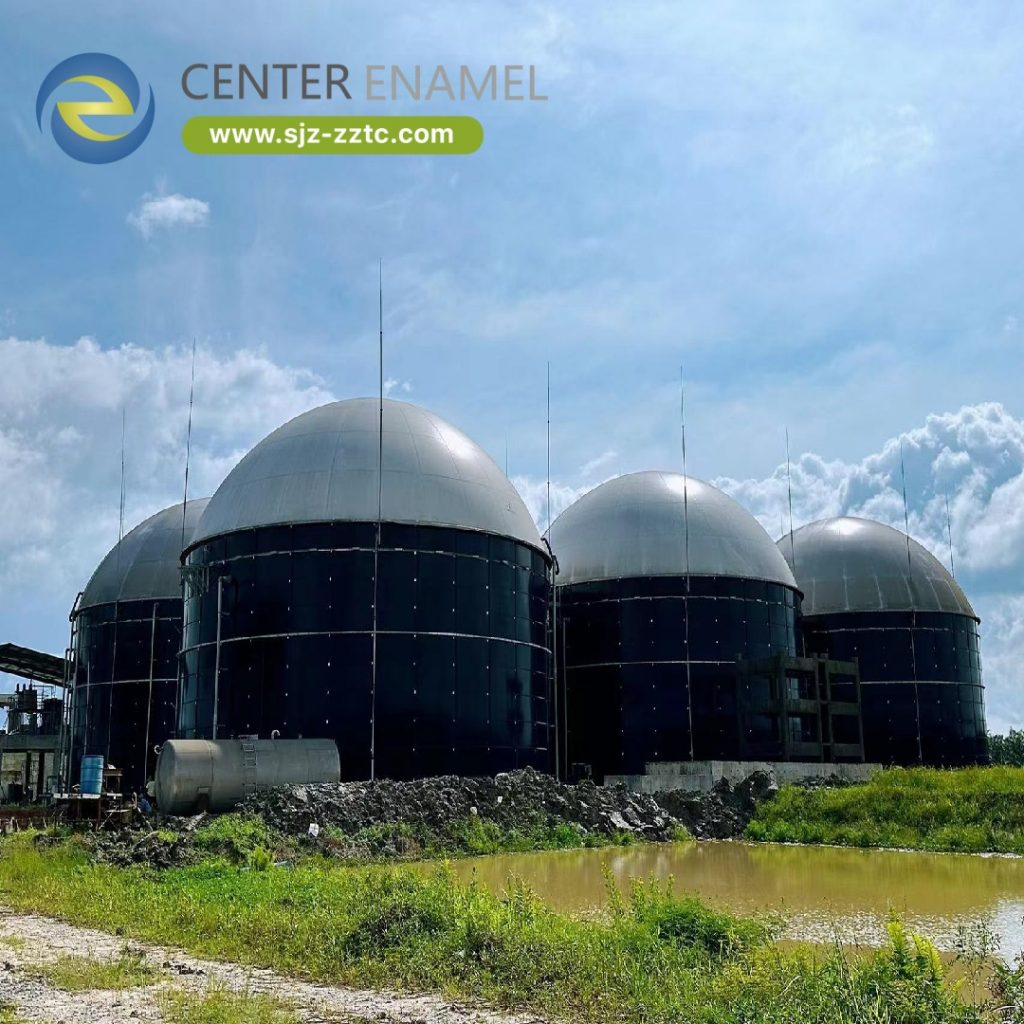
The challenge is significant. Sugar processing generates effluent that is characterized by high organic loads, with Chemical Oxygen Demand (COD) and Biochemical Oxygen Demand (BOD) values that can vary drastically during the crushing season. The presence of residual sugars, yeast, and high-temperature process water creates a volatile environment that can quickly degrade traditional concrete infrastructure. Shijiazhuang Zhengzhong Technology Co., Ltd, known globally as Center Enamel, enters this market as a provider of turnkey solutions. We do not just supply tanks; we engineer the entire infrastructure lifecycle to ensure that every Malaysia Sugar Industry Wastewater Treatment Project is compliant, durable, and profitable.
Specialized Anaerobic Processes: Engineering the Biological Heart
In a Malaysia Sugar Industry Wastewater Treatment Project, the selection of the biological process is the most critical decision. Center Enamel provides four world-class anaerobic technologies, each integrated into our superior Glass-Fused-to-Steel (GFS) tanks to handle the specific characteristics of sugar and agricultural waste.
1. UASB Process (Upflow Anaerobic Sludge Blanket)
The UASB Process is the global gold standard for Sugar Industry Wastewater Treatment.
Mechanism: Wastewater enters from the bottom and flows upward through a dense blanket of anaerobic granular sludge. The sugars are decomposed, and biogas is separated by a high-efficiency three-phase separator at the top.
Application: It is ideal for the medium-to-high COD levels found in sugar refinery effluent. Our GFS tanks provide the perfect smooth internal surface to prevent sludge adhesion, ensuring the "sludge blanket" remains active and stable.
2. IC Process (Internal Circulation)
The IC Process represents the next generation of high-rate anaerobic technology, essentially functioning as two UASB reactors stacked vertically.
Mechanism: It utilizes the "internal circulation" driven by the biogas produced in the first stage to create an intense mixing effect, allowing for much higher volumetric loading rates.
Application: For large-scale refineries in Johor or Perlis with extreme organic loads, the IC process offers a smaller footprint and effectively handles the "acidification" spikes common in sugar processing.
3. CSTR Process (Completely Stirred Tank Reactor)
The CSTR Process is designed for wastewater with high suspended solids (SS) or high viscosity, such as sugar beet pulp or thick cane molasses residue.
Mechanism: It utilizes mechanical stirring to ensure that the biomass and the influent are completely mixed.
Application: When a project involves the co-digestion of sugar waste with other agricultural byproducts like bagasse or filter mud, the CSTR prevents "dead zones" and ensures maximum biogas yield.
4. USR Process (Upflow Solids Reactor)
The USR Process is a simplified, high-efficiency system for high-solid organic waste.
Mechanism: Similar to UASB but optimized for waste with a high concentration of suspended organic solids. The solids stay in the reactor longer to ensure complete breakdown.
Application: It is highly effective for processing the "filter mud" and thick sludge generated during the juice clarification stage of sugar production.
Technical Foundation: Engineering Resilience for High-Load Sugar Effluent
The success of a Sugar Industry Wastewater Treatment facility in Malaysia is determined by the material science of its containment hardware. Center Enamel provides a multi-material containment strategy designed for 2026 industrial realities.
1. Glass-Fused-to-Steel (GFS) Tanks: The Bio-Chemical Fortress
Our flagship GFS tanks are the global standard for anaerobic reactors. By fusing high-tech glass enamel to specialized steel at temperatures exceeding 820 degrees Celsius, we create a surface that is chemically inert.
Acid and Temperature Resistance: The GFS coating is virtually immune to the volatile organic acids formed during the fermentation of sugar waste (pH 3 to 11).
Modular Construction: For the geography of Malaysia, our bolted design is a critical advantage. Components are prefabricated and shipped in standard containers, allowing for rapid assembly with minimal heavy machinery.
2. Fusion Bonded Epoxy (FBE) Tanks: Specialized Process Support
As a vital part of our turnkey solutions, Center Enamel Epoxy Coated Tanks provide an excellent solution for auxiliary stages like equalization, sedimentation, and treated water storage. Utilizing a high-specification electrostatic powder coating process, these tanks offer excellent resistance against industrial detergents.
3. Double Membrane Roof Systems: Energy Recovery from Waste
Center Enamel integrates high-performance Double Membrane Roof systems onto anaerobic digesters. These systems capture methane gas generated during the breakdown of high-COD sugar waste, allowing for the recovery of biogas that can be used to generate electricity or heat for the milling process, significantly lowering operational costs.
4. Aluminum Dome Roofs: Climate and UV Protection
For large-scale equalization basins or final polishing stages, Center Enamel provides specialized Aluminum Dome Roofs. These roofs are naturally resistant to the humid atmosphere and intense UV radiation of Malaysia, protecting the treatment process from heavy monsoon rains.
Engineering Advantage: Why Bolted Technology Defies Malaysia’s Monsoon Season
One of the primary challenges in executing a Malaysia Sugar Industry Wastewater Treatment Project is the tropical climate. Malaysia's high rainfall and humidity make traditional construction methods—such as field-welded steel or reinforced concrete—notoriously difficult to manage.
1. All-Weather Installation
Traditional field-welded tanks require dry conditions. In Malaysia, frequent afternoon squalls can halt welding for hours. Our bolted technology involves high-strength self-locking bolts and specialized sealants. Installation can continue during light rain and resume immediately after a storm, ensuring that the project timeline is maintained regardless of the monsoon.
2. Elimination of On-site Coating Risks
Concrete tanks require on-site waterproofing. High humidity often leads to poor adhesion. Center Enamel’s GFS coating is fused in a controlled factory environment. By the time the plates arrive in Malaysia, the protection is permanent and 100 percent immune to site-level humidity.
3. No Curing Time Required
Concrete basins require up to 28 days to cure. Our bolted tanks are "ready-to-fill" the moment the last bolt is torqued. This allows sugar mills to commission their treatment plants 30 percent to 50 percent faster than traditional methods, which is critical during the peak crushing season.
4. Minimal Heavy Equipment Dependency
Soft, rain-soaked soil in Malaysia makes the use of heavy cranes dangerous. Our modular plates are lightweight and typically installed using a "top-down" jacking system. This reduces the risk of heavy machinery sinking into mud
Global Project Excellence: Center Enamel Real-World Case Studies
The standing of Center Enamel as a global leader in turnkey solutions is validated by thousands of successful installations.
1. Malaysia Palm Oil Wastewater Treatment Project (Sandakan)
Project Location: Sandakan, Malaysia
Tank Quantity: 5 sets of Glass-Fused-to-Steel (GFS) tanks (Size: 18.33 meters diameter)
Status: Operational for over a decade.
Project Overview: This project demonstrates our long-term reliability in handling high-load agricultural wastewater in the Malaysian climate, resisting highly corrosive effluent for over 10 years without structural failure.
2. Coca-Cola Plant Wastewater Treatment Project in Malaysia
Project Location: Seremban, Malaysia
Tank Quantity: 2 sets of Glass-Fused-to-Steel (GFS) tanks (EGSB Reactor and Adjusting Tank)
Project Overview: Center Enamel provided high-specification reactors for this bottling plant. This project showcases our ability to deliver specialized GFS tanks for high-rate anaerobic processes (similar to the IC Process) in a tropical environment.
3. Malaysia Drinking Water Storage Project
Project Location: Malaysia
Tank Quantity: 3 sets of Glass-Fused-to-Steel (GFS) tanks (Total Capacity: 2,392 cubic meters)
Project Overview: Completed in January 2023, this project proves our ability to deliver NSF/ANSI 61 compliant infrastructure, demonstrating our precision in managing vital public utilities across the country.
4. Cangzhou Integrated Industrial Wastewater Cluster
Project Location: Cangzhou City, Hebei Province, China
Tank Quantity: 13 units of Glass-Fused-to-Steel (GFS) tanks.
Project Overview: This flagship project demonstrates our capacity to manage complex, multi-tank arrays as a Turnkey Contractor. Coordinating 13 GFS tanks for different treatment stages—including UASB and CSTR configurations—this case serves as a model for centralized industrial parks.
Operational Efficiency and Economic Analysis (ROI)
A Malaysia Sugar Industry Wastewater Treatment Project by Center Enamel is an investment that pays for itself through reduced operational expenditure (OPEX).
Energy Savings: Biogas recovery can offset up to 30 percent of a mill's thermal energy requirements. By capturing methane in our GFS reactors, mills can reduce reliance on external fuel.
Low Maintenance: GFS tanks require zero repainting over their decades lifespan. The non-porous glass surface prevents the buildup of organic scale, ensuring consistent performance.
Compliance Security: We guarantee that our turnkey designs meet or exceed Malaysia’s Standard A and B discharge limits, protecting the mill from regulatory fines.
Your Partner in Industrial Sustainability
The successful execution of an industrial sustainability strategy relies on the reliability, efficiency, and modularity of the Malaysia Sugar Industry Wastewater Treatment Project infrastructure. By selecting turnkey solutions from a specialized partner like Center Enamel, organizations secure a foundation of certified, modular, and durable infrastructure.
At Shijiazhuang Zhengzhong Technology Co., Ltd (Center Enamel), we are dedicated to providing the innovation and engineering excellence that make these projects a success. From our premier GFS tanks to our specialized Double Membrane Roofs, we offer a total containment solution designed for the future of Malaysia’s industrial sustainability.