
Why Is Chemical Wastewater Treatment Considered the Toughest Challenge in Industrial Wastewater Technology?
Industrial wastewater treatment today is defined by the "three highs"-high difficulty, high cost, and high energy consumption. Effluent from new energy, chemical, and pharmaceutical industries is complex in composition and loaded with characteristic pollutants that conventional processes struggle to remove effectively.
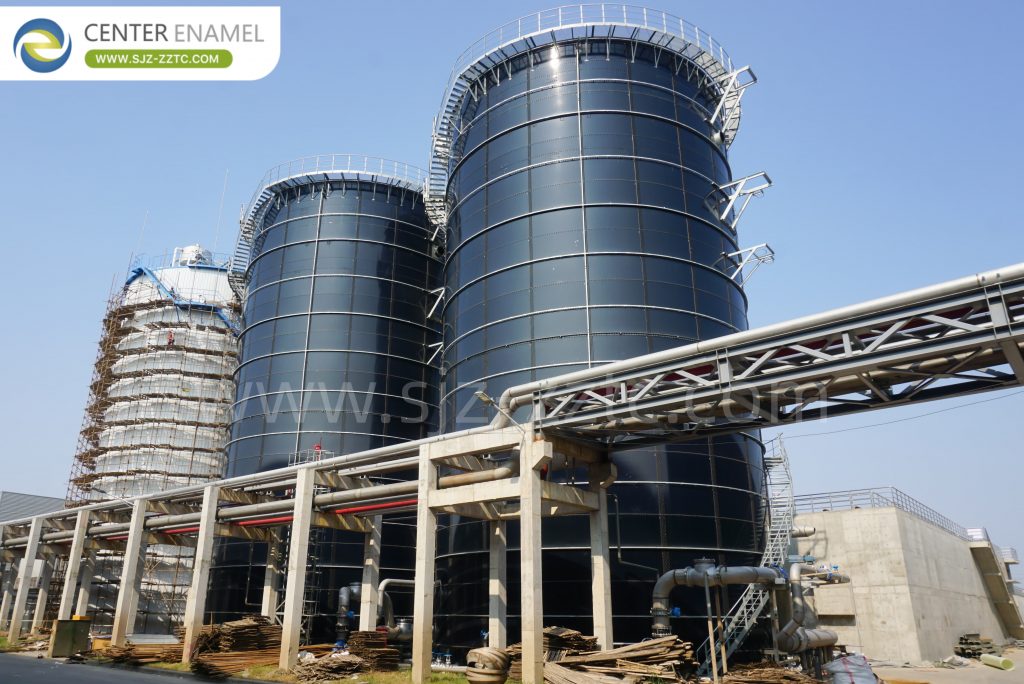
Chinese manufacturers hold significant price advantages in mid- to low-end equipment, yet the entire industry faces relentless pressure from tightening emission standards, alongside new demands for digitalization and low-carbon transformation that test operational refinement. Meeting these demands requires Wastewater Treatment Technology that is both compact and robust, and nowhere is that requirement more acute than in Chemical Wastewater Treatment, where pollutant toxicity, salinity, and load variability combine to defeat standard designs.
The Three Highs: Why Conventional Processes Fall Short
The core challenges of industrial wastewater treatment center on cost, difficulty, and energy intensity. Wastewater from new energy, chemical, and pharmaceutical industries contains numerous characteristic pollutants, and traditional treatment processes are difficult to remove them effectively. At the same time, increasingly stringent emission standards impose continuous technological upgrade pressure, while digitalization and low-carbon transformation add new requirements for operational refinement management. These pressures push plant owners toward treatment trains that occupy less land, consume less energy, and recover more resources-precisely the direction in which modern Wastewater Treatment Technology has evolved.
IC Process Advantages: Compact Footprint, Superior Efficiency
Among anaerobic configurations, the IC (Internal Circulation) reactor stands out for top-tier treatment efficiency, with a footprint only one-third that of traditional anaerobic processes for the same treatment capacity-a significant compactness advantage for space-constrained industrial sites. Its built-in gas-lift internal circulation requires no external recirculation equipment, achieving autonomous forced mixing of sludge and water. Strong hydraulic mixing ensures thorough microbe-pollutant contact, greatly improving degradation efficiency and withstanding high water quality and hydraulic shock loads. The dual-zone configuration combines high-efficiency degradation with deep polishing for stable effluent quality. The process achieves a high degree of sludge granulation, strong activity, and very low washout. Automation is high, operation is stable, failure rates are low, biogas production is large, and resource recovery benefits are outstanding. Long-term energy and O&M costs are far lower than traditional anaerobic processes, making the IC reactor suitable for large-flow, high-concentration industrial wastewater treatment-and a cornerstone of modern Chemical Wastewater Treatment design.
The Environmental Toxicity of Chemical Pollutants
Chemical wastewater carries the strongest environmental toxicity and highest ecological risk among all industrial wastewater types, with significant acute toxicity, chronic toxicity, and environmental persistence. Toxic organics such as benzene series, phenols, cyanides, and halogenated hydrocarbons at high concentrations are strongly inhibitory and lethal to aquatic organisms and microbial communities-even trace discharge can cause irreversible damage to aquatic ecosystems. Phenols and cyanides are highly toxic and directly lethal to aquatic life. Halogenated hydrocarbons and polycyclic aromatic hydrocarbons are persistent organic pollutants that are difficult to biodegrade, remaining in the environment for extended periods with bioaccumulation and carcinogenic, teratogenic, and mutagenic risks.
High-salinity discharge causes soil salinization and groundwater mineralization, damaging soil-water ecosystems. Heavy metal ions accumulate in sediments over the long term and magnify through the food chain, endangering human health. Some chemical wastewater contains endocrine disruptors that at trace levels can interfere with aquatic organism reproduction and development, with far-reaching and persistent ecological impacts. These realities explain why Chemical Wastewater Treatment demands corrosion-resistant tank materials, robust biological design, and rigorous containment at every stage.
R&D Strength and Global Certifications Behind the Technology
Technology R&D is Center Enamel's core competitive advantage, and it underpins every Wastewater Treatment Technology the company deploys. Center Enamel independently masters over 200 differentiated anti-corrosion enamel formulations, with full self-control over the enamel raw material chain, holding nearly 100 invention and utility patents. Products have passed NSF, WRAS, ASME, BSCI, CE, ISO9001, and other global certifications.
Company certifications and honors include National High-Tech Enterprise, National Specialized and Sophisticated "Little Giant," Hebei Manufacturing Single Champion, Provincial Smart Factory, and Provincial Green Factory, alongside complete environmental engineering and special equipment manufacturing compliance qualifications. The company maintains long-term collaborative research with multiple universities through joint materials laboratories, continuously iterating anti-corrosion coatings and large bolted tank structural design technologies. This proprietary material technology barrier creates an irreplaceable competitive advantage, with product performance comparable to high-end imported European and American storage equipment.
Full-Process Installation Quality Control and Field Team Capability
High-standard installation quality is demonstrated through long-term stable global project performance. Center Enamel has established full-chain quality control standards across four dimensions: factory protection, on-site assembly construction, completion inspection, and long-term warranty-ensuring quality control for every GFS tank.
At the factory stage, all enameled panels, seals, and structural components receive rust-proof and moisture-proof independent packaging with dedicated protective supports, preventing damage during sea and land transport and avoiding enamel coating damage. On-site construction strictly follows unified assembly process specifications-panel-by-panel tightening and leak testing in layers, with air-tightness and verticality testing after each tank section completion; dual-membrane covers and anaerobic piping undergo simultaneous pressure testing and acceptance.
Differentiated quality acceptance standards are customized for different regions, as summarized in the table below.
| Region | Acceptance Standard / Focus |
| EU / US projects | Stringent CE / NSF inspection criteria |
| Southeast Asia (hot humid) | Enhanced corrosion protection and sealing acceptance |
| Remote African sites | Additional foundation settlement re-inspection procedures |
Upon project completion, complete construction inspection reports, pressure test records, and anti-corrosion appearance acceptance documents are issued, with full photo and video archives retained. Over 10,000 tanks delivered globally have operated long-term without large-scale leakage or structural deformation, preventing future O&M issues at source.
The installation team brings practical experience from over 10,000 GFS tank projects globally, strictly following standardized construction procedures with full control over project mobilization, civil coordination, tank assembly, piping, and commissioning schedules and quality. The team is proficient in complete standardized installation processes for GFS tanks, dual-membrane gas storage covers, USR/CSTR/IC anaerobic reactors, and biogas desulfurization and piping systems, adaptable to large-scale farms, industrial parks, remote mountainous sites, coastal high-corrosion sites, and other complex locations, strictly implementing unified global safety construction standards. For large overseas cross-border projects, the team can be deployed as complete units for on-site construction, technical training, and local worker practical instruction, ensuring timely and stable commissioning of global environmental projects through standardized delivery capability.
Global Benchmark Project Footprint
Center Enamel's project portfolio spans over 100 countries across Southeast Asia, Africa, Europe, and the Americas, with 30,000+ mature projects. This experience has accumulated complete industry solutions across palm oil, livestock, municipal, brewing, and food waste biogas applications, enabling rapid matching of customized solutions for different regional climates, water quality, and regulations.
| Global Delivery Metric | Scale |
| Countries served | 100+ (Southeast Asia, Africa, Europe, Americas) |
| Mature projects delivered | 30,000+ |
| GFS tanks delivered | 10,000+ |
| Core industries served | Palm oil, livestock, municipal, brewing, food waste biogas |
| Patents held | Nearly 100 invention and utility patents |
| Enamel formulations | 200+ differentiated anti-corrosion formulas |
Frequently Asked Questions
What makes Chemical Wastewater Treatment more difficult than other industrial wastewater?
Chemical effluent combines high salinity, toxic organics, fluctuating pH, and poor biodegradability, which inhibit microbial activity. Successful treatment requires corrosion-resistant tanks, robust anaerobic technology, and often pretreatment.
Why choose IC reactor technology over traditional anaerobic processes?
The IC reactor uses one-third the footprint, requires no external recirculation, tolerates shock loads, and delivers lower long-term energy and O&M costs while producing more biogas.
How does Center Enamel ensure installation quality across different regions?
Factory-protected panels, layered leak and air-tightness testing, and region-specific acceptance standards-CE/NSF for EU/US, enhanced corrosion protection for humid Southeast Asia, and foundation re-inspection for remote African sites.
Looking for a proven partner to match the right Wastewater Treatment Technology to your effluent profile? Contact to Center Enamel's engineers for a tailored process recommendation. You are also welcome to request our global project portfolio to see how we have solved Chemical Wastewater Treatment challenges across more than 100 countries.