
How Can a China Brewing Wastewater Treatment Project EPC Contractor Deliver Efficient IC Process Solutions?
The global industrial wastewater treatment landscape is shifting decisively from construction-focused delivery to long-term operational performance, with the Asia-Pacific region-led by China-emerging as the largest market for industrial wastewater treatment and O&M services. Within this evolving context, breweries face a distinctive challenge: their effluent is rich in natural organic matter but demands reliable, energy-efficient treatment to meet increasingly stringent discharge standards. As a specialized China Brewing Wastewater Treatment Project EPC Contractor, Center Enamel addresses this challenge by integrating the IC Process into full-lifecycle project delivery, ensuring that breweries achieve both environmental compliance and operational cost control from day one.
Regional Market Dynamics Reshape Brewery Wastewater Strategies
Different regions approach brewery wastewater treatment with distinct priorities. North America concentrates on upgrading aging facilities, while Europe prioritizes high-value resource recovery technologies. The Middle East, constrained by water scarcity, demands advanced treatment and reuse capabilities. Southeast Asia’s manufacturing transfer drives new facility construction. Across these varied markets, one common thread emerges: the need for treatment solutions that are compact, robust, and capable of recovering energy from high-strength organic loads. The IC Process has become a preferred anaerobic technology precisely because it meets these criteria, and a capable China Brewing Wastewater Treatment Project EPC Contractor must tailor its delivery model to regional conditions while maintaining core process performance.
Why the IC Process Stands Out for Brewery Effluent
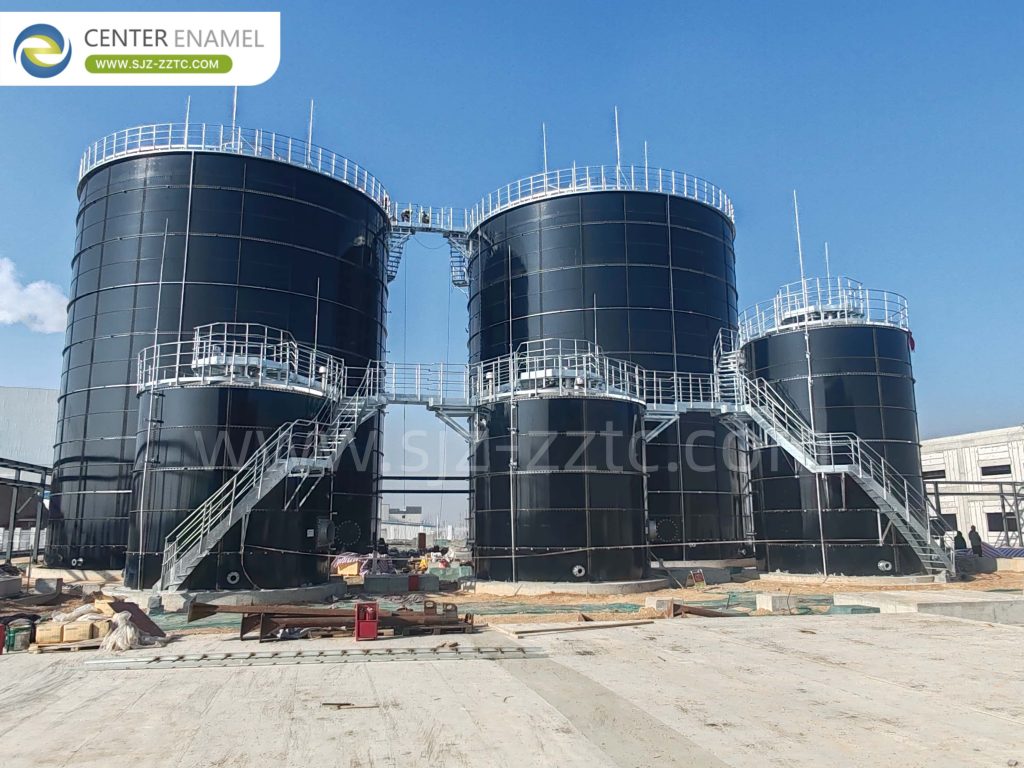
Brewery wastewater is characterized by high chemical oxygen demand, fluctuating hydraulic loads, and a composition dominated by sugars, starches, and alcohols-all readily biodegradable but requiring stable biological treatment to prevent oxygen depletion in receiving waters. The IC Process, or Internal Circulation Anaerobic Reactor, delivers top-tier treatment efficiency with a footprint only one-third that of traditional anaerobic systems for equivalent capacity. Its built-in gas-lift internal circulation eliminates the need for external recirculation equipment, achieving autonomous forced mixing of sludge and water. This strong hydraulic mixing ensures thorough contact between microorganisms and pollutants, greatly improving degradation efficiency while withstanding shock loads. The dual-zone configuration combines high-efficiency degradation with deep polishing, maintaining stable effluent quality. With high sludge granulation, low washout, and substantial biogas production, the IC Process offers long-term energy and O&M costs far below conventional alternatives-making it particularly suitable for large-flow, high-concentration brewery operations.
Project Performance Data: IC Process in Brewery Applications
The following table summarizes representative brewery wastewater treatment projects delivered by Center Enamel, demonstrating the operational reliability of IC Process systems across different scales and locations.
| Project Location | Process Configuration | Treatment Capacity | Key Performance Indicator |
| Chongqing, China (Jiangxiaobai Brewery) | IC reactor × 6 sets | 6,000 tons/day | Stable operation, full-scale brewery effluent treatment |
| Xinjiang Aksu, China | High-rise IC reactor (6.88 × 21 m) | 780 m³ total capacity | COD removal efficiency exceeding 70%, operational since 2024 |
These reference projects illustrate the scalability of IC Process deployment-from compact high-rise reactors suited to space-constrained sites to multi-unit configurations serving large-volume breweries. For prospective clients evaluating a China Brewing Wastewater Treatment Project EPC Contractor, such operational track records provide concrete evidence of delivery capability.
Installation Quality as the Foundation of Long-Term Performance
Process selection alone does not guarantee success; installation quality determines whether an IC Process system achieves its designed efficiency over a 20-to-30-year service life. Center Enamel has established full-chain quality control across four dimensions: factory protection, on-site assembly, completion inspection, and long-term warranty. All enameled panels, seals, and structural components receive rust-proof and moisture-proof independent packaging with dedicated protective supports, preventing damage during sea and land transport. On-site construction follows unified assembly specifications, with panel-by-panel tightening and layered leak testing, air-tightness and verticality verification after each tank section, and simultaneous pressure testing of dual-membrane covers and anaerobic piping. Differentiated acceptance standards are applied by region: EU and US projects follow CE/NSF criteria, Southeast Asian sites receive enhanced corrosion and sealing acceptance, and remote African locations include additional foundation settlement inspections. With over 10,000 tanks delivered globally operating without large-scale leakage or structural deformation, this quality framework directly reduces future O&M risks for brewery clients.
Brewery Effluent Toxicity Profile Supports Anaerobic Resource Recovery
A critical but often overlooked advantage of anaerobic treatment for brewery wastewater is the fundamentally benign nature of the pollutants involved. Brewery effluent contains no chemical toxicity-it is purely natural organic wastewater derived from grain fermentation, comprising starches, sugars, alcohols, amino acids, and proteins. It contains no heavy metals, bacteriostats, or persistent toxic organics that could inhibit biochemical bacteria or pose acute or chronic toxicity to soil, water, or plants. The core pollution issue is high-concentration oxygen-demanding organics, which if discharged untreated would rapidly deplete dissolved oxygen and cause black-odor conditions and algal blooms. Crucially, these pollutants have no bioaccumulation potential and are rapidly decomposed by microorganisms and natural water bodies, leaving no long-term persistent ecological harm. This characteristic makes brewery wastewater an ideal feedstock for anaerobic digestion, where the IC Process converts organic load into valuable biogas rather than treating it as a waste to be destroyed.
Global Biogas Project Validation: Data from Demonstration and Storage Applications
Beyond brewery-specific installations, Center Enamel’s anaerobic and gas storage infrastructure has been validated across diverse international projects. The following table presents key parameters from representative biogas-related projects, demonstrating the engineering foundation that supports IC Process reliability in brewery applications.
| Project | Location | Technology/Scope | Capacity/Volume | Status |
| Pakistan Food Waste + Napier Grass Biogas Demonstration | Pakistan | CSTR anaerobic process with mechanical mixing; food waste and Napier grass co-digestion | Daily biogas production of 100 m³ | Local official demonstration project validating gas production efficiency and long-term stability [file content] |
| Sweden Biogas Storage Project | Sweden | GFS tank for biogas storage | 5,504 m³ (φ19.11 m × 19.2 m) | Fully operational, supporting renewable energy infrastructure |
The Pakistan demonstration project confirms the operational stability of Center Enamel’s anaerobic process integration under mixed-feedstock conditions, while the Sweden project demonstrates the gas-tightness and corrosion resistance of GFS containment technology essential for biogas recovery. Together, these references reinforce the engineering credibility that a China Brewing Wastewater Treatment Project EPC Contractor must bring to brewery clients seeking both compliance and energy recovery.
Comprehensive EPC Delivery from a Single Source
Center Enamel operates as a China Brewing Wastewater Treatment Project EPC Contractor with integrated capabilities spanning process design, equipment manufacturing, installation, commissioning, and long-term service. The installation team brings practical experience from over 10,000 GFS tank projects globally, proficient in complete standardized processes for IC reactors, dual-membrane gas storage covers, and biogas desulfurization and piping systems. For large overseas brewery projects, the team can be deployed as complete units for on-site construction, technical training, and local worker instruction, maintaining full control over construction details, air-tightness testing, and corrosion protection. This standardized delivery capability ensures timely and stable commissioning regardless of whether the project is located in an industrial park, a remote site, or a coastal high-corrosion environment.
Frequently Asked Questions
What makes the IC Process suitable for brewery wastewater?
Brewery effluent contains high-strength organic matter that is readily biodegradable but would deplete oxygen if discharged untreated. The IC Process achieves high COD removal with a footprint one-third that of conventional anaerobic systems, while producing biogas that offsets operational energy costs.
Can Center Enamel handle projects outside China?
Yes. As a China Brewing Wastewater Treatment Project EPC Contractor, Center Enamel has delivered projects across Asia, Africa, Europe, and the Middle East, with installation teams deployable as complete units for overseas construction and commissioning.
What is the typical service life of the GFS tank used in IC reactors?
Center Enamel’s glass-fused-to-steel tanks are engineered for over 30 years of service life, with corrosion resistance to the organic acids present in brewery wastewater and gas-tight sealing to maximize biogas capture.
Ready to evaluate your brewery wastewater project with a contractor who understands both process efficiency and long-term operational reality? Share your project parameters with Center Enamel’s engineering team for a tailored IC Process assessment.
Contact us today to discuss how our EPC delivery model can reduce your brewery’s treatment footprint while maximizing biogas recovery-your project deserves a partner with proven global execution.