
How a China Dairy Wastewater Treatment Project EPC Contractor Applies Anaerobic Digestion
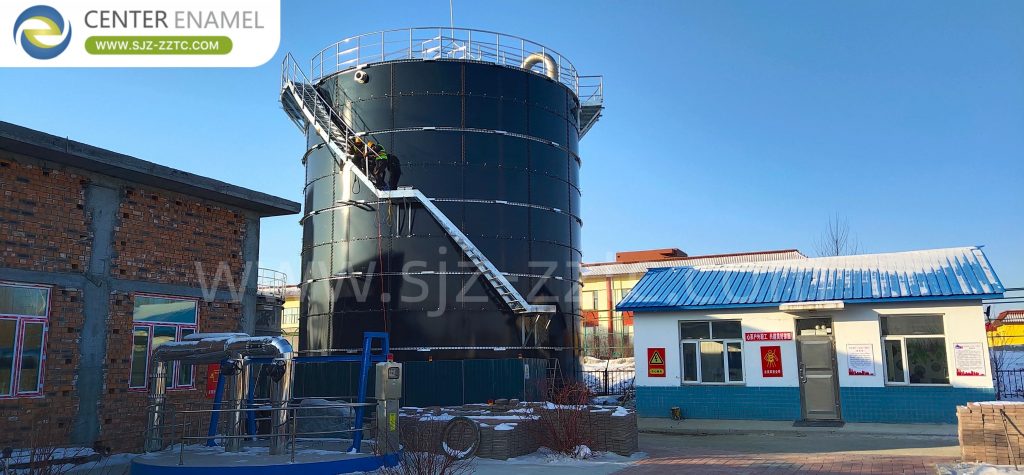
The anaerobic process segment has become the decisive battleground in high-strength industrial wastewater. UASB, EGSB, and IC anaerobic reactors, with advantages of high loading rates, small footprints, and stable operation, are widely used in high-concentration organic wastewater pretreatment in food processing, pharmaceutical fermentation, alcohol brewing, chemical, and other industries. These reactors use steel tank shells, and their corrosion resistance and gas-tightness directly determine long-term operational stability-which is why the application value of glass-fused-to-steel tanks in such scenarios is increasingly prominent. For dairy processors, selecting a China dairy wastewater treatment project EPC contractor with in-house control over both the reactor process and the tank shell is the surest route to reliable anaerobic digestion performance.
A Competitive Landscape That Rewards Integration
The competitive landscape shows divergence, with leading companies building integrated service capabilities through technical integration and capital operations, and industry concentration gradually increasing. Chinese companies continue to consolidate their advantages in mid-tier equipment exports. International giants target high-end customers and complex industrial wastewater markets, while local players occupy the mid- to low-end and industrial park centralized treatment markets with service responsiveness and cost advantages. For buyers, the practical implication is clear: the value of a contractor lies in how much of the chain-process design, enamel formulation, tank manufacturing, installation, and commissioning-sits inside one organization rather than being subcontracted outward.
Inside IC Process Advantages
The IC reactor's performance claims rest on specific engineering features. It delivers top-tier treatment efficiency, with a footprint only one-third that of traditional anaerobic processes for the same treatment capacity-a significant compactness advantage. The built-in gas-lift internal circulation requires no external recirculation equipment, with autonomous forced mixing of sludge and water. Strong hydraulic mixing ensures thorough microbe-pollutant contact, greatly improving degradation efficiency and withstanding high water quality and hydraulic shock loads. The dual-zone configuration combines high-efficiency degradation with deep polishing for stable effluent quality. It achieves high sludge granulation, strong activity, and very low washout. Automation is high, operation is stable, failure rates are low, biogas production is large, and resource recovery benefits are outstanding. Long-term energy and O&M costs are far lower than traditional anaerobic processes, making it suitable for large-flow, high-concentration industrial wastewater treatment.
What Dairy Pollutants Actually Do to Receiving Water
Understanding the pollutant profile shapes the treatment design. Dairy wastewater pollutants are entirely natural dairy components with no synthetic toxic chemicals-extremely low chemical toxicity and good environmental safety. Pollutants are natural organics-lactose, milk proteins, milk fats-containing no heavy metals, bacteriostats, or persistent organics, and no chemical toxicity to aquatic organisms or microorganisms. The core environmental risk is oxygen demand from high-concentration organics: high COD/BOD wastewater, if directly discharged, undergoes rapid aerobic decomposition, severely depleting dissolved oxygen and causing fish suffocation. Milk fats form surface oil films blocking oxygen exchange. Milk protein decomposition produces ammonia, contributing to eutrophication. Wastewater readily decomposes, producing odors and breeding bacteria and fly larvae-public health risks. Long-term discharge causes organic sediment deposition and black-odor conditions. Overall pollution is primarily oxygen-demanding organic pollution, with no chemical toxicity accumulation risks and rapid natural degradation and recovery. This profile is precisely what anaerobic digestion is designed to intercept before discharge.
Dairy Wastewater Pollutant Profile and Treatment Response
| Pollutant / Parameter | Environmental Behavior | Treatment Response |
| Lactose, milk proteins, milk fats | Natural organics, no heavy metals or persistent toxins | Readily anaerobically degraded; high biogas yield |
| High COD/BOD load | Rapid oxygen depletion in receiving water | Anaerobic digestion intercepts load before discharge |
| Milk fats | Surface oil films block oxygen exchange; scale on equipment | Oil separation and DAF pretreatment |
| Milk protein decomposition | Ammonia release contributes to eutrophication | Aerobic nitrogen removal stage |
| Readily decomposable organics | Odors, bacteria and fly larvae, public health risk | Equalization, sealed tanks, and timely treatment |
Tank Shells That Survive Extreme Conditions
Because anaerobic reactors use steel tank shells, corrosion resistance and gas-tightness determine long-term stability-and site conditions determine whether those properties hold. GFS tanks can undergo customized wind and seismic design based on project site climate and geological conditions, with environmental adaptability far superior to concrete tanks. Concrete tanks are cast-in-place monolithic structures, with seismic and wind resistance entirely dependent on on-site construction quality. In remote areas, typhoon-prone zones, and earthquake belts, construction quality is difficult to control. Under strong earthquakes or typhoons, concrete tanks are prone to cracking and base settlement damage, with subsequent reinforcement costs equivalent to rebuilding. GFS tanks collect local seismic intensity, maximum wind pressure, and foundation bearing capacity data before construction, with customized thickened steel panels, stiffening ribs, and anchored base components-all factory-prefabricated to standardized specifications. The bolted panel structure has excellent stress distribution capability, making it less prone to overall fracture under seismic and typhoon impacts, and minor foundation settlement will not cause through-cracking.
R&D Depth and Certifications That Clear Tender Barriers
Technology R&D is Center Enamel's core competitive advantage. The company independently masters over 200 differentiated anti-corrosion enamel formulations, with full self-control over the enamel raw material chain, holding nearly 100 invention and utility patents. Products have passed NSF, WRAS, ASME, BSCI, CE, ISO9001, and other global certifications. Company certifications and honors include National High-Tech Enterprise, National Specialized and Sophisticated "Little Giant," Hebei Manufacturing Single Champion, Provincial Smart Factory, and Provincial Green Factory, alongside complete environmental engineering and special equipment manufacturing compliance qualifications. The company maintains long-term collaborative research with multiple universities through joint materials laboratories, continuously iterating anti-corrosion coatings and large bolted tank structural design technologies. This proprietary material technology barrier creates an irreplaceable competitive advantage, with product performance comparable to high-end imported European and American storage equipment.
Certifications, Honors, and Delivery Track Record
| Category | Credentials / Record | Market Value |
| Product certifications | NSF, WRAS, ASME, BSCI, CE, ISO9001 | Clears EU, North American, and international tender requirements |
| Enterprise honors | National High-Tech Enterprise, National "Little Giant," Hebei Manufacturing Single Champion, Provincial Smart Factory, Provincial Green Factory | Verifies manufacturing and R&D standing |
| Installation experience | Over 10,000 GFS tank projects globally | Proven standardized construction delivery |
| Process scope | GFS tanks, dual-membrane gas storage covers, USR/CSTR/IC anaerobic reactors, biogas desulfurization and piping | Full anaerobic digestion system capability |
Construction Teams That Deliver Anywhere
The installation team has practical experience from over 10,000 GFS tank projects globally, strictly following standardized construction procedures-full control over project mobilization, civil coordination, tank assembly, piping, and commissioning schedules and quality. The team is proficient in complete standardized installation processes for GFS tanks, dual-membrane gas storage covers, USR/CSTR/IC anaerobic reactors, and biogas desulfurization and piping systems-adaptable to large-scale farms, industrial parks, remote mountainous sites, coastal high-corrosion sites, and other complex locations-strictly implementing unified global safety construction standards. For large overseas cross-border projects, the team can be deployed as complete units for on-site construction, technical training, and local worker practical instruction-full control over construction details, airtightness testing, and corrosion protection-ensuring timely and stable commissioning of global environmental projects through standardized delivery capability.
Matching the Right Roof to Each Tank Duty
Not every tank in a dairy wastewater treatment project requires gas-tight sealing. The Aluminum Alloy Trough Deck Roof is a cost-effective economical tank cover solution for clean water and wastewater storage scenarios, primarily designed for drinking water, production wastewater, and firewater reserve tanks, balancing practicality and cost advantages. The main body is integrally formed from anti-corrosion aluminum alloy plates, paired with aluminum support trusses. Its lightweight design imposes less load on the tank foundation, reducing civil construction investment.
A naturally formed dense oxide protective layer on the surface resists rain and mild wastewater corrosion, withstands outdoor sun and rain exposure, and effectively blocks wind, rain, insects, fallen leaves, and odor volatilization, protecting water quality by preventing dust and debris from falling in and causing secondary contamination. The flat roof structure is neat and orderly, allowing installation of maintenance walkways, guardrails, vents, and level monitoring ports on top, facilitating daily inspection and equipment maintenance. The simple sealing structure enables straightforward installation with short construction timelines and virtually eliminates the need for anti-corrosion painting maintenance, resulting in extremely low operational costs. It is suitable for various small, medium, and large atmospheric pressure water storage tanks, and has been widely implemented in waterworks clear water tanks, industrial circulating water tanks, park firewater tanks, and domestic wastewater temporary storage facilities-highly compatible with water storage applications that do not require biogas collection or high-pressure sealing.
Frequently Asked Questions
Why choose a China-based EPC contractor for dairy wastewater treatment?
Chinese contractors combine mid-tier equipment cost advantages with full in-house control of enamel formulation, tank manufacturing, and IC reactor delivery-backed by NSF, WRAS, CE, and ASME certifications.
What makes anaerobic digestion suitable for dairy effluent?
Lactose, milk proteins, and milk fats are natural, readily degradable organics with no persistent toxins, producing high biogas yields and significant energy recovery.
Can GFS tanks handle earthquake and typhoon zones?
Yes. Site seismic intensity, wind pressure, and bearing capacity data drive customized panels, ribs, and anchored bases-all factory-fabricated for consistent quality.
Send our team your dairy plant's flow rate, COD and fat load, and site conditions for a preliminary anaerobic digestion and tank configuration review.
Partner with Center Enamel as your China dairy wastewater treatment project EPC contractor and let one accountable team take your project from process design through commissioning.