
How China Industrial Wastewater Treatment Project EPC Contractor Manages Complex Chemical Effluent?
The industrial wastewater landscape is defined by stark divergence. Leading firms consolidate integrated service capabilities through technical integration and capital operations, while industry concentration steadily increases. International giants target high-end customers and complex industrial wastewater markets, whereas local players occupy mid-to-low-end and industrial park centralized treatment markets through service responsiveness and cost advantages.
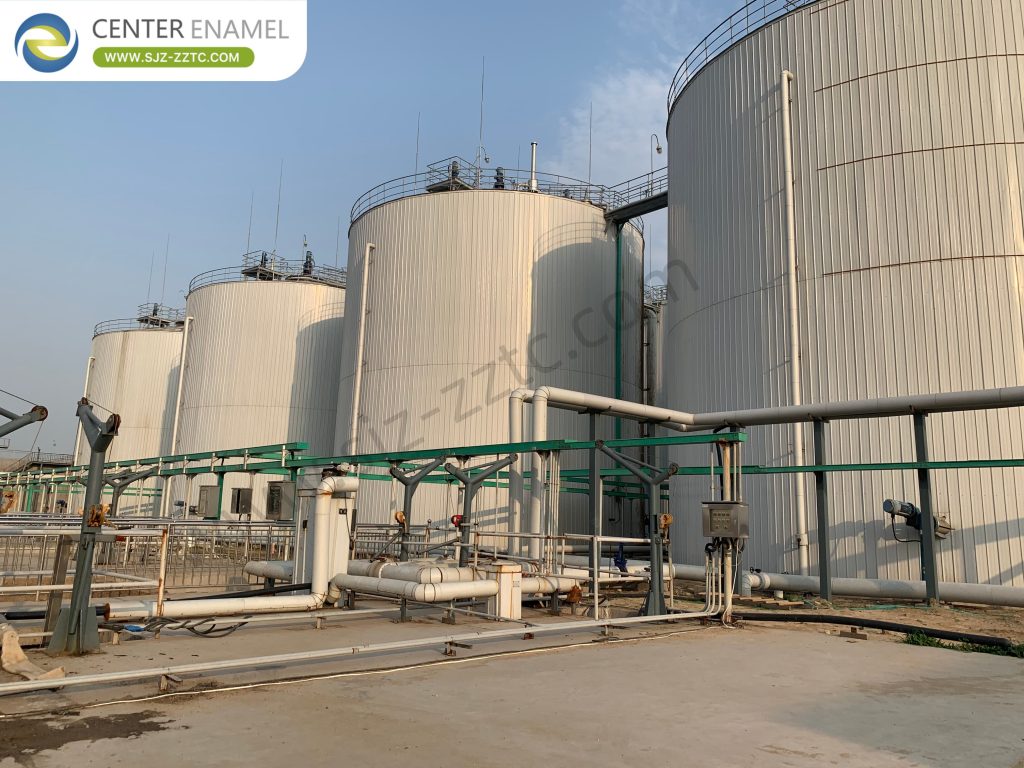
Within this competitive framework, the anaerobic process segment-particularly UASB, EGSB, and IC reactors-has become indispensable for high-concentration organic wastewater pretreatment across food processing, pharmaceutical fermentation, alcohol brewing, and chemical industries. These reactors rely on steel tank shells whose corrosion resistance and gas-tightness directly determine long-term operational stability.
This is precisely where a specialized China Industrial Wastewater Treatment Project EPC Contractor like Center Enamel creates measurable value. By integrating the IC Process with glass-fused-to-steel tank technology, we deliver containment and biological treatment as a single, performance-guaranteed system rather than fragmented components from multiple vendors.
The IC Process: Core Anaerobic Technology for High-Strength Industrial Wastewater
The IC Process-Internal Circulation anaerobic reactor-stands as the preferred anaerobic technology for modern high-efficiency industrial wastewater treatment. It is engineered primarily for high-concentration, high-flow soluble industrial organic wastewater, covering brewery, beverage, starch, pharmaceutical, chemical, and papermaking high-strength streams. The process excels in land-constrained projects with high treatment efficiency requirements in large industrial wastewater treatment facilities, and it serves as the primary process for high-strength wastewater with rapid COD/BOD removal. It is particularly suited for centralized industrial park WWTPs and large enterprise proprietary treatment systems handling wastewater with significant quality fluctuations and extremely high pollutant concentrations. Notably, the IC Process is not suitable for high-solids, high-viscosity wastewater.
Within the reactor, pretreated high-strength organic wastewater enters the lower main reaction zone from the bottom, mixing with recirculated sludge-water mixture and rising rapidly. Anaerobic microorganisms degrade organic matter efficiently, producing large volumes of biogas. The gas-lift action of that biogas carries the mixed liquor upward to the top gas-liquid separator, where biogas is collected. The degassed sludge-water mixture then returns by gravity through downcomers to the reactor bottom, creating autonomous internal circulation that repeatedly enhances pollutant degradation. After multiple circulation cycles, the wastewater enters the upper polishing zone for further reaction and sludge-water separation. Remaining trace organics are fully degraded, sludge settles back to the lower reaction zone, treated effluent overflows from the top, and aged sludge is periodically discharged. The result is fully autonomous circulation and efficient continuous operation-high-rate treatment that shrinks footprint, energy demand, and operator intervention simultaneously .
Chemical Wastewater: The Most Demanding Operating Environment
Chemical wastewater operation and maintenance costs rank among the highest of all wastewater types, with poor overall economic viability second only to pharmaceutical wastewater. Strong toxicity and high salinity require extensive segregated pretreatment equipment-high capital investment and complex operation. Advanced oxidation demands continuous addition of expensive chemicals such as hydrogen peroxide, ozone, and catalysts, driving chemical costs to extreme levels. High-salinity wastewater evaporation crystallization and reverse osmosis membrane treatment consume enormous energy, making electricity and steam costs significant. Salt-bearing and toxic sludge is classified as hazardous waste with high compliance disposal costs-disposal alone can account for over 30% of total costs. Equipment in high-salt, highly corrosive, strong oxidizing environments suffers frequent corrosion damage with high repair and replacement costs, requiring premium corrosion protection. Frequent water quality fluctuations demand dedicated 24/7 monitoring and adjustment, resulting in high labor costs. Resource recovery benefits are minimal, and overall investment far exceeds returns-making chemical wastewater one of the highest economic burdens in industrial wastewater treatment.
For a China Industrial Wastewater Treatment Project EPC Contractor, these conditions dictate both material selection and process configuration. Center Enamel’s response integrates the IC Process with GFS tanks engineered specifically for this duty.
GFS Tanks: Engineered Containment for Corrosive Chemical Streams
Anaerobic performance is only as durable as the tank that contains it-and chemical wastewater is merciless on tank materials. Center Enamel has independently developed over 200 specialized enamel frit formulations and supporting patents, enabling anti-corrosion enamel to be customized for the exact media a customer stores. This adaptability is comprehensively superior to concrete tanks, which use a single material suited mainly to neutral clean water. When storing corrosive materials such as chemical wastewater or high-salinity streams, concrete tanks require additional anti-corrosion linings-linings that are prone to failure and cannot adapt to alternating high and low concentration storage conditions .
GFS tanks can be specifically formulated for the full chemical wastewater profile-strong acids, strong alkalis, high organic content, and high salinity-and a single tank can switch between multiple wastewater and fermentation feedstock storage requirements. Because they are universally applicable across biogas anaerobic digestion, municipal wastewater, food processing, and industrial water treatment, factories eliminate the need to rebuild tanks when media change, perfectly meeting the needs of diversified, multi-condition environmental protection projects.
Table 1: GFS Tanks vs. Concrete Tanks for Chemical Wastewater Containment
| Comparison Point | GFS Tanks | Concrete Tanks |
| Corrosion resistance | Specialized enamels resist strong acids, strong alkalis, high organics, high salinity | Requires anti-corrosion linings for corrosive media; linings prone to failure |
| Application scope | Biogas, municipal, livestock, food processing, industrial | Limited to clean and neutral water storage |
| Media adaptability | Single tank can switch between multiple wastewater types | Cannot adapt to alternating high/low concentration conditions |
| Long-term stability | Inert glass surface; no leaching or contamination | Lining degradation compromises operational stability |
Proven Delivery: South Africa Brewery High-Strength Wastewater Treatment
The practical application of this integrated approach is demonstrated in Center Enamel’s South Africa Brewery High-Strength Wastewater Treatment Project. Focusing on high-concentration organic wastewater treatment in South Africa’s brewing industry, the project features both Center Enamel GFS tanks and stainless steel tanks as core equipment. GFS tanks serve as the primary anaerobic digestion system, suited to brewery wastewater’s high-COD, high-sugar, readily decomposable characteristics for efficient organic pollutant degradation. Stainless steel tanks are used for wastewater transfer and chemical storage supporting processes. The complete equipment package delivers excellent corrosion resistance and flexible assembly, providing long-term stable treatment of brewery production and cleaning wastewater-solving local brewing industry pollution challenges. This stands as a mature brewery wastewater treatment case in Africa.
Table 2: South Africa Brewery Project Equipment Configuration
| Equipment Type | Primary Function | Key Performance Requirement |
| GFS Tanks | Primary anaerobic digestion system | High-COD/high-sugar degradation; corrosion resistance; gas-tightness |
| Stainless Steel Tanks | Wastewater transfer and chemical storage | Chemical compatibility; structural integrity |
| Complete Package | Production and cleaning wastewater treatment | Flexible assembly; long-term operational stability |
Global Delivery Capability and After-Sales Support
Center Enamel is the pioneer of Chinese GFS equipment exports, with installation service coverage across over 100 countries and regions-possessing full delivery capability across climates, regulations, and geographies. Overseas coverage includes Southeast Asia (Vietnam, Thailand, Malaysia, Indonesia, Cambodia, Bangladesh, Nepal), Africa (Ghana, South Africa, Mali, Guinea, Zambia, Kenya, Pakistan), Europe and the Americas (Sweden, USA, Russia), the Middle East, and Latin America-adaptable to tropical rainy high-salt spray, high-altitude mountainous, Nordic severe cold, and high-standard European/American facility conditions. The company operates a dual-service model of “own cross-border construction teams + overseas local agent coordination,” providing one-stop services including on-site survey, on-site installation, process commissioning, and operator training regardless of whether clients are in developed countries or remote developing regions.
The after-sales team adheres to service principles of rapid response, professional efficiency, and full-cycle support, providing 24/7 full-lifecycle O&M support to global clients. Standard remote services include fault diagnosis, process parameter adjustment, and tank anti-corrosion maintenance guidance. For domestic and long-distance overseas clients, overseas technical service personnel can be dispatched for on-site inspection, annual inspection, and equipment refurbishment as needed. The team maintains long-term client feedback tracking mechanisms, regularly collecting tank and anaerobic equipment operational data to continuously optimize product structure and support processes.
FRP Roof Cover: Economical Solution for Non-Pressurized Storage
For atmospheric pressure storage tanks without air-tightness requirements, the FRP Roof Cover provides a general-purpose economical solution suitable for drinking water storage, agricultural irrigation water, firewater reserve, and general production wastewater temporary storage. Available in flat and dome styles, the roof is integrally molded from resin and fiberglass-lightweight, with natural water resistance and mild acid/alkali corrosion resistance. It will not rust or rot in long-term humid environments, eliminating the frequent anti-corrosion maintenance required for metal roofs. The dome style features excellent drainage performance due to its curved structure, resisting water accumulation, dust buildup, snow load, and strong winds. The flat style facilitates installation of maintenance walkways, level gauges, and vents on top. The product is fully insulated with no risk of galvanic corrosion, will not contaminate drinking water quality, and meets environmental standards for domestic water storage. The modular design with low individual component weight allows for simple on-site hoisting and assembly. It is only suitable for atmospheric pressure water storage tanks without biogas collection or pressurization requirements, and is not recommended for anaerobic fermentation gas-producing conditions.
Why Center Enamel as Your China Industrial Wastewater Treatment Project EPC Contractor
Selecting a China Industrial Wastewater Treatment Project EPC Contractor is a strategic decision that determines whether a facility achieves compliance, operational stability, and long-term cost control. Center Enamel operates on a single point of responsibility model, contractually guaranteeing that the final treatment system meets discharge limits while eliminating client exposure to inter-vendor failures, budget overruns, and scheduling delays. The IC Process and GFS tank integration is not a catalog offering-it is an engineered system where biological performance and containment durability are designed together, validated together, and guaranteed together.
For complex chemical wastewater-where corrosion, toxicity, salinity, and load fluctuations converge-this integrated EPC approach is not merely advantageous. It is essential.
Frequently Asked Questions
Q: What makes the IC Process suitable for chemical wastewater?
The IC Process handles high-concentration, high-flow soluble organic wastewater with rapid COD/BOD removal and a compact footprint. Its internal circulation delivers stable performance under significant quality fluctuations, making it ideal for chemical streams that vary in strength and composition.
Q: Why specify GFS tanks instead of concrete for corrosive chemical wastewater?
GFS tanks use customized enamel formulations that resist strong acids, alkalis, high salinity, and high organics. Unlike concrete, which requires linings prone to failure, GFS provides a single inert surface that adapts to changing media without rebuilding.
Q: Does Center Enamel provide installation and after-sales support outside China?
Yes. With installation coverage across 100+ countries and a dual-service model combining cross-border construction teams with local agent coordination, Center Enamel delivers on-site installation, commissioning, operator training, and 24/7 remote and dispatched after-sales support globally.
Ready to discuss your chemical wastewater project? Contact Center Enamel today for a tailored EPC solution that integrates the IC Process with corrosion-proof GFS containment-engineered for your specific effluent profile and discharge requirements.
Our engineering team is available to review your project parameters and recommend the optimal configuration. Reach out to Center Enamel and let us demonstrate why we are the trusted China Industrial Wastewater Treatment Project EPC Contractor for complex industrial streams worldwide.