
Complete CBG Plant EPC Solutions with Durable GFS Tanks for Global Biogas Projects
The global livestock industry faces unprecedented regulatory pressure to manage manure sustainably while recovering valuable energy and nutrients. As governments worldwide tighten environmental standards through comprehensive nutrient management frameworks, the demand for reliable, turnkey treatment infrastructure has surged. CBG Plant EPC Solutions (Compressed Biogas Plant Engineering, Procurement, and Construction) provide integrated project delivery that transforms organic waste into renewable energy assets. At the core of these systems, GFS Tanks deliver the corrosion-resistant, long-lasting containment essential for stable anaerobic digestion across diverse waste streams and climatic conditions.
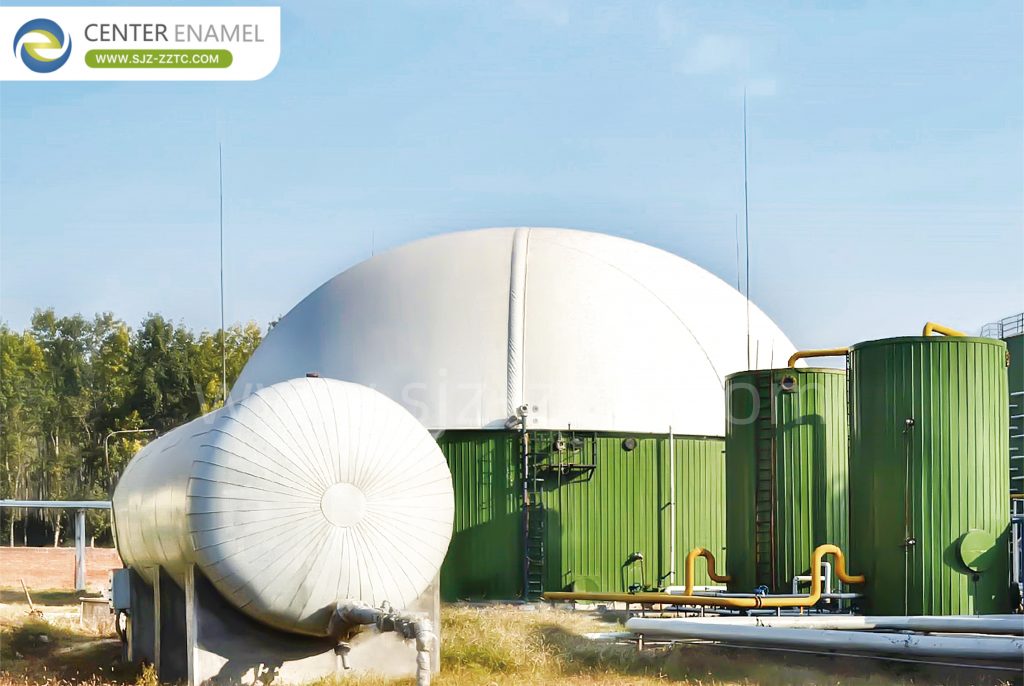
Global Policy Framework: Driving the Transition to Nutrient Management
The global livestock manure treatment policy system, with the US and EU as typical representatives, is shifting from end-of-pipe treatment to full-process nutrient management. The US establishes a manure management framework covering the entire livestock production process through Comprehensive Nutrient Management Plans. The EU, through the Nitrates Directive, strictly limits manure application amounts, with Germany and the Netherlands using tax instruments to mandate nitrogen and phosphorus recovery rates, and Denmark demonstrating distinctive features in livestock regulation and ecological compensation. The Netherlands uses a management mechanism linking manure treatment with phosphate quotas. China has issued a series of environmental regulations, with the current legal system providing comprehensive regulation of pollution from large-scale livestock operations.
These evolving regulatory frameworks create substantial opportunities for specialized CBG Plant EPC Solutions providers who can navigate complex compliance requirements while delivering cost-effective treatment systems. The integration of GFS Tanks within anaerobic digestion trains has become a preferred engineering approach, offering both environmental compliance and economic returns through biogas recovery and nutrient recycling-making it the cornerstone of modern CBG plant design worldwide.
UASB Process Advantages: High-Efficiency Anaerobic Treatment
No mechanical mixing equipment is required, with sludge suspension achieved through hydraulic action, resulting in very low overall energy consumption. High-concentration anaerobic granular sludge can be cultivated, with high sludge concentration, strong activity, excellent settleability, low sludge washout, and low sludge yield, significantly reducing sludge disposal costs. The integrated design combines reaction, sedimentation, and separation simultaneously, with small footprint and moderate capital investment. Simple structure with low failure rates and convenient maintenance. High volumetric loading rate with excellent organic pollutant degradation efficiency and good shock load resistance. Stable biogas production with high resource recovery value. The process is mature and widely adopted, with well-established construction, commissioning, and O&M systems, suitable for large-scale industrial wastewater treatment.
For any CBG Plant EPC Solutions provider, mastering advanced anaerobic processes is essential to delivering reliable treatment performance. When paired with GFS Tanks engineered for aggressive biogas environments, the UASB process achieves COD removal exceeding 80% while generating methane-rich biogas suitable for compression and grid injection-making it the preferred choice for CBG plants treating livestock, POME, and food processing waste streams.
Livestock Wastewater Environmental Toxicity Profile
No synthetic chemical toxicity, no hazardous substances-very low risk of acute or chronic toxicity. Pollution impacts are primarily biological and nutrient pollution. All pollutants are natural organics from livestock metabolites and feed residues, with no inhibition of microbial activity and no toxicity to soil, water, or aquatic organisms. However, they are rich in nitrogen, phosphorus, and suspended impurities, carrying E. coli, parasite eggs, and pathogens. Direct discharge without treatment rapidly causes eutrophication, black-odor conditions, mosquito breeding, and disease transmission. Long-term discharge causes soil compaction and elevated nutrient levels in groundwater-persistent ecological pollution, but no hazardous substance accumulation or carcinogenic/mutagenic risks.
Understanding this toxicity profile reinforces why anaerobic digestion within GFS Tanks is the preferred treatment pathway for livestock waste. A well-designed CBG plant effectively neutralizes biological risks while creating economic value-turning a pollution liability into a renewable energy asset. CBG Plant EPC Solutions that incorporate robust pretreatment, high-rate anaerobic reactors, and biogas upgrading systems address both environmental and energy recovery objectives simultaneously.
Center Enamel's Core R&D Capabilities and Global Authoritative Certifications
Technology R&D is Center Enamel's core competitive advantage. The company independently masters over 200 differentiated anti-corrosion enamel formulations, with full self-control over the enamel raw material chain, holding nearly 100 invention and utility patents. Products have passed NSF, WRAS, ASME, BSCI, CE, ISO9001, and other global certifications.
Company certifications and honors include: National High-Tech Enterprise, National Specialized and Sophisticated "Little Giant," Hebei Manufacturing Single Champion, Provincial Smart Factory, Provincial Green Factory; complete environmental engineering and special equipment manufacturing compliance qualifications. The company maintains long-term collaborative research with multiple universities through joint materials laboratories-continuously iterating anti-corrosion coatings and large bolted tank structural design technologies. The proprietary material technology barrier creates an irreplaceable competitive advantage, with product performance comparable to high-end imported European/American storage equipment.
This R&D excellence directly benefits clients engaging Center Enamel for CBG Plant EPC Solutions. The proprietary enamel formulations ensure that GFS Tanks withstand the aggressive acidic, high-sulfide environments common in CBG applications, while certifications across major global markets facilitate rapid project approval and regulatory acceptance-reducing timeline risks and ensuring bankable project delivery.
Full-Process Standardized Installation Quality Control
Demonstrating high-standard installation quality through long-term stable global project performance, Center Enamel has established full-chain quality control standards across four dimensions: factory protection, on-site assembly construction, completion inspection, and long-term warranty-ensuring quality control for every GFS tank.
At the factory stage, all enameled panels, seals, and structural components receive rust-proof and moisture-proof independent packaging with dedicated protective supports-preventing damage during sea and land transport and avoiding enamel coating damage. On-site construction strictly follows unified assembly process specifications-panel by panel tightening and leak testing in layers, with air-tightness and verticality testing after each tank section completion-dual-membrane covers and anaerobic piping undergo simultaneous pressure testing and acceptance.
Differentiated quality acceptance standards are customized for different regions: EU/US projects follow stringent CE/NSF inspection criteria; Southeast Asian hot humid regions receive enhanced corrosion protection and sealing acceptance; remote African sites have additional foundation settlement re-inspection procedures. Upon project completion, complete construction inspection reports, pressure test records, and anti-corrosion appearance acceptance documents are issued, with full photo/video archives retained. Over 10,000 tanks delivered globally have operated long-term without large-scale leakage or structural deformation-preventing future O&M issues at source.
This rigorous quality control framework is the hallmark of reliable CBG Plant EPC Solutions delivery. Every GFS Tanks installation-whether for a small farm digester or a large industrial CBG facility-undergoes the same standardized inspection protocols, ensuring consistent quality across all geographies and applications.
Installation and Construction Team: Global Expertise, Local Delivery
The installation team has practical experience from over 10,000 GFS tank projects globally, strictly following standardized construction procedures-full control over project mobilization, civil coordination, tank assembly, piping, and commissioning schedules and quality.
The team is proficient in complete standardized installation processes for GFS Tanks, dual-membrane gas storage covers, USR/CSTR/IC anaerobic reactors, and biogas desulfurization/piping systems-adaptable to large-scale farms, industrial parks, remote mountainous sites, coastal high-corrosion sites, and other complex locations-strictly implementing unified global safety construction standards. For large overseas cross-border projects, the team can be deployed as complete units for on-site construction, technical training, and local worker practical instruction-full control over construction details, air-tightness testing, and corrosion protection-ensuring timely and stable commissioning of global environmental projects through standardized delivery capability.
The combination of world-class GFS Tanks with an experienced global installation force ensures that every CBG Plant EPC Solutions project, regardless of location, achieves rapid deployment and dependable performance. This integrated approach reduces the risk of construction delays, quality issues, and operational inefficiencies that often plague large-scale infrastructure projects in remote or challenging environments.
Center Enamel's Extensive Global Benchmark Project Cases
Center Enamel's project portfolio covers over 100 countries across Southeast Asia, Africa, Europe, and the Americas-30,000+ mature projects-accumulating complete industry solutions across palm oil, livestock, municipal, brewing, and food waste biogas-rapidly matching customized solutions for different regional climates, water quality, and regulations.
This vast experience base enables Center Enamel to provide tailored CBG Plant EPC Solutions that optimize performance for specific waste streams and energy recovery goals. Whether deploying GFS Tanks for high-solids digestion, low-temperature adaptation, or saline wastewater treatment, the company's engineering team draws upon proven global best practices to ensure project success from initial design through long-term operation.
Frequently Asked Questions
Q1: What is included in a CBG Plant EPC Solution from Center Enamel?
Center Enamel provides complete turnkey CBG Plant EPC Solutions including feasibility studies, process design, equipment manufacturing (GFS Tanks, anaerobic reactors, gas systems), civil coordination, installation, commissioning, and O&M training. Single-point accountability reduces client coordination costs and ensures seamless project execution across all phases.
Q2: Why are GFS Tanks essential for CBG plant applications?
GFS Tanks offer exceptional corrosion resistance to acidic biogas environments, high hydrogen sulfide, and ammonia. Their modular bolted construction enables rapid installation (40-60 days) and future expansion without demolition. With a 30-year design life and minimal maintenance, they deliver significantly lower lifecycle costs than concrete or carbon steel alternatives.
Q3: What quality certifications does Center Enamel hold for global projects?
Center Enamel holds NSF, WRAS, ASME, BSCI, CE, and ISO9001 certifications, along with National High-Tech Enterprise and Provincial Green Factory status. Over 200 proprietary enamel formulations and nearly 100 patents ensure product performance meeting stringent EU/US standards. Differentiated quality acceptance protocols are applied for each region's specific requirements.