
Comprehensive Biogas Solutions with Advanced GFS Tanks and UASB Process Engineering
The global livestock industry faces unprecedented regulatory pressure to manage manure sustainably while maintaining productivity. As governments worldwide tighten environmental standards, the demand for reliable, cost-effective treatment technologies has surged. Leading Biogas Solution Provider companies are responding with integrated systems that combine robust anaerobic digestion with advanced containment infrastructure. At the core of these systems, GFS tanks (Glass-Fused-to-Steel) provide the corrosion-resistant, long-lasting vessels essential for stable biogas production, while the UASB Process delivers high-efficiency organic degradation with minimal energy input. Together, these technologies form the backbone of modern livestock waste management.
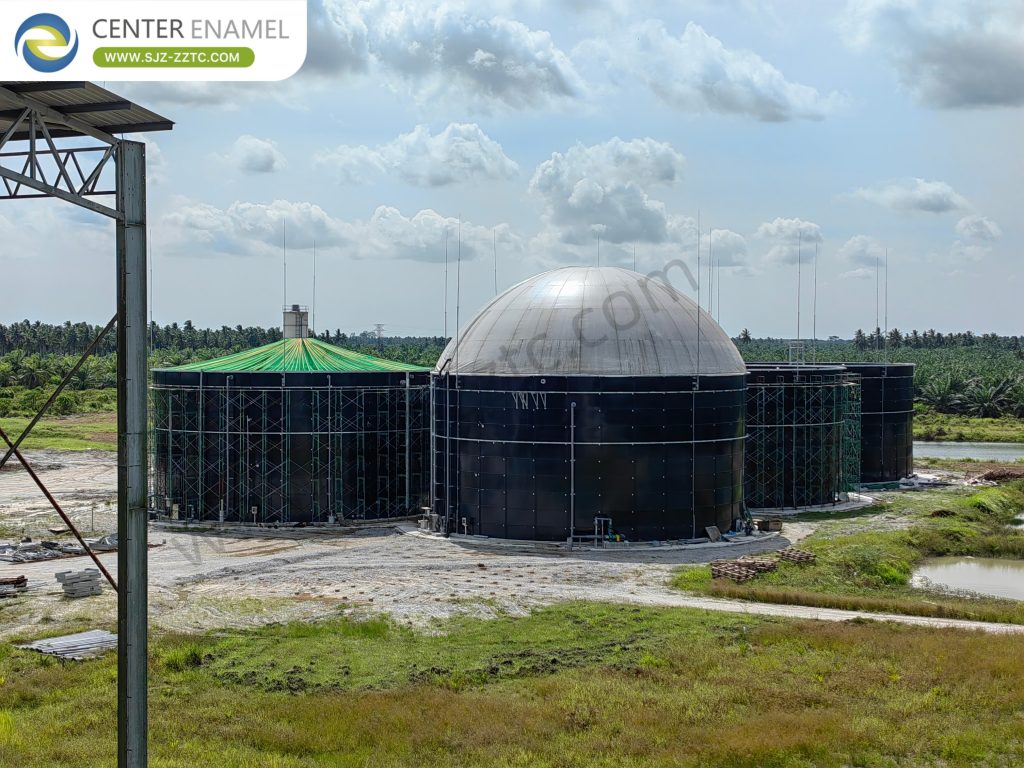
Global Policy Framework: Driving the Transition to Nutrient Management
The global livestock manure treatment policy system, with the US and EU as typical representatives, is shifting from end-of-pipe treatment to full-process nutrient management. The US establishes a manure management framework covering the entire livestock production process through Comprehensive Nutrient Management Plans. The EU, through the Nitrates Directive, strictly limits manure application amounts, with Germany and the Netherlands using tax instruments to mandate nitrogen and phosphorus recovery rates, and Denmark demonstrating distinctive features in livestock regulation and ecological compensation. The Netherlands uses a management mechanism linking manure treatment with phosphate quotas. China has issued a series of environmental regulations, with the current legal system providing comprehensive regulation of pollution from large-scale livestock operations.
These regulatory shifts create substantial opportunities for certified Biogas Solution Provider firms equipped to deliver compliant, turnkey treatment systems. As policies increasingly favor resource recovery over simple disposal, the integration of GFS tanks within anaerobic digestion trains has become a preferred engineering approach, offering both environmental compliance and economic returns through biogas and fertilizer production.
GFS Tanks: Engineered for Modern Intensive Plant Layouts
GFS tanks offer flexible customization of size and appearance, with higher land utilization rates, ideally suited for modern compact plant layouts, with significant advantages over fixed poured concrete tanks. Concrete tanks cannot alter volume or shape after pouring, with heavy bases occupying large areas, making placement difficult on narrow or irregular plots. Their rough, uniform appearance cannot match modern facility aesthetic requirements.
GFS tanks volume can be precisely customized as needed, with capacities ranging from dozens of cubic meters to 50,000 cubic meters freely selectable. Tank height and diameter can be flexibly combined to fit narrow or irregularly shaped plots, effectively saving plant land occupation. Enamel color customization is also supported, achieving visual harmony with plant buildings and environmental facilities. During later plant expansion, GFS tanks can be directly adjusted in layout and expanded; concrete tanks, being monolithic structures, must be demolished and rebuilt, offering less flexibility in land resource utilization. This aligns well with the intensive construction and aesthetic operation and maintenance needs of industrial parks.
The modular bolted construction of GFS tanks not only accelerates installation-typically requiring 40–60 days for large projects-but also enables future capacity upgrades without disruptive reconstruction. For any Biogas Solution Provider, this scalability ensures that treatment capacity can evolve alongside farm expansion or changing waste characteristics, delivering long-term value and operational flexibility.
UASB Process: High-Efficiency Anaerobic Treatment for Industrial Wastewater
The UASB Process (Upflow Anaerobic Sludge Blanket) offers exceptional advantages for soluble medium-to-high concentration organic wastewater treatment. Suitable for soluble medium-to-high concentration organic wastewater, covering light industrial wastewater from brewing, sugar refining, starch, papermaking, food processing, printing and dyeing, etc. Suitable for wastewater where organics are predominantly soluble with low suspended solids content, not suitable for high-solids, high-viscosity wastewater. Can be used alone as the primary treatment process or as a pretreatment for high-strength wastewater to reduce downstream aerobic load. Suitable for municipal wastewater anaerobic pretreatment and low-solids livestock wastewater treatment. With its low cost and stable operation advantages, it is suitable for long-term continuous, large-flow industrial wastewater treatment projects.
When deployed as part of a comprehensive treatment train within GFS tanks, the UASB Process achieves COD removal efficiencies exceeding 80% while generating biogas with methane content typically between 55-65%. This combination makes it the preferred choice for Biogas Solution Provider engineers designing systems for breweries, food processors, and livestock operations seeking to maximize energy recovery while minimizing footprint and operating costs.
Livestock Wastewater Operation and Maintenance Cost Analysis
O&M costs are relatively low with excellent input-output ratio-the highest cost-effectiveness among the five wastewater types. Core treatment units are primarily physical separation, anaerobic digestion, and ecological polishing-no high-end precision equipment or expensive chemicals. Equipment is simple with low failure rates and low maintenance costs. Anaerobic digestion produces stable biogas for plant heating and power generation, offsetting energy costs. Ecological treatment units have virtually no ongoing O&M costs. Only periodic cleaning of sedimentation tanks and polishing ponds is required, with low labor costs. Manure solids, sludge, and digestate can be sold as resources, further reducing net treatment costs.
This favorable cost profile is amplified by the use of durable GFS tanks, which require minimal maintenance over their 30-year design life compared to concrete or carbon steel alternatives. For any Biogas Solution Provider, specifying GFS tanks with the UASB Process not only ensures regulatory compliance but also delivers the lowest lifecycle cost among competing treatment configurations-a compelling value proposition for project financiers and farm operators alike.
Center Enamel's Global Market Presence
Center Enamel's global business covers over 100 countries and regions, with 30,000+ successful overseas projects. Products are exported to all major regions including Europe, the Americas, the Middle East, Africa, Southeast Asia, and Latin America, with a well-established global localized service network.
Domestically, the company is organized into North, South, Central, East, and Southwest marketing regions, covering environmental, water utility, livestock, and petrochemical customers nationwide. Internationally, the company adopts a "standardized products + localized adaptation" model-adjusting tank corrosion protection, sealing, and pressure standards for different national water quality and environmental regulations-with multiple global landmark projects: large-volume GFS tanks in Italy, 20 m tower water supply tanks in Colombia, coastal seawater treatment tanks in Costa Rica, large municipal wastewater aluminum dome projects in Saudi Arabia, etc. The company has established long-term stable strategic partnerships with many Fortune 500 companies.
As a trusted Biogas Solution Provider with proven delivery capability across six continents, Center Enamel leverages its extensive reference base to rapidly match client requirements with optimized UASB Process configurations and GFS tanks specifications. This global footprint ensures that localized technical support and spare parts are always within reach, minimizing project risk and operational downtime.
After-Sales and Technical Support Team
The after-sales team adheres to the service principles of rapid response, professional efficiency, and full-cycle support-providing 24/7 full-lifecycle O&M support to global clients.
Standard remote services include fault diagnosis, process parameter adjustment, and tank anti-corrosion maintenance guidance. For domestic and long-distance overseas clients, overseas technical service personnel can be dispatched for on-site inspection, annual inspection, and equipment refurbishment as needed. The team also maintains long-term client feedback tracking mechanisms-regularly collecting tank and anaerobic equipment operational data to continuously optimize product structure and support processes.
Supporting external technical expert teams provide specialized support for anaerobic process commissioning, biogas upgrading O&M, and wastewater upgrade/retrofit projects-ensuring long-term stable operation of domestic and overseas projects, continuously improving global client satisfaction and repurchase rates.
This comprehensive support infrastructure distinguishes Center Enamel from competitors, ensuring that every Biogas Solution Provider engagement-whether a small farm digester or a large industrial UASB Process installation-receives dedicated technical oversight from project inception through decades of operation.
Aluminum Geodesic Dome Roof: Integrated Tank Sealing and Gas Storage
Aluminum Geodesic Dome Roof independently developed by Center Enamel is manufactured using high-strength aluminum alloy plates through integral stamping. It features a triangular grid spherical self-supporting structure, enabling large-span full coverage without internal support columns. Made of aluminum alloy, the roof offers excellent weather resistance and corrosion resistance, capable of long-term protection against acid rain, salt spray, and UV radiation, suitable for various extreme outdoor climate conditions. The structural design complies with international AWWA D108 standards, with aluminum plate thickness, rib cross-sections, and joint connections all verified by finite element stress analysis, ensuring wind and snow load resistance that meets building code requirements across different global regions.
The weight of the Aluminum Geodesic Dome Roof is only one-third to one-half of a steel roof with the same span, significantly reducing the load on the tank top and allowing direct installation without tank wall reinforcement. The roof provides superior overall sealing performance, with double sealing between panels using specialized sealant strips and mechanical interlocking, enabling both airtight gas storage and enclosed odor control, suitable for biogas collection and storage, wastewater tank odor control, and drinking water contamination prevention. The support-column-free design does not interfere with the installation and operation of internal equipment such as mixers and water distributors. The aluminum material does not support microbial growth, requiring no anti-corrosion maintenance over long-term use, resulting in low total life-cycle costs.
This proprietary roof system integrates seamlessly with GFS tanks in UASB Process applications, enabling efficient biogas capture and storage without the need for separate gas holders. For any Biogas Solution Provider, this integrated approach simplifies plant layout, reduces capital expenditure, and enhances operational safety-all while delivering the aesthetic and performance standards expected in modern industrial facilities.
Frequently Asked Questions
Q1: What makes the UASB Process suitable for livestock wastewater treatment?
The UASB Process excels in treating soluble medium-to-high concentration organic wastewater with low suspended solids. It requires no mechanical mixing, uses hydraulic action for sludge suspension, and cultivates high-activity granular sludge. This results in very low energy consumption, excellent COD removal exceeding 80%, and stable biogas production. When paired with GFS tanks, it offers a compact, cost-effective solution for livestock operations.
Q2: How do GFS tanks compare to concrete tanks for anaerobic digestion?
GFS tanks offer superior corrosion resistance to acidic biogas environments, high hydrogen sulfide, and ammonia. They are modular, enabling rapid installation (40-60 days) and future expansion without demolition. Their non-porous glass surface prevents biofilm buildup and simplifies cleaning. With a 30-year design life and minimal maintenance, GFS tanks deliver significantly lower lifecycle costs compared to concrete alternatives.
Q3: What after-sales support does Center Enamel provide for biogas projects?
Center Enamel provides 24/7 full-lifecycle support including remote fault diagnosis, process parameter adjustment, and corrosion maintenance guidance. For overseas projects, technical service personnel can be dispatched for on-site inspection and refurbishment. The company maintains long-term performance tracking and collaborates with external experts for anaerobic commissioning and biogas upgrading, ensuring stable project operation worldwide.