
Comprehensive Guide to the Anaerobic Treatment of Palm Oil Mill Effluent (POME)
The global palm oil industry is a vital economic pillar across Southeast Asia, Latin America, and parts of Africa. However, extracting crude oil from fresh fruit bunches (FFB) is a water-intensive process that generates immense volumes of Palm Oil Mill Effluent (POME). Raw POME is a thick, brownish colloidal suspension characterized by extraordinarily high Chemical Oxygen Demand (COD) ranging from 50,000 to 100,000 mg/L and Biochemical Oxygen Demand (BOD) between 25,000 and 65,000 mg/L.
Because untreated POME poses severe ecological threats to aquatic ecosystems through rapid oxygen depletion, deploying an efficient wastewater management strategy is mandatory. Among all available options, anaerobic treatment of POME stands out as the cornerstone technology, successfully degrading complex organic compounds while converting waste into renewable energy.
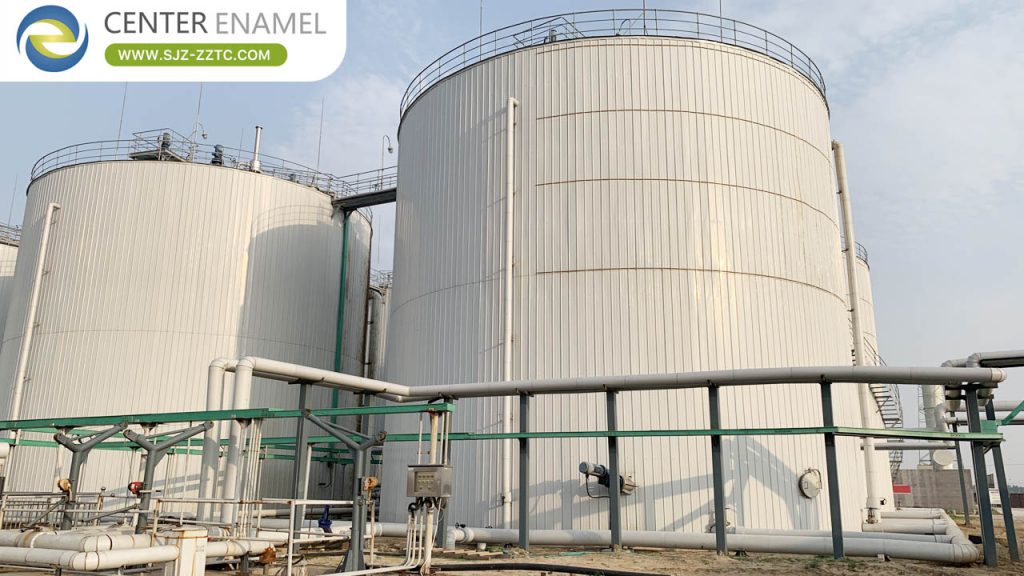
The Biochemical Mechanism of Anaerobic POME Digestion
Anaerobic treatment relies on specialized microbial consortia that break down high-strength organic matter in the complete absence of dissolved oxygen. The digestion process unfolds across four sequential biological stages:
- Hydrolysis: Extracellular enzymes secreted by bacteria break down complex insoluble polymers (lipids, proteins, and carbohydrates) into soluble monomers like amino acids, long-chain fatty acids, and sugars.
- Acidogenesis: Acid-forming bacteria convert soluble monomers into volatile fatty acids (VFAs), alcohols, lactic acid, and carbon dioxide.
- Acetogenesis: Acetogenic bacteria further convert VFAs into acetic acid, hydrogen, and carbon dioxide, which serve as direct substrates for methane-producing microbes.
- Methanogenesis: Strict anaerobic methanogenic archaea consume acetic acid and hydrogen to produce methane ($CH_4$) and carbon dioxide ($CO_2$), yielding biogas rich in energy.
Evolution of Anaerobic Treatment Technologies for POME
Industrial facilities have transitioned through distinct technological generations to optimize anaerobic POME digestion:
- Traditional Open Ponds: Historically, mills relied on series of open anaerobic and facultative lagoons. While inexpensive to construct, they require massive land areas, feature long hydraulic retention times (HRT), and release fugitive methane emissions directly into the atmosphere.
- Enclosed Continuous Stirred-Tank Reactors (CSTR): CSTR systems enclose the biological reaction within sealed tanks, allowing temperature control and capturing biogas, though they are limited by lower biomass retention.
- High-Rate Granular Sludge Reactors (UASB, USR, and EGSB): Modern facilities deploy advanced high-rate anaerobic reactors such as Upflow Anaerobic Sludge Blankets (UASB), Upflow Solids Reactors (USR), and Expanded Granular Sludge Bed (EGSB) systems. These configurations maintain high concentrations of active microbial biomass, achieving rapid organic breakdown in compact spatial footprints.
Comparative Data Table: Traditional Ponds vs. High-Rate Anaerobic Systems
| Evaluation Parameter | Traditional Open Anaerobic Ponds | High-Rate Enclosed Anaerobic Systems (UASB / EGSB / USR) |
| COD Removal Efficiency | Moderate (50% – 70%) | High (85% to 95%+) |
| Spatial Footprint | Massive land area requirement | Compact, vertical modular footprint |
| Biogas Capture & Utilization | Uncontrolled fugitive release (high GHG risk) | 100% enclosed capture for boiler/generator fuel |
| Hydraulic Retention Time (HRT) | Very long (weeks to months) | Short retention time (days to hours) |
| Odor & Environmental Control | High odor emission and groundwater leakage risks | Completely odorless, sealed, and secure |
Core Advantages of Anaerobic POME Treatment
- Massive Organic Load Reduction: Anaerobic digesters remove up to 95% of incoming COD and BOD, stabilizing the wastewater before any secondary aerobic polishing or membrane filtration.
- Renewable Energy Generation: Methane-rich biogas generated during digestion can be scrubbed and utilized in combined heat and power (CHP) systems, significantly offsetting the mill's operational energy expenditures.
- Reduced Carbon Footprint: Transitioning from open lagoons to enclosed anaerobic digestion captures fugitive greenhouse gases, helping palm oil producers meet strict international environmental, social, and governance (ESG) standards.
Frequently Asked Questions (FAQ)
Q1: Why is anaerobic digestion preferred over aerobic treatment for raw POME?
A: Raw POME contains extremely high concentrations of organic matter (COD up to 100,000 mg/L). Aerobic treatment would require massive and economically prohibitive energy inputs for continuous aeration. Anaerobic digestion handles high organic loads without oxygen while simultaneously generating renewable methane biogas.
Q2: Can anaerobic treatment alone make POME clean enough for direct river discharge?
A: No. While anaerobic digestion removes 85% to 95% of organic pollutants, the treated effluent still contains residual BOD, suspended solids, nitrogen, and color. It requires secondary aerobic polishing or advanced membrane filtration (such as MBR or ultrafiltration) to comply with strict national water discharge standards.
Q3: How does temperature affect the anaerobic treatment of POME?
A: Raw POME exits palm oil milling operations at elevated temperatures (80°C to 90°C). Because methanogenic bacteria thrive best under mesophilic (35°C–37°C) or thermophilic (50°C–55°C) ranges, cooling towers or heat exchangers are integrated into the pre-treatment train to optimize biological performance.