
Comprehensive Solutions for Biogas Plant Project Design and GFS Tanks
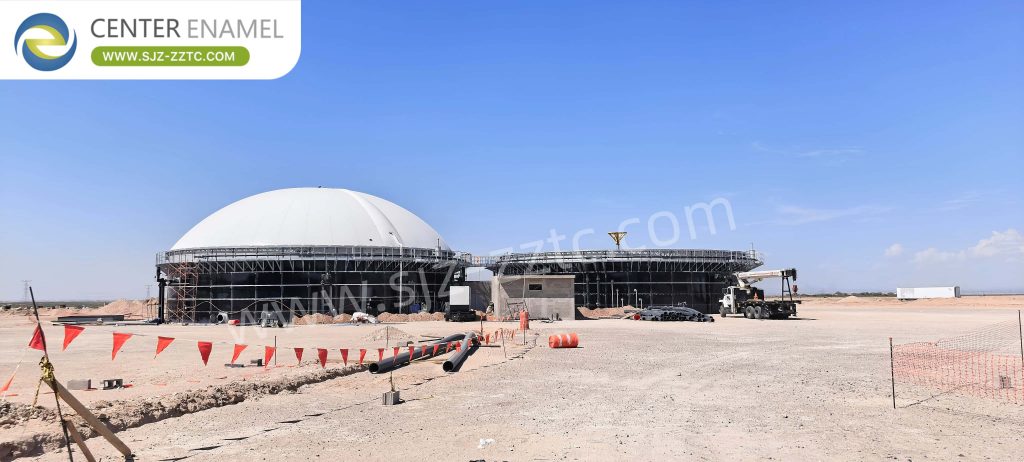
Global industrial wastewater treatment policies are escalating from "compliance discharge" to mandatory "resource recovery" and "zero liquid discharge." The EU, through its Circular Economy Action Plan, requires member states to increase industrial wastewater reuse rates and extends carbon footprint accounting to the full life cycle of wastewater treatment. China continuously updates and tightens industrial water pollutant discharge standards, with increasingly stringent limits on total nitrogen, total phosphorus, and characteristic pollutants for industries such as chemicals, pharmaceuticals, and printing and dyeing. Some water-scarce regions and highly polluting industries are mandated to adopt zero or near-zero liquid discharge technologies. Germany has established a differentiated pretreatment technical standard system by industry, requiring industrial wastewater to meet specific quality requirements before discharge into municipal wastewater treatment plants, implementing strict source control.
To meet these rigorous international environmental standards, enterprises must invest in high-performance infrastructure. Our professional Biogas Plant Project Design integrates these regulatory requirements directly into the facility architecture. By prioritizing compliance and efficiency, we ensure your operations remain sustainable and future-proof.
GFS Tanks Adaptable to Modern Intensive Plant Layouts
GFS Tanks offer flexible customization of size and appearance, with higher land utilization rates, ideally suited for modern compact plant layouts, with significant advantages over fixed poured concrete tanks. Concrete tanks cannot alter volume or shape after pouring, with heavy bases occupying large areas, making placement difficult on narrow or irregular plots. Their rough, uniform appearance cannot match modern facility aesthetic requirements.
GFS tank volume can be precisely customized as needed, with capacities ranging from dozens of cubic meters to 50,000 cubic meters freely selectable. Tank height and diameter can be flexibly combined to fit narrow or irregularly shaped plots, effectively saving plant land occupation. Enamel color customization is also supported, achieving visual harmony with plant buildings and environmental facilities. During later plant expansion, GFS Tanks can be directly adjusted in layout and expanded; concrete tanks, being monolithic structures, must be demolished and rebuilt, offering less flexibility in land resource utilization. This aligns well with the intensive construction and aesthetic operation and maintenance needs of industrial parks.
The integration of modular storage technology is essential for optimizing spatial efficiency in modern industrial parks. Selecting the right containment solutions directly impacts the overall success of your Biogas Plant Project Design. Through advanced engineering, these systems provide unparalleled flexibility and longevity.
CSTR Reaction Process
CSTR operates in continuous feed, continuous reaction, and intermittent/continuous sludge discharge mode, with a concise and coherent process flow. High-solids organic wastewater, after pretreatment to remove large-particle impurities, is fed at a constant rate into the sealed anaerobic reactor via feed pumps. Continuous mechanical stirring maintains uniform mixing throughout the reactor, creating a stable anaerobic environment. Within the reactor, acidogenic bacteria and methanogens decompose macromolecular organic matter in stages, first hydrolyzing and acidifying polysaccharides, proteins, and lipids into volatile fatty acids, then further degrading them into methane and carbon dioxide biogas. Throughout the reaction, no material stratification occurs, pollutants are continuously degraded, treated supernatant overflows from the upper portion of the reactor, aged sludge is periodically discharged from the bottom, and biogas is uniformly collected for resource utilization, maintaining stable sludge concentration and reaction equilibrium for consistent treatment performance.
Achieving a consistent anaerobic reaction environment requires robust containment that can withstand internal pressures and chemical exposure. Our GFS Tanks serve as the perfect vessel for CSTR processes, ensuring long-term operational stability. This synergy between process technology and equipment quality is the cornerstone of a successful plant.
Key Water Quality Characteristics of Food Waste
Prominent "four highs"-high COD, high oil and grease, high salinity, high suspended solids-with extremely high pollution load and complex composition. COD typically 15,000-80,000 mg/L, with oil separation wastewater exceeding 100,000 mg/L. Animal/vegetable oil content is extremely high at 5,000-20,000 mg/L-oil easily adheres and accumulates on pipe and equipment walls, causing blockages and membrane fouling. High salinity with sodium chloride content of 5,000-15,000 mg/L from seasonings and salt residues. High suspended solids rich in food residue particles, bone fragments, and fibrous impurities. Rich in proteins and amino acids, readily decomposing, emitting odors, and breeding flies. pH is slightly acidic to neutral, BOD/COD approximately 0.4-0.5-good biodegradability but oils and salts pose microbial inhibition risks. Water quality varies with collection volume, season, and dietary habits-higher summer volumes with higher oil content.
Handling such complex waste streams requires a deep understanding of biological load and equipment durability. A well-executed Biogas Plant Project Design accounts for these specific water quality challenges to prevent premature system failure. Choosing specialized equipment ensures that your treatment facility remains efficient despite these harsh conditions.
Indonesia Palm Oil Biogas Project
Specifically designed for high-concentration palm oil wastewater treatment with 3 GFS Tanks, each 19.86 m diameter × 8.4 m height. Installation began November 2009 with only 7 construction personnel, completing all tank assembly in 40 days-highly efficient and time-saving. Tanks are fitted with dual-membrane gas storage covers for POME anaerobic digestion-degrading organics and recovering biogas energy while eliminating palm industry pollution. This is an early benchmark POME biogas treatment project in Southeast Asia.
This project serves as a prime example of how modular construction accelerates time-to-market and operational readiness. By leveraging high-quality GFS Tanks, industries can transform waste treatment into a viable energy recovery stream. We bring this same level of expertise to every Biogas Plant Project Design we undertake.
Center Enamel's Smart Manufacturing Base Scale
Center Enamel's core intelligent manufacturing base is located in Hebei Province, China, covering a total area of over 150,000 m², with Phase I mature manufacturing facility and Phase II high-end environmental equipment industrial park-dual-base synergy ensures stable production capacity. The base includes dedicated R&D office buildings, proprietary material laboratories, and finished product testing centers, with full-process quality control systems meeting ISO, NSF, CE, and other international standards. The facility operates to green manufacturing standards, certified as a Provincial Green Factory-balancing efficient production with energy conservation and emission reduction. The company has 6 marketing service centers across China, establishing a nationwide production-sales network ensuring stable global order delivery. The base is adjacent to expressway networks and major logistics hubs, with complete container shipping capabilities-supporting simultaneous large-scale tank projects globally. The base employs over 500 staff, with multiple parallel automated production lines-facility scale and production capacity firmly placing it among the global top tier of GFS Tanks equipment manufacturers.
Reliability in manufacturing is the final assurance that your project will meet its performance targets on time. As a global leader in the industry, Center Enamel provides the technical backbone for every Biogas Plant Project Design. Our infrastructure ensures that every component is built to the highest standard of international excellence.
Over a Decade of Global Installation Experience
Unmatched global practical experience among domestic peers-over a decade covering multiple regions and all industry sectors. In 2009, Center Enamel completed the first overseas GFS Tanks installation-sending a team to Niger, Africa for drinking water storage tank installation. In 2015, it broke industry ground with China's first GFS Tanks export and installation to the US-passing strict US acceptance standards. All installed projects have operated stably for many years, covering livestock biogas, POME, municipal wastewater, and drinking water storage applications. Construction has covered Southeast Asia, Africa, the Americas, and other regions-accumulating specialized solutions for complex sites including mountainous terrain, coastal salt spray, tropical high temperatures, and high-standard European/American facility conditions-maturely addressing global special construction requirements.
Your investment deserves the peace of mind that comes with proven, field-tested experience. We apply these decades of global knowledge to tailor every Biogas Plant Project Design to your specific local conditions and operational goals. Partnering with a proven expert is the best way to guarantee a successful and sustainable facility project.
FAQ (Frequently Asked Questions)
1. Why choose GFS Tanks for my industrial biogas plant?
GFS Tanks offer superior durability, fast modular assembly, and flexible capacity customization, optimizing land use and ensuring long-term reliability for your Biogas Plant Project Design.
2. How does Center Enamel ensure the quality of their GFS tanks?
Built in a 150,000 m² smart facility meeting ISO and CE standards, every GFS Tank undergoes strict quality control, backed by over a decade of proven global installation experience.
3. Can your Biogas Plant Project Design solutions handle high-load industrial wastewater like POME?
Yes. By combining advanced anaerobic digestion with robust GFS Tanks, our designs efficiently treat high-COD wastewater, ensuring maximum energy recovery and environmental compliance.