
Compressed Biogas (CBG) Projects: Production, Compression, and Market Applications
As global transport decarbonization accelerates, compressed biogas (CBG) has emerged as a drop-in renewable alternative to fossil compressed natural gas (CNG). CBG is produced by upgrading raw biogas to biomethane purity (96-98% methane), then compressing it to 200-250 bar for storage, transport, and dispensing through standard CNG infrastructure. Because it is chemically identical to fossil CNG, no engine or fueling system modification is required.
The commercial logic for CBG projects is strengthening rapidly. Carbon-intensity fuel standards in California, the EU Renewable Energy Directive, and India's SATAT scheme have created premium pricing for bio-CNG. A well-designed CBG facility processing 2,000 m3 of raw biogas per day can produce approximately 1,100 m3 of CBG daily—enough to fuel 30-50 commercial trucks or 200+ passenger vehicles, with revenue potential 40-80% higher than equivalent electricity-only biogas configurations.
This guide covers the complete compressed biogas project value chain—from feedstock-to-fuel production stages, upgrading technology selection, compression and storage engineering, dispensing infrastructure, and end-market applications across transport, industrial, and off-grid power sectors.
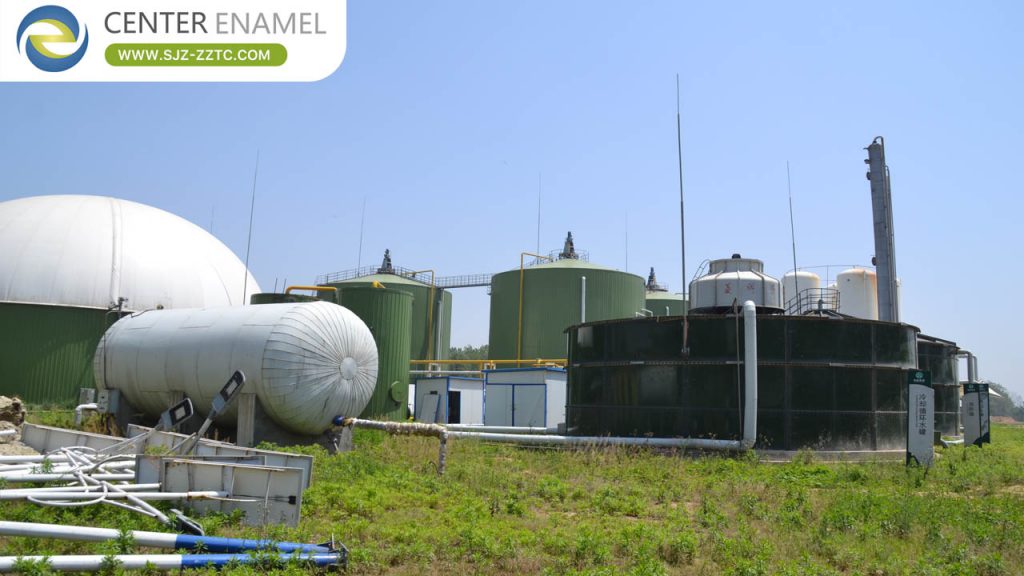
Understanding Compressed Biogas Production: From Raw Biogas to Bio-CNG
Compressed biogas (CBG) is pipeline-quality biomethane compressed to 200-250 bar for high-density storage and transport. The production process begins with anaerobic digestion producing raw biogas (50-70% CH4, 30-50% CO2, 200-4,000 ppm H2S, saturated with water vapor). This raw gas undergoes four sequential treatment stages: desulfurization (reducing H2S to below 10 ppm), moisture removal (dew point below -20 degrees C), CO2 separation (upgrading to 96-98% CH4), and high-pressure compression (200-250 bar). The resulting CBG has a methane number above 90 and energy density of approximately 6.5-7.5 kWh per cubic meter at 250 bar.
The upgrading stage is the technical and economic bottleneck of CBG production. Four primary technologies compete: pressure swing adsorption (PSA), membrane separation, water scrubbing, and cryogenic separation. Selection depends on plant scale, gas quality requirements, and local energy costs. For most commercial-scale CBG projects (500-5,000 m3/h capacity), membrane separation or PSA provides the best balance of capital cost, methane recovery, and operational simplicity.
Comparative Data Table: Biogas Upgrading Technologies for CBG Production
| Upgrading Technology | CH4 Purity | CH4 Recovery | Energy Use (kWh/m3) | CAPEX Range | Best Scale | Key Advantage |
| Pressure Swing Adsorption (PSA) | 96-98% | 96-99% | 0.20-0.30 | Medium-High | 200-2,000 m3/h | High purity; mature technology |
| Membrane Separation | 95-97% | 90-95% (single-stage), 97-99% (two-stage) | 0.15-0.25 | Medium | 100-3,000 m3/h | Simple operation; no chemicals |
| Water Scrubbing | 97-99% | 97-99% | 0.10-0.20 | Low-Medium | 100-2,000 m3/h | Lowest energy; robust |
| Cryogenic Separation | 99%+ | 99%+ | 0.40-0.60 | High | 1,000+ m3/h | Liquefaction-ready; pure CO2 byproduct |
| Amine Scrubbing | 99%+ | 99%+ | 0.25-0.35 | Medium-High | 500-5,000 m3/h | High selectivity; low CH4 loss |
CBG Compression, Storage, and Dispensing Infrastructure
After upgrading, biomethane must be compressed to 200-250 bar using multi-stage piston compressors (typically 3-4 stages with inter-stage cooling). A compressor rated at 500 m3/h inlet flow requires approximately 50-80 kW of power, representing 8-12% of the energy content of the compressed gas. The compression system should include redundant units (N+1) and buffer storage (high-pressure cascade cylinders) to smooth flow between continuous biomethane production and intermittent dispensing.
Storage and dispensing infrastructure for CBG follows CNG industry standards: Type I steel cylinders for stationary storage, Type III/IV composite cylinders for transport trailers (lighter weight, higher payload), and standard CNG dispensers with mass flow meters and breakaway hoses. A typical CBG dispensing station with 1,000 m3 storage capacity and dual-hose fast-fill dispensers can serve 30-50 vehicles per hour at 200 bar fill pressure.
Frequently Asked Questions (FAQ)
Q1: Is compressed biogas the same as CNG?
A: CBG and fossil CNG are chemically identical—both are compressed methane at 200-250 bar. The difference is origin: CBG is derived from renewable biomass via anaerobic digestion, while CNG is extracted from fossil gas reserves. CBG can fuel any CNG-compatible vehicle without modification, including buses, trucks, and passenger cars. The key advantage of CBG is its near-zero net carbon intensity and eligibility for renewable fuel credits.
Q2: What is the production cost of compressed biogas?
A: The all-in production cost of CBG ranges from $0.50 to $1.20 per kg (diesel gallon equivalent, DGE), depending on feedstock cost, upgrading technology, and plant scale. Small facilities (<500 m3/h biogas) typically produce at $0.90-1.20/DGE. Large facilities (>2,000 m3/h) can achieve $0.50-0.70/DGE. When renewable fuel credits (LCFS, RINs, or equivalent) are included, net production cost can drop to $0.30-0.50/DGE, competitive with fossil CNG.
Q3: How is CBG transported to fueling stations?
A: For distances up to 100-150 km, CBG is transported via cascade tube trailers—steel or composite cylinders mounted on truck chassis, filled at the production plant and driven to dispensing stations. Each trailer carries 200-500 m3 of compressed biomethane at 200-250 bar. For larger volumes or longer distances, small-scale liquefaction to LBG (liquefied biomethane at -162 degrees C) reduces transport volume by 600x and extends economical range to 500+ km.
Q4: What government incentives support CBG projects?
A: Major incentive programs include India's SATAT scheme (guaranteed CBG offtake at $0.70/kg for 10-15 years), California's LCFS (generates $100-200/tonne carbon credits), the EU RED II (mandatory renewable transport fuel targets with CBG eligible for double-counting), and the US RFS (D5 RINs generating $0.50-1.50/DGE). These incentives can represent 30-60% of project revenue in early years.