
Continuous Stirred-Tank Reactor (CSTR) for Juice Processing Wastewater Treatment Project
The global juice processing industry, a cornerstone of the food and beverage sector, generates a wastewater stream that is characterized by high, yet highly soluble, organic loads. Effluent from a Juice Processing Wastewater Treatment Project primarily contains sugars, organic acids, and fruit pulp fines. While this composition is non-toxic, the rapid biodegradability of sugars combined with the inevitable batch variations in production leads to frequent and severe fluctuations in organic loading (COD) and pH. This instability is the greatest threat to a functional anaerobic digestion system.
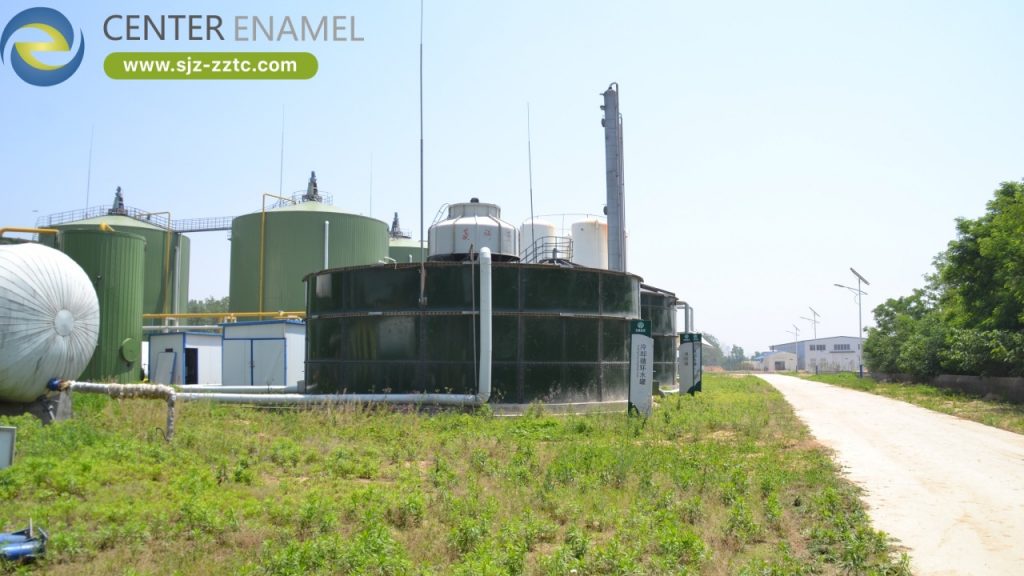
Shijiazhuang Zhengzhong Technology Co., Ltd (Center Enamel) recognizes that success in this high-variability environment requires the superior mixing and buffering capacity of the Continuous Stirred-Tank Reactor (CSTR) System. The CSTR's principle of complete homogenization provides immediate resilience against shock loads, stabilizing the microbial environment to maximize energy recovery. Housed within our structurally robust and chemically inert Glass-Fused-to-Steel (GFS) tanks, the CSTR establishes the most reliable and cost-effective core for any modern Juice Processing Wastewater Treatment Project.
Understanding the Variable Nature of Juice Effluent
A successful Juice Processing Wastewater Treatment Project must specifically address the inherent volatility and composition of the effluent:
Sudden pH and Load Spikes: Batch cleaning of tanks and lines can release highly concentrated sugar or cleaning solutions, resulting in sudden, extreme spikes in COD and rapid production of Volatile Fatty Acids (VFAs) in the reactor. This quick pH drop can inhibit or kill the sensitive methanogenic bacteria in less robust systems.
High Solubility and Rapid Digestibility: The organic load, consisting mainly of fruit sugars, is highly soluble and readily biodegradable. This leads to an extremely high potential rate of biogas generation that must be managed safely and efficiently.
Colloidal Solids and Foaming: Residual fruit pulp and colloidal solids, such as pectin, can contribute to foaming or the formation of floating scum layers in the digester. This interferes with gas transfer and operational efficiency.
Seasonal Variability: Juice processing is often highly seasonal, leading to periods of peak production followed by low flow periods, demanding a reactor that can maintain stability across wide operational ranges.
The Continuous Stirred-Tank Reactor (CSTR) excels precisely because its total-mix design directly counteracts the effects of these sudden, aggressive influxes, ensuring continuous microbial health and stable output
Technical Mastery: CSTR Homogenization and Biogas Optimization
The design and operation of the Continuous Stirred-Tank Reactor (CSTR) System make it an ideal fit for the complex fluid dynamics and chemical demands of a Juice Processing Wastewater Treatment Project.
The Power of Continuous Mixing
The signature feature of the CSTR is its robust, continuous, and complete mixing mechanism, which provides three immediate benefits:
Immediate Shock Mitigation: Any incoming high-load or high-acid effluent is instantly diluted across the entire reactor volume. This immediate homogenization buffers the microbial community against sudden changes in pH, temperature, and substrate concentration, preventing the acid shock that causes reactor failure.
Optimal Contact and Conversion: Complete mixing ensures that every particle of substrate—the soluble sugars and organic acids—achieves intimate and sustained contact with the vast population of suspended anaerobic biomass. This continuous contact maximizes the rate of hydrolysis and subsequent methanogenesis, directly translating to the highest possible COD removal and biogas yield.
Solids and Foam Management: The powerful mechanical agitation keeps residual pulp, fine solids, and potentially troublesome colloidal materials like pectin perpetually suspended. This prevents the formation of disruptive scum or sediment layers, which maintains optimal mass transfer and hydraulic efficiency—a key operational requirement in any Juice Processing Wastewater Treatment Project.
Energy Recovery and Operational Simplicity
In the juice processing sector, maximizing resource recovery is both an environmental and economic necessity.
Maximized Biogas Yield: The high stability and conversion rate of the CSTR ensure that the vast majority of the soluble organic content is efficiently converted into methane-rich biogas. This recovered energy can offset substantial utility costs by fueling boilers or generating electricity on-site.
Thermal Uniformity: Mixing ensures that the operating temperature is consistent throughout the reactor volume, preventing "cold spots" that can inhibit bacterial activity. This thermal stability is crucial for maximizing performance, especially in regions with high ambient temperature swings.
Simple Management: The CSTR's simplicity of operation and maintenance is a major draw. Unlike systems that rely on the delicate balance of settling granular sludge, the CSTR’s suspended biomass is managed through controlled wasting, eliminating complexity and downtime associated with sludge bed disturbances.
GFS Tanks: The Unyielding Vessel for Anaerobic Digestion
Housing a CSTR system, which features heavy, often column-supported mixing equipment, requires a containment vessel that offers both extreme structural support and uncompromising chemical resistance. Center Enamel’s Glass-Fused-to-Steel (GFS) tanks are the definitive choice for a Juice Processing Wastewater Treatment Project.
Superior Corrosion Resistance: Anaerobic digestion of high-sugar waste generates Volatile Fatty Acids (VFAs) and potentially corrosive hydrogen sulfide (H2S). The GFS tank features an inert glass layer fused to the steel, providing a non-porous, chemically impervious barrier that resists these organic acids and sulfide compounds, guaranteeing a service life of several decades.
Engineered Structural Strength: The GFS tank, built with high-strength, precision-engineered steel panels, is robustly designed to safely bear the heavy dynamic and static loads imposed by continuous, powerful mixing equipment, ensuring long-term mechanical safety and integrity.
Guaranteed Gas-Tightness: The safe and efficient capture of the high-value biogas is critical. The modular, bolted GFS design, utilizing proprietary sealants, ensures a perfect gas-tight enclosure, preventing the loss of methane and providing critical containment for any odorous or hazardous digester gases.
Rapid, Modular Deployment: The GFS system allows for exceptionally fast installation compared to traditional concrete construction, minimizing the construction footprint and accelerating the Juice Processing Wastewater Treatment Project’s pathway to full operation and energy self-sufficiency.
Project Cases
Center Enamel is a proven leader in providing durable GFS containment for high-load industrial and food/beverage applications globally. The following projects reflect our extensive experience in supporting high-volume organic waste and beverage processing treatment needs similar to those of a Juice Processing Wastewater Treatment Project.
Sichuan Yibin Brewing Wastewater Treatment Project: A large-scale, high-organic load beverage application. This project involved 1 unit with a capacity of 838 cubic meters, showcasing the use of a robust anaerobic unit in the beverage sector.
Sichuan Yibin Brewing Wastewater Treatment Project: Another significant installation for a major brewing facility. This project involved 1 unit with a total capacity of 7,700 cubic meters, demonstrating our capacity to deliver very large-volume containment for volatile organic streams.
Sichuan Yibin Brewing Wastewater Treatment Project: Further supporting the same high-demand beverage producer. This installation consisted of 1 unit with a total capacity of 1,787 cubic meters, affirming the trust placed in our GFS solutions across a single, complex industrial site.
Uruguay Wastewater Treatment Plant Project: We provided containment for a multi-faceted international industrial wastewater plant. This project involved 2 units with a total capacity of 1,067 cubic meters, underscoring the reliability of our tanks in general industrial treatment environments.
Shandong Qingdao Industrial Wastewater Treatment Project: We supplied GFS tanks for a coastal industrial application with demanding regulatory requirements. This project involved 2 units with a total capacity of 990 cubic meters, demonstrating our capability in critical industrial infrastructure.
Chile Industrial Wastewater Project: We supplied containment for an international industrial facility. This installation included 1 unit with a total capacity of 635 cubic meters, showcasing the global reach and application of our durable GFS solutions in diverse industrial settings.
For sustainable, stable, and economically rewarding operation, a Juice Processing Wastewater Treatment Project requires an anaerobic reactor capable of instantly neutralizing the effects of pH and load shocks. The Continuous Stirred-Tank Reactor (CSTR) System provides this essential resilience through complete homogenization, ensuring maximum biogas yield and operational stability. When housed within the chemically resistant and structurally sound framework of Center Enamel’s GFS tanks, juice processors gain a reliable, decades-long solution that transforms wastewater into a valuable energy asset, securing both environmental compliance and economic benefit. Partner with Center Enamel for the cutting-edge CSTR technology your operation needs.