
How Continuous Stirred Tank Reactors (CSTR) Drive Sustainable Waste Management
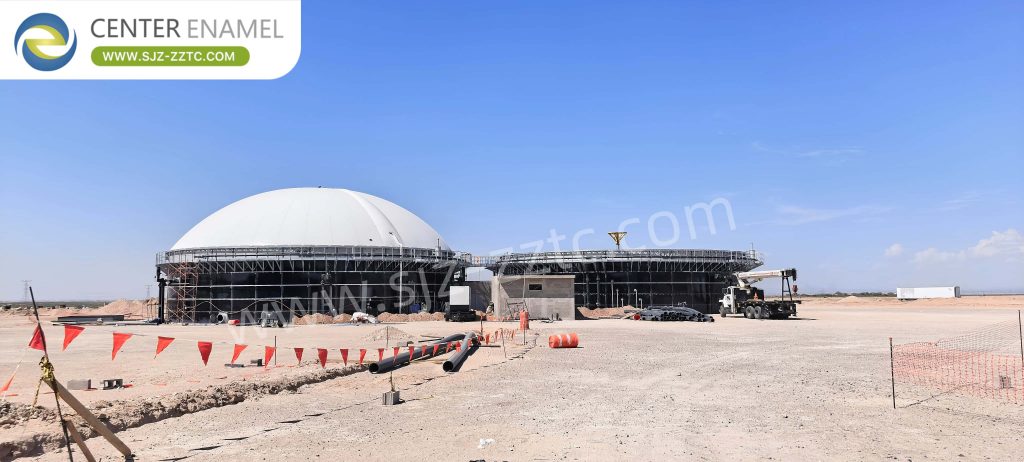
As the global community transitions towards a more sustainable and circular economy, waste management is evolving from a disposal challenge into a pivotal opportunity for renewable energy generation. At the core of this transformation lies the Continuous Stirred Tank Reactor (CSTR)—an advanced technology designed to optimize the anaerobic digestion process. Center Enamel, a global leader in storage tank and reactor manufacturing, delivers state-of-the-art CSTR systems that drive efficiency and sustainability in modern waste-to-energy projects, turning diverse organic waste streams into valuable resources.
The CSTR: A Core Technology for Anaerobic Digestion
Anaerobic digestion is a natural biological process where microorganisms break down organic materials in the absence of oxygen. This process typically occurs in four distinct stages: hydrolysis, acidogenesis, acetogenesis, and finally, methanogenesis, which produces biogas. While this process can occur in simple tanks, the CSTR is specifically engineered to control and optimize it for maximum efficiency and yield.
The key to the CSTR’s success is its continuous operation and robust mixing. Unlike batch systems, a CSTR is fed with new feedstock constantly, and the continuous stirring ensures that the organic materials and the active microbial population are homogeneously distributed throughout the reactor. This enhanced contact and stable environment are critical for several reasons:
Optimal Microbial Activity: It prevents stratification and "dead zones," ensuring that the entire volume of the reactor is utilized for digestion.
Uniform Feedstock Breakdown: The constant mixing accelerates the initial breakdown of complex organic molecules, setting the stage for the later stages of digestion.
High Methane Yield: By maintaining consistent conditions, the CSTR promotes a stable methanogenic community, leading to a higher and more consistent production of methane-rich biogas.
Resilience to Feedstock Variability: Waste-to-energy projects often rely on a mix of different feedstocks, from agricultural residues to municipal food waste. The CSTR's ability to handle this heterogeneous mix makes it an ideal, versatile solution.
Center Enamel’s CSTR Technology: Engineered for Excellence
As a leading provider of advanced solutions for waste-to-energy projects, Center Enamel designs and manufactures CSTR systems that are engineered for long-term performance and reliability. Our commitment to quality is evident in every aspect of our technology, from our robust tank materials to our advanced system configurations.
Our CSTR tanks are constructed with premium, highly durable materials to withstand the corrosive environments inherent in anaerobic digestion. Our flagship Glass-Fused-to-Steel (GFS) tanks offer unparalleled, long-lasting corrosion and abrasion resistance. The inert glass coating is fused to the steel at high temperatures, creating an impermeable, chemical-resistant barrier that ensures the integrity of the reactor for a service life of many decades. We also offer Fusion Bonded Epoxy (FBE) and stainless steel tanks, providing a range of durable, cost-effective options to meet the specific requirements of any project.
Beyond the tank itself, our CSTR systems feature:
Advanced Mixing Technology: We incorporate powerful and energy-efficient mechanical agitators or biogas recirculation systems that ensure the homogeneous distribution of feedstock, maximizing mass transfer and biogas yield.
Efficient Heating Systems: We design and integrate advanced heating systems that maintain optimal mesophilic or thermophilic temperatures, which are crucial for consistent and stable biogas production.
Customizable Configurations: Our CSTR systems are available in modular and scalable designs, allowing for seamless integration into projects of any size, from small-scale industrial installations to large municipal facilities.
From Waste to Value: Strategic Advantages
The strategic implementation of CSTR technology in waste-to-energy projects provides a host of economic, environmental, and operational advantages.
Municipal Waste Management: For cities grappling with the challenge of organic waste, a CSTR system offers a powerful solution. It reduces reliance on landfills, minimizes methane emissions, and helps cities meet their climate targets by converting food waste and other biodegradable materials into renewable energy.
Agricultural & Industrial Waste: Farms and factories that generate significant organic by-products, such as livestock manure, crop residues, or food processing waste, can use CSTRs to achieve energy independence. The biogas produced can be used to generate electricity and heat, offsetting utility costs and creating a new revenue stream.
Cost-Effectiveness: The economic viability of CSTR systems is compelling. The high biogas yield and efficient energy recovery can lead to a rapid return on investment. Furthermore, the reduction in waste disposal costs and the potential to sell excess energy or bio-fertilizer enhance the overall profitability of the project.
Reduced Environmental Impact: By capturing methane that would otherwise be released into the atmosphere and by reducing the need for fossil fuels, CSTR systems play a key role in mitigating climate change. They also contribute to a circular economy by recycling nutrients and reducing overall pollution.
Comparative Data Overview of Center Enamel CSTR Solutions
| Project Application / Industry | Reactor Type | Total Capacity (m3) | Core Technology / Material | Primary Project Result |
| European Municipal Facility | CSTR Reactors (2 Units) | 4,000 | GFS Bolted Tanks + Heavy Agitation | Foundational infrastructure for municipal green energy |
| South American Biogas Plant | CSTR Biogas Engineering | 2,249 | Bolted Steel Reactor System | Reliable power generation in challenging terrain |
| Chinese Municipal Sewage Project | CSTR Sewage Tank | 1,200 | GFS Wastewater Digester | Environmental compliance & operational efficiency |
| North American Food Waste Facility | CSTR Food Waste Tank | 1,800 | FBE Coated Steel Tank | Successful circular economy conversion of food scraps |
| Middle Eastern Dry Bulk Storage | Industrial Storage Tank | 1,800 | Specialized Industrial Bolted Tank | Secure, weather-proof non-liquid bulk handling |
| Southeast Asian Public Utility | Firefighting Water Storage | 1,210 | Engineered Liquid Storage Tank | Reliable public utility resource reserve |
Featured Project Case Studies
1. European Municipal Waste-to-Energy Project
Project Overview: A municipal initiative designed to process urban organic waste streams and generate reliable district power.
Scope of Work: Comprehensive design, manufacture, and deployment of 2 large-scale CSTR units.
Technologies Used: GFS tank construction, high-efficiency mechanical mixing systems, and thermal regulation controls.
Project Results/Data: Total capacity of 4,000 m3, delivering stable baseload energy production and reducing local landfill pressures.
Client Testimonial: "Center Enamel's CSTR infrastructure has proven exceptionally reliable, allowing our municipality to meet aggressive green energy targets while streamlining local organic waste handling."
2. North American Food Waste Treatment Facility
Project Overview: A commercial organic recycling center focused on converting diverted commercial food waste into high-value biogas and digestate.
Scope of Work: Turnkey engineering and supply of a dedicated high-solids CSTR reactor.
Technologies Used: Fusion Bonded Epoxy (FBE) bolted steel tanks equipped with precision feed pumps and temperature monitors.
Project Results/Data: 1,800 m3 capacity reactor achieving optimal organic loading rates and maximum methane recovery efficiency.
Client Testimonial: "The robust design and seamless operation of Center Enamel's CSTR system have drastically accelerated our throughput and enhanced our facility's profitability."
Center Enamel - Your Partner in Sustainable Waste Management
Center Enamel offers extensive experience and a global reach in delivering high-quality, durable solutions for waste-to-energy projects. Our CSTR systems are engineered for efficiency, durability, and adaptability, making them the ideal choice for municipalities, industries, and farms seeking to optimize waste management and energy recovery. We are committed to helping our clients achieve their sustainability goals with our superior technology and comprehensive support. Contact Center Enamel today to learn more about how our innovative CSTR technology can drive your waste-to-energy initiatives toward success.
Frequently Asked Questions (FAQ)
1.What is a Continuous Stirred Tank Reactor (CSTR) and how does it work in waste management?
A CSTR is an advanced anaerobic digester that continuously receives organic feedstocks while using robust mechanical or gas mixing to keep the contents homogeneous. This maintains uniform microbial contact, prevents dead zones, and maximizes methane-rich biogas production from organic wastes.
2.Why are Glass-Fused-to-Steel (GFS) tanks ideal for CSTR waste systems?
GFS tanks fuse inert glass to high-strength steel at extreme temperatures, providing an impermeable, highly corrosion-resistant barrier against acidic digestates and harsh biogas components. This guarantees a long operational lifespan exceeding 30 years with minimal maintenance.
3.What types of waste can be processed using Center Enamel's CSTR technology?
Center Enamel's CSTR systems are highly versatile, capable of processing agricultural residues, livestock manures, municipal solid waste (food waste), industrial organic effluents, and sewage sludge efficiently.