
How an EPC Contractor Uses GFS Tanks to Solve Chemical Wastewater Challenges
Chemical wastewater is rarely one problem. It is extreme pH and high salinity, solvent loads and persistent toxic organics arriving in the same stream-conditions that punish the process design and the tank that has to hold it in equal measure. A capable EPC Contractor therefore does not buy containment and treatment separately. At Center Enamel, GFS Tanks are engineered as the structural layer of the whole treatment train, from equalization through anaerobic digestion to final polishing, so the plant is built to survive its chemistry rather than be slowly consumed by it.
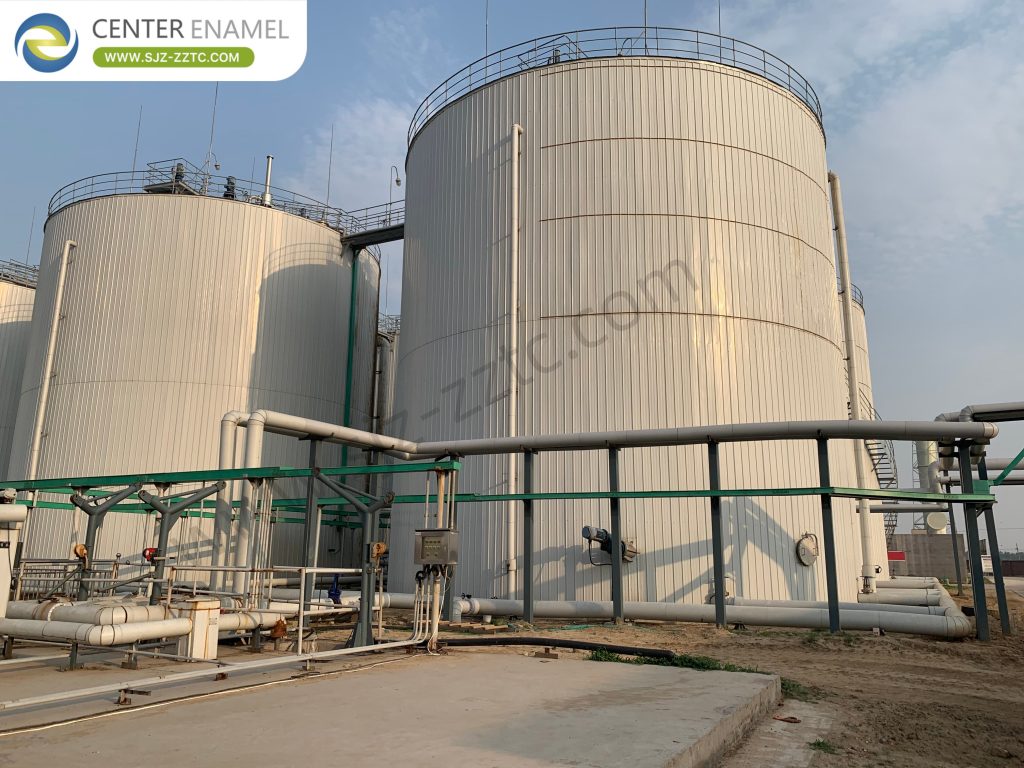
Why Chemical Wastewater Punishes Conventional Treatment Design
Industrial treatment is squeezed by three pressures at once: high difficulty, high cost and high energy consumption. Effluent from new energy, chemical and pharmaceutical plants carries a long list of characteristic pollutants that conventional biological trains were never designed to remove, while steadily tighter discharge limits keep moving the target. Buyers in the mid- and low-end equipment segment still enjoy a clear price advantage in China, but price alone no longer wins a project-clients now ask for digital monitoring, low-carbon operation and evidence that the plant will still comply in year ten.
Chemical streams are the most aggressive of the group. Benzene series, phenols, cyanides and halogenated hydrocarbons are acutely toxic and strongly inhibitory to aquatic organisms and to the microbial community a biological plant depends on. Halogenated hydrocarbons and polycyclic aromatic hydrocarbons persist for years, bioaccumulate and carry carcinogenic, teratogenic and mutagenic risk. High salinity drives soil salinization and groundwater mineralization; heavy metals settle into sediment and magnify along the food chain; endocrine disruptors disturb reproduction at trace concentrations. For an EPC Contractor, that toxicity profile turns every leak into an environmental liability rather than a maintenance item.
Concrete's Weak Point, and What GFS Tanks Change
Concrete is the traditional answer and the traditional weak point. A concrete basin is porous by nature, so wastewater and acid or alkaline media migrate into the structural layer. Over years the wall spalls, joints seep, reinforcement corrodes, and the damage is effectively irreversible-repairs treat symptoms, never the cause. Most concrete basins show widespread corrosion and leakage within five to eight years.
GFS Tanks take a different route. Steel panels are enameled at high temperature on both faces, producing a dense, non-porous glass coating that blocks liquid and gas permeation. The enamel is chemically stable against acids, alkalis, salts and microbial attack, and it does not peel or blister the way painted or lined surfaces do. Service life exceeds 30 years without internal relining, which removes the recurring anti-corrosion budget and the risk of media escaping into soil and groundwater. The same coating holds up in palm oil mill effluent, livestock manure and high-salinity chemical brine.
| Performance factor | Concrete basin | GFS Tanks |
| Surface structure | Porous; media penetrate the structural layer | Dense, non-porous enamel fused to both faces |
| Chemical resistance | Limited against acids, alkalis and salts | Stable against acids, alkalis, salts and microbial attack |
| First major failure | Widespread corrosion and leakage after 5–8 years | No relining needed over a 30+ year service life |
| Repair profile | Repeated internal lining work, often irreversible | No peeling or blistering; inspection-level maintenance |
| Leakage risk | Seepage into soil and groundwater | Sealed panel joints, verified by air-tightness testing |
| Gas permeation | Biogas escapes through the wall | Enamel layer blocks gas permeation |
| Construction | Long curing, weather dependent | Factory-coated panels bolted on site, fast to erect |
Matching Process to Stream: EGSB as the Working Core
Containment solves half the problem; the other half is what happens inside the tank. For high-strength chemical and agro-industrial streams, the EGSB reactor is usually the working core of the train. Its high upflow velocity fully expands the sludge bed, removing the accumulation and localized mass-transfer dead zones that limit conventional UASB designs and lifting degradation efficiency accordingly.
The operating window is also wider. EGSB handles medium- and high-concentration organic loads, and still performs on low-temperature, low-concentration and trace-recalcitrant streams where older anaerobic processes lose efficiency. Granular sludge brings high activity and good settleability, so washout is low and surplus sludge is limited-both of which show up directly in O&M cost. With no mechanical mixing, energy demand stays low, the structure is simple, and shock loads are absorbed without upsetting effluent quality.
Assembling that reactor inside a gas-tight shell is where an experienced EPC Contractor earns its fee: internals, dual-membrane gas storage cover, desulfurization and piping all have to fit the same tank and pass the same air-tightness test.
Field Evidence: Two Beverage Plants in Mali and Guinea
Two beverage plants commissioned by Center Enamel in 2024 show how the pieces come together. One sits in Mali, the other in Guinea; each treats 100 m³ per day of high-sugar beverage processing wastewater. The train runs dissolved air flotation, hydrolysis acidification, biological contact oxidation, sedimentation and ozone oxidation in sequence-DAF strips suspended solids, the biological stages remove most of the organic load, and ozone polishing delivers a clean, stable effluent that meets regional African discharge requirements. GFS Tanks were chosen for containment because panels ship pre-coated, erect quickly and stay simple to operate and maintain in locations where skilled labor is scarce.
| Parameter | Mali beverage plant | Guinea beverage plant |
| Commissioning year | 2024 | 2024 |
| Design capacity | 100 m³/day | 100 m³/day |
| Wastewater source | High-sugar beverage processing | High-sugar beverage processing |
| Process train | DAF + hydrolysis acidification + biological contact oxidation + sedimentation + ozone oxidation | Same configuration |
| Containment | Center Enamel GFS Tanks | Center Enamel GFS Tanks |
| Outcome | Stable clean effluent, regional discharge compliance | Stable clean effluent, regional discharge compliance |
What an EPC Contractor Delivers Beyond the Tank
Design quality means little if the site cannot execute it. Center Enamel's installation teams carry practical experience from more than 10,000 GFS tank projects worldwide and follow the same standardized procedure on every job: mobilization, civil coordination, tank assembly, piping and commissioning are scheduled and quality-controlled as one sequence.
That experience reaches far beyond tank erection-complete installation routines for GFS Tanks, dual-membrane gas storage covers, USR, CSTR and IC anaerobic reactors, plus biogas desulfurization and piping systems. It applies equally to large farms, industrial parks, remote mountain sites and coastal high-corrosion locations, always under one global safety standard. For cross-border projects the team deploys as a complete unit, builds on site, trains local workers, controls air-tightness testing and corrosion protection, and hands over a plant that starts up on schedule.
A Global Portfolio That De-Risks the Schedule
The fastest way to reduce project risk is to reuse a problem someone has already solved. Center Enamel's portfolio spans more than 100 countries across Southeast Asia, Africa, Europe and the Americas, with over 30,000 completed projects and mature reference designs for palm oil, livestock, municipal, brewing and food-waste biogas applications. That library lets an EPC Contractor match a configuration to local climate, water quality and discharge rules in weeks rather than months, and gives clients verifiable references in their own region before they commit capital.
| Application | Stream handled | Why GFS Tanks fit |
| Palm oil | POME: acidic, oily, high organic load | Enamel resists organic acids; sealed joints stop seepage |
| Livestock | Manure slurry, ammonia, sulfide | Gas-tight cover and corrosion resistance over decades |
| Brewing and beverage | High-sugar, variable seasonal load | Fast erection, simple cleaning and low O&M |
| Municipal | Variable flow with odor control needs | Standardized modules, sealed containment |
| Food-waste biogas | Volatile fatty acids, high H₂S | Dual-membrane gas storage plus desulfurization |
Frequently Asked Questions
Why are GFS Tanks a better fit than concrete for chemical wastewater?
Concrete is porous, so aggressive media reach the structural layer and cause spalling, seepage and rebar corrosion that cannot be reversed. GFS Tanks fuse glass enamel to both faces of a steel panel, creating a non-porous barrier that resists acids, alkalis, salts and microbial attack for 30 years or more without relining.
What does an EPC Contractor actually handle?
One contract covering process design, tank and equipment fabrication, civil coordination, installation, piping, air-tightness testing, commissioning and operator training-one schedule and one point of accountability from water analysis to handover.
Which treatment processes can be installed inside GFS Tanks?
Equalization and storage, aerobic and anaerobic reactors including UASB, EGSB, IC, CSTR and USR, and dual-membrane gas storage for biogas recovery. Coatings are selected for the specific stream, from high-salinity chemical brine to palm oil mill effluent.
If you already have a water analysis, send it over and our engineers will turn it into a tank schedule, a process train and an indicative budget. Talk to Center Enamel and let one EPC Contractor take ownership of the chemistry, the containment and the commissioning.