
Converting Rwanda's Kitchen Waste into Renewable Energy: Leading Biogas Technology with GFS Tanks and CSTR Process
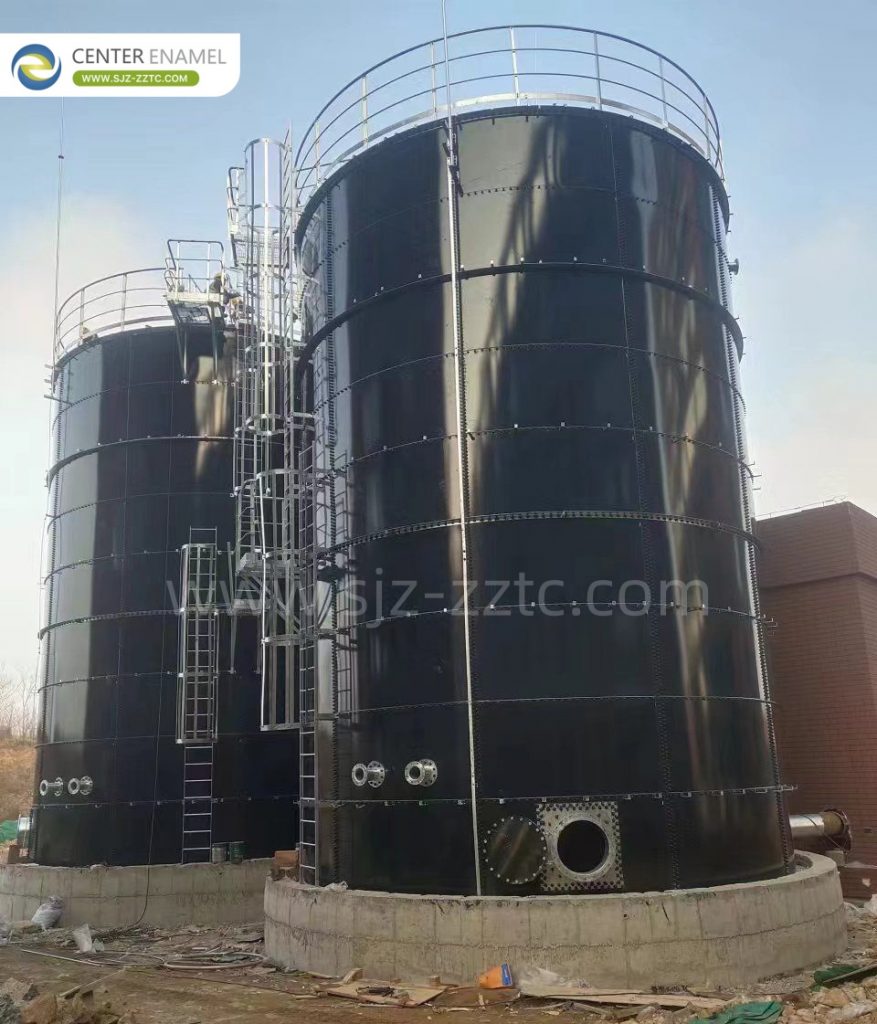
Rwanda is transforming its significant kitchen waste challenge into a renewable energy opportunity through advanced Biogas Technology. The implementation of the efficient CSTR Process and durable GFS Tanks enables the nation to convert organic waste into valuable biogas while addressing environmental sustainability goals and clean cooking access.
Rwanda's Kitchen Waste Challenge: A Significant Environmental Opportunity
Rwanda generates substantial kitchen waste, presenting both a significant environmental challenge and a valuable resource opportunity. The country's urban centers, particularly Kigali, face growing solid waste management challenges. Studies of Kigali's waste streams confirm that biowaste represents a major portion of municipal solid waste, with significant potential for biogas production through anaerobic digestion .
Research on the Mpazi Rehousing Project in Kigali estimates daily biogas outputs of 36-42 m³ from community-based digesters, demonstrating the substantial potential of urban organic waste for energy recovery . The challenge is compounded by waste management infrastructure limitations, with significant quantities of organic waste currently directed to the Nduba landfill rather than being recovered for energy production . Rwanda's biogas sector has previously faced challenges, with reports indicating that among over 10,600 biogas digesters installed nationwide, only 1,595 are currently operational—highlighting the critical need for durable, high-quality technology and proper project implementation .
The Advantage of Converting Kitchen Waste to Biogas in Rwanda
Kitchen waste presents an ideal feedstock for anaerobic digestion due to its rich organic content. The conversion process delivers multiple benefits: it reduces the volume of organic waste requiring landfill disposal, captures harmful methane emissions, produces renewable energy for local use, and creates a nutrient-rich digestate that can be applied as organic fertilizer.
The biogas sector is recognized as the sole solution to organic waste management, greenhouse gas emissions reductions, clean and green cooking fuel generation, and climate change mitigation technology . For Rwanda, where many households rely on firewood and charcoal for cooking, biogas offers a cleaner alternative that reduces deforestation and indoor air pollution. The revitalization of Rwanda's biogas programme is expected to help achieve the country's Nationally Determined Contribution targets under the Paris Agreement and reduce reliance on firewood and charcoal, contributing to 38% lower emissions by 2030 . Modern prefabricated biodigester models with longer warranties and lower maintenance requirements are being introduced as a solution to past implementation challenges .
CSTR Process: Core Technology for Rwandan Kitchen Waste Treatment
At the heart of Rwanda's advanced Biogas Technology solutions is the CSTR Process (Continuous Stirred-Tank Reactor), an anaerobic treatment technology specifically designed for high-solids, high-concentration organic waste like kitchen waste. The CSTR Process reactor is equipped with a mechanical stirring device that keeps fermentation materials and microorganisms in a state of complete mixing.
Through continuous or semi-continuous feeding at a constant temperature (mesophilic range around 35°C), the CSTR Process ensures efficient degradation of organic matter while maintaining stable biogas production. Pilot-scale research confirms that CSTR systems achieve methane yields of 0.7 ± 0.2 m³ per kg of influent volatile solids, with peak production reaching 0.6 ± 0.1 m³ per m³ reactor volume per day and effective hydraulic retention times of approximately 25 days . The mechanical agitation prevents solids from settling and crust formation on the reactor surface, which is particularly important when processing diverse Rwandan kitchen waste containing various food materials.
Center Enamel: Comprehensive Biogas Technology Design Solutions
Center Enamel offers comprehensive design solutions for Biogas Technology applications, bringing extensive expertise in anaerobic digestion systems to Rwanda's renewable energy sector . As a premier global manufacturer of bolted tank technology, the company provides complete engineering solutions covering every aspect of Biogas Technology development.
The design process begins with comprehensive feedstock analysis to determine optimal reactor configuration, mixing parameters, and retention times. Engineers evaluate the specific characteristics of Rwandan kitchen waste—including organic loading rates, volatile solids content, and expected biogas yields—to develop customized solutions that maximize efficiency. Center Enamel integrates multiple system components into each Biogas Technology design, including pretreatment systems for feedstock preparation, the CSTR Process reactor with mechanical stirring, gas collection and purification systems, and storage infrastructure. The company's international certifications ensure all designs meet rigorous quality and safety standards .
Premium Storage Solutions: GFS Tanks and Double Membrane Roof
GFS Tanks (Glass-Fused-to-Steel) represent the premium coating technology in the storage tank market and are essential components of Center Enamel's Biogas Technology solutions for Rwanda. The manufacturing process involves firing steel panels at 820°C-930°C, causing molten glass to react with the steel surface and form an inert, inorganic bond .
This fusion combines the strength and flexibility of steel with outstanding glass corrosion resistance, making GFS Tanks ideal for the challenging environment of anaerobic digestion. The non-porous glass surface prevents adhesion of organic materials, facilitates cleaning, and provides excellent protection against hydrogen sulfide and methane corrosion . With a 30+ year service life and zero repainting requirement, GFS Tanks deliver reliable, long-term performance for Rwandan Biogas Technology applications.
The Double Membrane Roof is the preferred cover solution for anaerobic digestion processes and biogas applications in Rwanda. This innovative roof design offers significant advantages including cost optimization through direct reduction of roof construction expenses and improved space efficiency compared to traditional structures. The Double Membrane Roof significantly reduces floor area requirements and eliminates foundation construction costs associated with ground-mounted gas holders, with excellent airtightness making it ideal for biogas collection and odor control.
Comprehensive Storage Tank Solutions
Center Enamel offers diverse tank options including Galvanized Steel Tanks with tough, wear-resistant protective coatings, Fusion Bonded Epoxy Tanks developed in partnership with AkzoNobel for innovative coating solutions, and Stainless Steel Tanks in AISI 304/316 grades for high-purity applications .
Diverse Cover Solutions
Center Enamel provides multiple cover options including the Aluminum Geodesic Dome Roof with corrosion resistance and efficient construction, the Glass-Fused-to-Steel Roof for airtight applications, Single and Double Membrane Roofs for anaerobic digestion, Aluminum Alloy Trough Deck Roofs for economical storage, Stainless Steel Roofs for harsh environments, and FRP Roofs for non-airtight applications.
Essential Biogas Technology Equipment
Complete Biogas Technology solutions require additional equipment including Gas Holders for biogas storage, Black Membrane covers for lagoons, Solid-liquid Separators for digestate processing, Torch Systems for emergency gas flaring, Lifting Pumps for material transfer, Dehydration and Desulfurization Tanks for biogas purification, and Screw Sludge Dewatering Machines for efficient sludge handling.
Efficient Installation and Project Execution
Center Enamel delivers efficient installation of GFS Tanks through modular construction with factory-prefabricated components, standard panel sizes for rapid assembly, reduced on-site construction time, minimal weather dependency, simplified foundation requirements, easy expansion capabilities, and comprehensive installation support . The company's modular approach is particularly suitable for Rwandan project conditions, enabling efficient transport and assembly.
One-Stop Solution Provider for Biogas Technology
Center Enamel offers complete Biogas Technology solutions with integrated EPC services, process package design, equipment supply, professional engineering expertise, international certification compliance, adherence to design standards (AWWA D103, OSHA, EN28765, EuroCode), extensive experience in diverse applications, and global project delivery capability . The company's solutions address the need for durable, high-quality biogas infrastructure that can overcome the maintenance and reliability challenges experienced in Rwanda's previous biogas programme .
Successful Project Implementations
Biogas Project in Canada
Tank dimensions: φ8.4m x 7.2m (H) (2 units)
Total volume: 798 m³
Completion year: 2024
Biogas Project in Indonesia
Tank application: Palm oil wastewater treatment plant
Tank model: Ø19.86m x 8.4m
Number of tanks: 3 GFS tanks
Installation: 7 personnel, 40 days
Installation date: November 2009
Conclusion
Rwanda's commitment to sustainable waste management and renewable energy development positions the nation for significant advancement in Biogas Technology implementation. The combination of the efficient CSTR Process and durable GFS Tanks provides an ideal approach to converting kitchen waste into renewable energy. Center Enamel offers comprehensive solutions including professional design, premium storage infrastructure, and complete equipment packages to support Rwanda's waste-to-energy goals, addressing the critical need for reliable, long-term biogas infrastructure .
Frequently Asked Questions
Q1: How does the CSTR Process address the challenges experienced with Rwanda's previous biogas installations?
The CSTR Process provides robust, controlled digestion that addresses the technical failures experienced in Rwanda's earlier biogas programme. With proven pilot-scale performance achieving methane yields of 0.7-1.1 m³ per kg of volatile solids, the technology ensures reliable biogas production even with variable feedstock . The continuous mixing prevents the crust formation and solids settling that can lead to system failure, addressing the substandard product and technical defects previously reported .
Q2: Why are GFS Tanks particularly suitable for Rwanda's biogas sector revitalization efforts?
GFS Tanks offer the durability and low maintenance required for Rwanda's biogas sector revitalization. With a 30-year design life and zero repainting requirement, these tanks address the high cost of ownership concerns identified in Rwanda's previous biogas programme . The modular design enables efficient installation and replacement if needed, supporting the government's goal of introducing prefabricated biodigester models with longer warranties .
Q3: How does Center Enamel support Rwanda's clean cooking and energy access goals through Biogas Technology?
Center Enamel provides complete solutions that convert organic waste into renewable biogas suitable for cooking, directly supporting Rwanda's clean cooking goals and NDC targets. By offering turnkey Biogas Technology solutions including CSTR Process technology, GFS Tanks infrastructure, and essential equipment, the company enables Rwandan municipalities and private enterprises to establish reliable biogas infrastructure that reduces reliance on firewood, charcoal, and imported fuels .