
Converting the Philippines' Kitchen Waste into Energy: Sustainable Biogas Solutions with GFS Tanks and CSTR Process
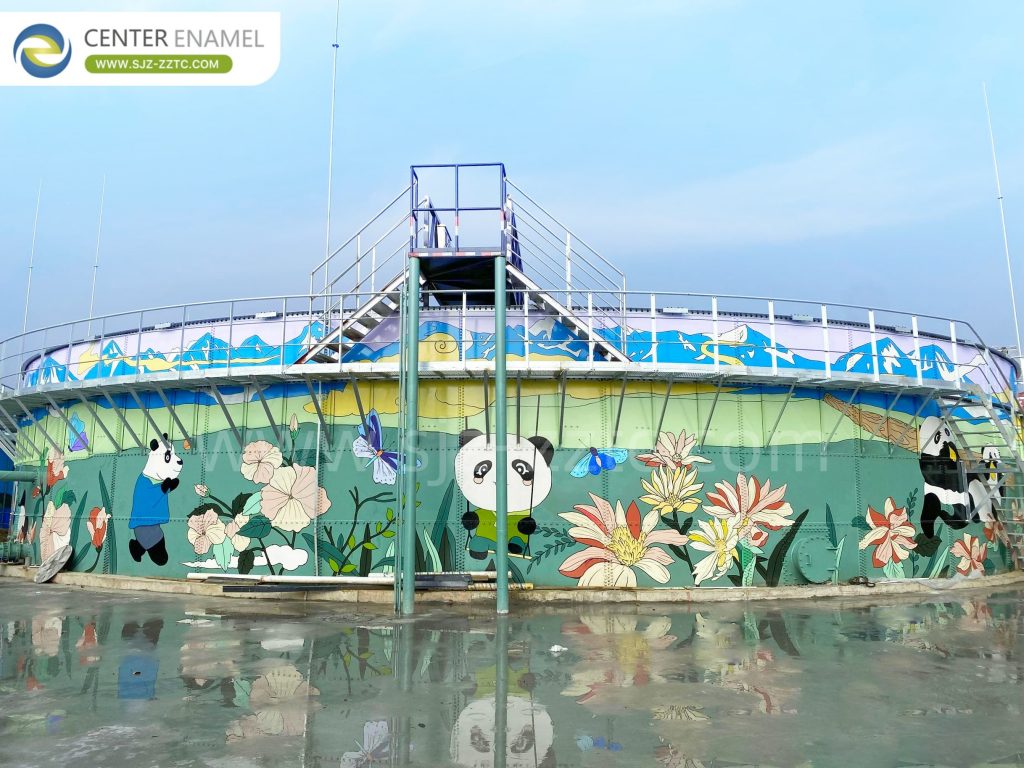
The Philippines is transforming its significant kitchen waste challenge into a renewable energy opportunity through advanced Biogas Solutions. The implementation of the efficient CSTR Process and durable GFS Tanks enables the nation to convert organic waste into valuable biogas while addressing environmental sustainability goals and clean energy access.
The Philippines' Kitchen Waste Challenge: A Significant Environmental Opportunity
The Philippines generates substantial kitchen waste, presenting both a significant environmental challenge and a valuable resource opportunity. In Baguio City alone, local authorities have recorded approximately 43,000 metric tons of food waste produced annually . The city's consumption rate stands at 58.33%, with 23.54% remaining uncollected and only 1.28% being diverted to composting—highlighting the urgent need for improved waste management systems .
In Metro Manila, an estimated 2,175 tons of edible food are discarded daily, with restaurants playing a significant role in this waste generation . The food service industry contributes to waste at various levels, from over-preparation and improper storage to inefficient portion control and disposal practices. Baguio City Councilor Elmer Datuin has called on hotel and restaurant owners to take immediate measurable action, emphasizing that food waste can be turned into valuable resources, not just waste .
The Advantage of Converting Kitchen Waste to Biogas in the Philippines
Kitchen waste presents an ideal feedstock for anaerobic digestion due to its rich organic content. The conversion process delivers multiple benefits: it reduces the volume of organic waste requiring landfill disposal, captures harmful methane emissions, produces renewable energy for local use, and creates a nutrient-rich digestate that can be applied as organic fertilizer.
Research on organic waste management in the Philippines demonstrates the significant potential for biogas production. Studies on prototype models using swine slurry and food waste have shown that co-digestion can produce 882 Nm³/day of biogas (55% methane), generating 1,611 kWh of electricity daily—enough to power approximately 322 households . This represents a greenhouse gas reduction effect of 3,611 tCO₂eq per year . Given the characteristics of household and livestock waste emissions, this prototype model can be replicated throughout the Philippines .
CSTR Process: Core Technology for Philippine Kitchen Waste Treatment
At the heart of the Philippines' advanced Biogas Solutions is the CSTR Process (Continuous Stirred-Tank Reactor), an anaerobic treatment technology specifically designed for high-solids, high-concentration organic waste like kitchen waste. The CSTR Process reactor is equipped with a mechanical stirring device that keeps fermentation materials and microorganisms in a state of complete mixing.
Through continuous or semi-continuous feeding at a constant temperature, the CSTR Process ensures efficient degradation of organic matter while maintaining stable biogas production. Research confirms that the anaerobic process operates effectively under mesophilic conditions, with biogas production following predictable stages of hydrolysis, acidogenesis, acetogenesis, and methanogenesis . Studies have shown that co-digestion of food waste with other organic materials significantly enhances biogas yields, with co-digestion achieving increases of up to 45.8% compared to mono-digestion .
Center Enamel: Comprehensive Biogas Solutions Design
Center Enamel offers comprehensive design solutions for Biogas Solutions applications, bringing extensive expertise in anaerobic digestion systems to the Philippines' renewable energy sector . As a premier global manufacturer of bolted tank technology, the company provides complete engineering solutions covering every aspect of Biogas Solutions development .
The design process begins with comprehensive feedstock analysis to determine optimal reactor configuration, mixing parameters, and retention times. Engineers evaluate the specific characteristics of Philippine kitchen waste to develop customized solutions that maximize efficiency. Center Enamel integrates multiple system components into each Biogas Solutions design, including pretreatment systems for feedstock preparation, the CSTR Process reactor with mechanical stirring, gas collection and purification systems, and storage infrastructure .
Premium Storage Solutions: GFS Tanks and Double Membrane Roof
GFS Tanks (Glass-Fused-to-Steel) represent the premium coating technology in the storage tank market and are essential components of Center Enamel's Biogas Solutions for the Philippines. The manufacturing process involves firing steel panels at 820°C-930°C, causing molten glass to react with the steel surface and form an inert, inorganic bond .
The exceptional durability of GFS Tanks makes them particularly suitable for the Philippines' tropical climate, characterized by high humidity, intense heat, and high rainfall . The glass-fused-to-steel coating provides superior corrosion resistance, with a non-porous surface that resists accumulation of scale, biofilm, and bacteria . GFS Tanks are engineered for a 30+ year service life with minimal maintenance requirements . The modular design allows for structural flexibility, ensuring tanks withstand environmental stressors such as seismic activity and monsoon-level precipitation .
The Double Membrane Roof is the preferred cover solution for anaerobic digestion processes and biogas applications. This innovative roof design offers significant advantages including cost optimization and improved space efficiency compared to traditional structures, providing excellent airtightness for biogas collection and odor control.
Comprehensive Storage Tank Solutions
Center Enamel offers diverse tank options including Galvanized Steel Tanks with tough, wear-resistant protective coatings, Fusion Bonded Epoxy Tanks developed in partnership with AkzoNobel, and Stainless Steel Tanks in AISI 304/316 grades for high-purity applications .
Diverse Cover Solutions
Center Enamel provides multiple cover options including the Aluminum Geodesic Dome Roof with corrosion resistance and efficient construction, the Glass-Fused-to-Steel Roof for airtight applications, Single and Double Membrane Roofs for anaerobic digestion, Aluminum Alloy Trough Deck Roofs for economical storage, Stainless Steel Roofs for harsh environments, and FRP Roofs for non-airtight applications.
Essential Biogas Solutions Equipment
Complete Biogas Solutions require additional equipment including Gas Holders for biogas storage, Black Membrane covers for lagoons, Solid-liquid Separators for digestate processing, Torch Systems for emergency gas flaring, Lifting Pumps for material transfer, Dehydration and Desulfurization Tanks for biogas purification, and Screw Sludge Dewatering Machines for efficient sludge handling.
Efficient Installation and Project Execution
Center Enamel delivers efficient installation of GFS Tanks through modular construction with factory-prefabricated components, standard panel sizes for rapid assembly, reduced on-site construction time, minimal weather dependency, simplified foundation requirements, easy expansion capabilities, and comprehensive installation support . This modular bolted construction significantly reduces on-site labor and construction timelines compared to traditional methods .
One-Stop Solution Provider for Biogas Solutions
Center Enamel offers complete Biogas Solutions with integrated EPC services, process package design, equipment supply, professional engineering expertise, international certification compliance (CE/EN1090, ISO 9001, NSF61, WRAS, EN28765), adherence to design standards (AWWA D103, OSHA, EN28765, EuroCode), extensive experience in diverse applications, and global project delivery capability .
Successful Project Implementations
Biogas Project in Sweden
Tank dimensions: φ19.11m x 19.2m (H) (1 unit)
Total volume: 5,510 m³
Completion year: 2024
Biogas Project in Indonesia
Application: Anaerobic reactor for palm oil wastewater treatment plant
Tank models: Ø17.58m x 8.4m, Ø16.82m x 7.2m
Number of tanks: 3 GFS tanks
Installation date: 2013
Conclusion
The Philippines' commitment to sustainable waste management and renewable energy development positions the nation for significant advancement in Biogas Solutions implementation. The combination of the efficient CSTR Process and durable GFS Tanks provides an ideal approach to converting kitchen waste into renewable energy. Center Enamel offers comprehensive solutions including professional design, premium storage infrastructure, and complete equipment packages to support the Philippines' waste-to-energy goals.
Frequently Asked Questions
Q1: How does the CSTR Process accommodate the Philippines' diverse kitchen waste composition, including challenges from restaurant and hotel sectors?
The CSTR Process is designed to handle variable feedstock compositions, making it ideal for the Philippines' diverse waste streams from restaurants, hotels, and households. The continuous mixing action ensures complete homogenization while maintaining stable process conditions. Research shows co-digestion approaches effectively enhance biogas yields from food waste, with prototype models in the Philippines demonstrating practical viability.
Q2: Why are GFS Tanks particularly suitable for the Philippines' challenging tropical climate and seismic conditions?
GFS Tanks perform exceptionally well in the Philippines' tropical climate with high humidity and monsoon-level precipitation. The glass-fused-to-steel coating provides superior corrosion resistance, and the modular design allows for structural flexibility to withstand seismic activity. With a 30-year design life and minimal maintenance, these tanks ensure reliable long-term performance. Center Enamel has successfully delivered GFS tank projects in the Philippines for wastewater treatment and water purification applications.
Q3: How does Center Enamel support the Philippines' sustainable waste management and renewable energy goals through Biogas Solutions?
Center Enamel provides complete solutions that convert organic waste into renewable energy, directly supporting the Philippines' circular economy and energy access goals. By offering turnkey Biogas Solutions including CSTR Process technology, GFS Tanks infrastructure, and essential equipment, the company enables Philippine municipalities and private enterprises to establish reliable biogas infrastructure. This addresses the critical need identified by local governments to manage food waste from business sectors efficiently, reducing greenhouse gas emissions by up to 50% while generating clean energy.