
Covered Lagoon Digesters for Biogas Projects: Low-Cost Methane Capture Engineering
For livestock operations with existing manure lagoons, the cheapest biogas plant is often the lagoon they already own—covered. A covered lagoon for biogas projects seals an earthen or lined basin with a high-density polyethylene (HDPE) membrane, letting naturally occurring anaerobic bacteria digest diluted manure while the floating cover captures the methane that would otherwise vent to the atmosphere.
The economics are the attraction. Covered lagoon digesters install at roughly one-third to one-half the cost per cubic meter of engineered tank digesters, generate carbon credits for avoided manure methane in the same transaction, and require minimal daily operation. Across warm-climate dairy and swine regions—and increasingly on flush-dairies under carbon programs—covered lagoons are the entry-level biogas technology.
This guide covers covered lagoon engineering end to end: how lagoon digestion works and its performance envelope, sizing and cover design, gas collection and utilization options, climate constraints, and honest economics against tank-based digesters—so developers can decide where the low-cost approach fits.
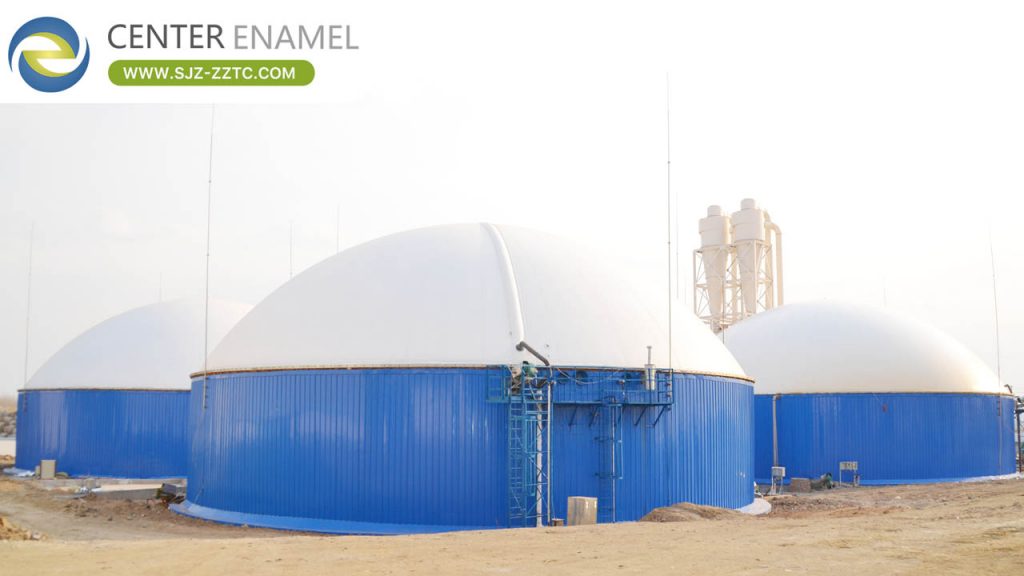
How a Covered Lagoon Digester Works
A covered lagoon digester is an ambient-temperature, unmixed (or gently mixed), long-retention anaerobic basin fitted with a gas-tight cover. Flush or scrape manure at 0.5-3% solids enters one end, slowly transits 40-120+ days of retention while bacteria decompose volatile solids, and clarified effluent exits the far end for storage or land application. Biogas (typically 55-70% CH4 on dairy flush systems) migrates upward beneath the cover, is gathered by perforated collection pipes or a sloped cover sump, and is delivered at low pressure to a flare, boiler, or engine—generally 20-60% of the volatile solids convert to gas, versus 40-60% in heated complete-mix tanks.
Design: Sizing, Liners, Covers, and Gas Collection
Covered lagoon design centers on retention, containment, and cover integrity. Basins are sized by manure volume and target retention—longer in cold seasons—usually split into a hot (active digestion) cell and a subsequent storage cell. Ground conditions dictate liner selection (compacted clay, 40-60 mil HDPE, or reinforced geomembrane with leak detection where regulation requires). Cover systems fall into two proven families plus hybrids.
1. Supported Covers: HDPE geomembrane tensioned over a cable or truss structure, creating rain-shedding slopes to perimeter ditches—recommended where rainfall is heavy, since rain removal is the operational headache.
2. Floating Covers: Flexible membranes resting directly on the liquid with weighted trenches for perimeter sealing; simpler and cheaper but rain handling requires cover slope design and pumping.
3. Gas Collection: Perforated HDPE laterals beneath the cover or a collection sump, tied to a blower delivering 5-25 mbar to utilization equipment, with condensate traps and a flame arrestor at every interface.
4. Safety Layer: Methane monitoring at walkways, cover access restricted, and pressure relief valves—lagoon covers are gas-tight envelopes over a large fermentation vessel and must be treated as confined-space-adjacent infrastructure.
Comparative Data Table: Covered Lagoon versus Tank Digester
| Parameter | Covered Lagoon Digester | Heated Tank Digester (CSTR) |
| CAPEX per m3 volume | $25-70 | $150-400 |
| Operating temperature | Ambient (climate-bound) | Controlled 35-38 degrees C |
| Volatile solids destruction | 20-60% | 40-60% |
| Retention time | 40-120+ days | 20-30 days |
| Feedstock solids range | 0.5-3% (flush/scrape dilute) | 2-12% (thick slurries) |
| Process control | Minimal | Full (mixing, heating, loading) |
| Biogas yield stability | Seasonal variation 30-50% | Stable year-round |
| Cold climate suitability | Poor without heat; long retention | Full |
| Carbon credit additionality | High (open lagoon baseline) | Moderate (depends on baseline) |
Climate Limits and Utilization Pathways
Covered lagoon performance follows water temperature: digestion is vigorous above roughly 20 degrees C and nearly dormant below 10-15 degrees C, making warm climates the natural home for the technology. In temperate regions, lagoons still work as seasonal digesters—summer gas peaks, winter troughs—if project economics tolerate 30-50% seasonal yield variation. Utilization follows scale: small systems flare for carbon credits alone; mid-size sites run boiler or chiller gas use; and clustered or large lagoon systems justify engine CHP or even upgrading where gas volumes and policy incentives align.
Frequently Asked Questions (FAQ)
Q1: How much biogas does a covered lagoon actually produce?
A: A warm-climate dairy flush lagoon processing manure from 1,000-2,000 cows typically yields 400-1,200 m3 of biogas per day at 55-70% methane, depending on retention, temperature, and volatile solids loading. Swine lagoons in similar climates run comparable figures per volatile-solid tonne. Cold-season output can fall by half or more—the design case should use seasonal minimums, not annual averages.
Q2: Can covered lagoons generate carbon credits?
A: Yes—manure-management methane avoidance is one of the most established carbon methodologies (for example, under Verra and Gold Standard lagoon-cover protocols). Because the baseline is open-lagoon methane emission, additionality is strong and credit volumes are significant: a 2,000-cow dairy cover can generate roughly 8,000-20,000 tonnes CO2-equivalent of credits annually.
Q3: What maintenance does a lagoon cover require?
A: Planned monthly and annual tasks: rainwater pumping from cover sumps, visual inspection for membrane wrinkles or wind stress, gas line condensate drainage, and perimeter anchorage checks after storms. Expect cover replacement or major refurbishment at 12-20 years for quality HDPE. The dominant unplanned failures are wind damage on under-tensioned covers and rainwater overload in high-precipitation regions.
Q4: When should a project choose a tank digester instead?
A: Choose tanks when feedstock is thick (above 3% solids), climate is cold, land is scarce, or gas demand requires year-round stable output; choose covered lagoons when dilute flush manure, available land, warm climate, and low capital appetite dominate. Many large operations phase the technologies—lagoon cover first for immediate methane abatement and carbon revenue, engineered digestion later as feedstock strategy matures.