
Leading CSTR Biogas Production System for Sustainable Energy Generation | Center Enamel
In the current energy landscape, sustainable and renewable energy solutions are more important than ever. Among these, biogas production from organic waste has emerged as a viable option, offering environmental benefits and economic incentives. Center Enamel presents its Continuous Stirred Tank Reactor (CSTR) biogas production system, engineered for efficient and reliable renewable energy generation. This system is designed to optimize the anaerobic digestion process, converting organic matter into methane-rich biogas while ensuring long-term operational stability and environmental compliance.
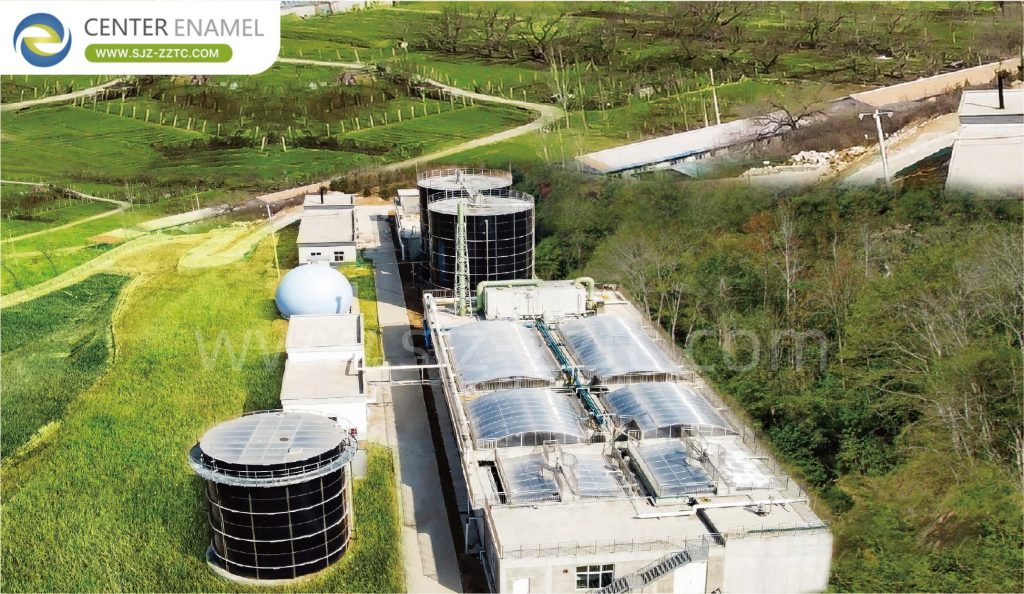
As a global leader in Glass-Fused-to-Steel (GFS) tank manufacturing, Center Enamel has successfully delivered CSTR solutions across the world, including landmark projects in France and Singapore. With over 30 years of specialization and more than 2,000 tanks installed globally, the company brings unmatched expertise to the biogas industry.
Key Advantages of the CSTR System
Operational Efficiency
The continuous mixing provided by the CSTR design maximizes contact between the organic material and anaerobic microorganisms. This leads to a higher biogas yield per unit of feedstock and minimizes the likelihood of process imbalances. The uniform environment within the reactor supports a steady-state operation, which is critical for large-scale energy generation. Unlike traditional anaerobic processes that suffer from stratification and crusting, the CSTR’s mechanical stirring system ensures homogeneous mixing of wastewater, anaerobic sludge, and organic substrates throughout the reactor.
Process Stability
Maintaining a consistent temperature and pH level is essential for effective anaerobic digestion. The CSTR system facilitates tight control over these parameters, resulting in a stable microbial ecosystem. This stability translates into fewer operational disruptions and reduced maintenance requirements, ensuring that the energy production process remains reliable over time.
Scalability and Flexibility
Center Enamel’s CSTR biogas production system is designed to be scalable, accommodating operations ranging from small agricultural installations to large industrial facilities. The modular nature of the system allows for capacity expansion as energy demands increase or as more organic waste becomes available for processing. Capacities range from 20m³ to 25,000m³, making this flexibility a cost-effective solution for a diverse range of applications.
Enhanced Energy Recovery
By optimizing the anaerobic digestion process, the CSTR system maximizes methane production. Methane, the primary component of biogas, can be used directly in combined heat and power (CHP) systems, converted into electricity, or further upgraded to biomethane for broader applications. Efficient biogas capture not only improves the energy yield but also reduces greenhouse gas emissions associated with organic waste decomposition.
Engineering Excellence and Innovation
Center Enamel has leveraged decades of expertise in the design and manufacturing of anaerobic digestion systems to develop a CSTR biogas production solution that meets rigorous quality and performance standards. Key elements of their engineering approach include:
Advanced Materials and Construction: GFS Tank as the Robust Carrier for CSTR Process
The reliability of any CSTR biogas production system depends not only on the mixing mechanism and process control but also on the structural integrity of the containment vessel. Center Enamel’s CSTR systems are built upon high-quality Glass-Fused-to-Steel (GFS) tanks, which serve as the durable and corrosion-resistant carrier for the entire anaerobic digestion process.
While the CSTR process relies on continuous mechanical stirring and active microbial metabolism, the GFS tank provides the ideal physical environment to sustain these operations. Manufactured through a specialized fusion process at temperatures between 820°C and 930°C, the enamel coating is molecularly bonded to the steel substrate. This creates an exceptionally smooth, inert, and abrasion-resistant surface that not only withstands the acidic conditions (pH 1–14) and high hydrogen sulfide (H₂S) concentrations commonly generated during digestion but also prevents biofilm adhesion and corrosion that could compromise the reactor shell.
As the primary carrier, this GFS tank ensures:
Chemical Resistance: Protects the structural shell from organic acids and aggressive biogas components, ensuring a design life exceeding 30 years.
Operational Stability: The smooth glass surface reduces friction and wear on mixing components while maintaining a consistent internal environment for temperature and pH control.
Leak-Proof Integrity: The bolted steel structure, combined with professional sealing systems, guarantees zero leakage of liquid and gas, which is essential for both safety and methane capture efficiency.
By combining the CSTR process technology with Center Enamel’s proven GFS tank manufacturing expertise, the system delivers both high-rate biogas production and long-term structural reliability—ensuring that the reactor vessel remains a stable and maintenance-free carrier throughout its operational lifespan.
Precision Process Control
The CSTR system incorporates sophisticated process monitoring and control technologies. Sensors continuously track key operational parameters such as temperature, pH, and biogas composition. This real-time data enables operators to make informed adjustments, ensuring optimal performance and reducing the risk of process failure.
Modular Design: Bolted Assembly
The modular bolted architecture of the system simplifies both installation and future expansion. All components are factory-prefabricated and shipped in standard containers, allowing for assembly with zero on-site welding—preserving the factory coating and reducing installation time by up to 60%. This modularity not only improves scalability but also contributes to overall cost efficiency.
Environmental Compliance
Center Enamel’s CSTR biogas production system is engineered to meet international environmental standards, including ISO 9001, AWWA D103, and OSHA. By capturing methane that would otherwise be released into the atmosphere, the system significantly reduces greenhouse gas emissions. This aligns with global initiatives to promote sustainable energy and reduce the carbon footprint of industrial processes.
Applications and Impact of CSTR System
The versatility of the CSTR biogas production system makes it suitable for a variety of applications:
Agricultural Waste Management: Livestock manure and crop residues can be effectively processed in the CSTR system, converting agricultural waste into renewable energy. This not only addresses waste disposal challenges but also provides farmers with an alternative revenue stream through energy savings or sales.
Municipal and Industrial Organic Waste: Urban centers and industrial facilities produce substantial amounts of organic waste. Implementing a CSTR system enables these entities to transform waste management challenges into opportunities for sustainable energy production, contributing to a circular economy and enhancing community resilience.
Energy Independence and Rural Electrification: In remote or rural areas where traditional energy infrastructure may be limited, the CSTR system offers a decentralized solution for energy generation. By producing biogas locally, communities can achieve greater energy independence and reduce reliance on external power supplies.
Global Project Showcase
Center Enamel has successfully implemented CSTR biogas systems across multiple countries, demonstrating the reliability and effectiveness of its technology. Below are two notable projects:
Project Data Summary
| Project Location | Process | Tank Configuration | Dimensions (Diameter × Height) | Total Volume (m³) | Completion Year |
| Singapore Biogas Project | CSTR | 3 Tanks | φ18.34 × 8.4m (1 unit), φ8.41 × 9.0m (1 unit), φ11.46 × 7.2m (1 unit) | 3,458 | 2021 |
| France Biogas Project | CSTR | 1 Tank | φ18.33 × 8.4m (1 unit) | 2,215 | 2021 |
Economic and Environmental Benefits from CSTR system
The adoption of the CSTR biogas production system yields multiple benefits:
Cost Savings: Improved energy recovery and lower maintenance requirements contribute to a favorable return on investment. The scalability of the system ensures that it can be tailored to meet the budget and capacity needs of diverse operations.
Environmental Sustainability: Efficient biogas capture mitigates methane emissions, a significant contributor to global warming. Additionally, the by-product digestate serves as a valuable organic fertilizer, closing the nutrient loop and promoting sustainable agricultural practices.
Enhanced Operational Reliability: The robust design and advanced control features of the CSTR system reduce the risk of process interruptions, ensuring consistent energy production and operational efficiency over time.
Conclusion
Center Enamel’s CSTR biogas production system represents a sophisticated and reliable solution for sustainable energy generation. By leveraging advanced technology, precision engineering, and scalable design, the system not only optimizes biogas yield but also supports environmental stewardship and operational excellence. Whether deployed in agricultural, municipal, or industrial settings, the CSTR system is a pivotal asset in the transition toward renewable energy and a more sustainable future. With proven success in projects across France, Singapore, and beyond, Center Enamel continues to lead the industry in delivering high-performance CSTR solutions.
For more information on how Center Enamel’s CSTR biogas production system can enhance your energy generation capabilities, please contact us.
Frequently Asked Questions (FAQ)
Q: What is a CSTR biogas production system?
A: A Continuous Stirred Tank Reactor (CSTR) is an anaerobic digestion system designed to maintain continuous mixing of organic material within the reactor. This ensures a homogeneous slurry, improving contact between bacteria and substrate for enhanced biogas yield. It is suitable for high-solids, high-concentration organic wastewater treatment.
Q: What types of feedstock can a CSTR system process?
A: CSTR systems can process a wide range of organic materials, including livestock manure, crop residues, food waste, municipal sludge, and industrial organic wastewater. They are particularly effective for feedstocks with high suspended solids.
Q: What role does the Glass-Fused-to-Steel (GFS) tank play in the CSTR system?
A: The GFS tank serves as the durable, corrosion-resistant carrier or containment vessel for the CSTR process. It provides a chemically inert, leak-proof, and long-lasting physical environment that protects the structural integrity of the reactor while supporting stable temperature, pH, and mixing conditions inside.
Q: Can CSTR systems be expanded for larger operations?
A: Yes. Center Enamel’s CSTR systems feature a modular bolted design that allows for easy expansion and scalability, accommodating capacities from 20m³ to 25,000m³ to meet growing energy demands.
Q: What are the environmental benefits of using a CSTR biogas system?
A: CSTR systems capture methane that would otherwise be released into the atmosphere, reducing greenhouse gas emissions. The digestate by-product serves as a nutrient-rich organic fertilizer, supporting circular economy principles.