
Advanced CSTR Biogas Reactor for Organic Waste Digestion | Center Enamel
Anaerobic digestion (AD) stands as a cornerstone technology in the transition toward a circular economy. At the core of the most efficient AD systems is the Continuous Stirred Tank Reactor (CSTR) . Center Enamel has engineered a next-generation CSTR biogas reactor specifically designed to optimize the digestion of high-volume organic waste streams.
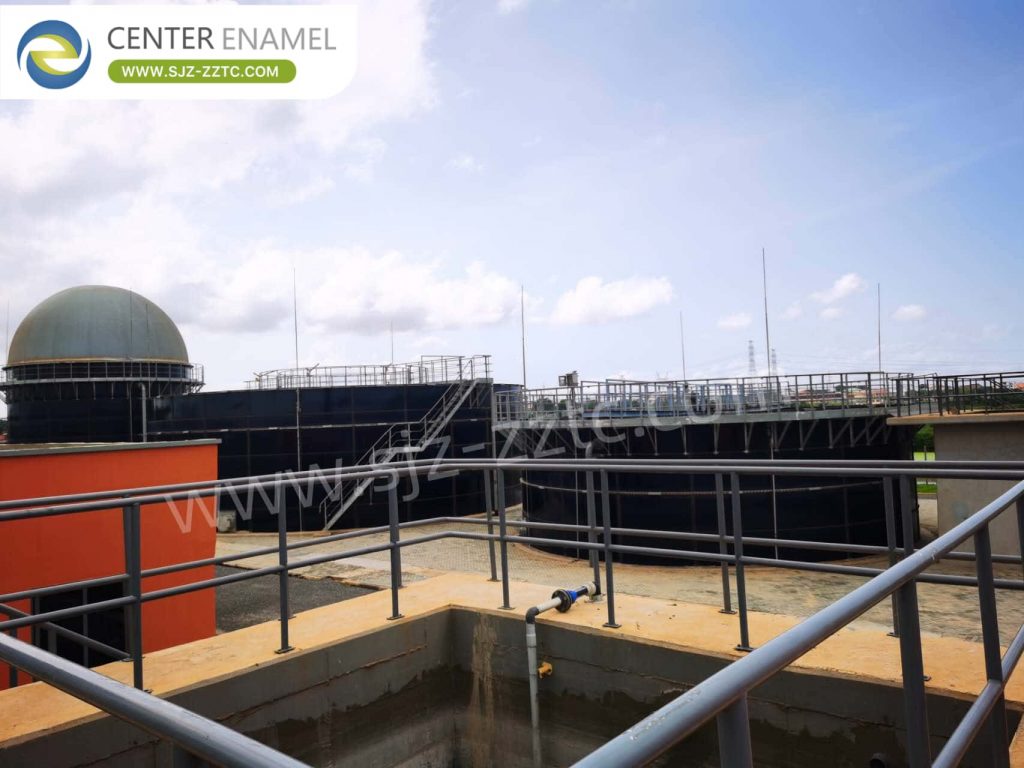
By combining robust construction with advanced process control, this reactor maximizes biogas yield, ensures operational stability, and meets the rigorous environmental compliance standards required by modern waste management and energy production facilities.
What is a CSTR Biogas Reactor?
A Continuous Stirred Tank Reactor (CSTR) is a fully mixed vessel where organic substrates are continuously fed and homogenized. The mechanical agitation ensures that incoming waste is instantly distributed, preventing the formation of "dead zones" and ensuring uniform contact between the organic matter and the active microbial biomass.
This design is particularly effective for homogeneous substrates and is the preferred choice for treating:
Food processing waste
Agricultural residues (manure, silage)
Municipal organic fractions (source-separated organics)
Technical Superiority: Key Advantages of the CSTR System
Center Enamel’s CSTR system is engineered to outperform conventional digesters. The following technical advantages ensure superior operational outcomes:
| Parameter | CSTR Advantage | Impact on Operations |
| Process Stability | Continuous stirring ensures uniformity of temperature (mesophilic/thermophilic) and pH. | Reduces the risk of acidification; maintains stable biogas output. |
| Microbial Efficiency | Optimized contact between enzymes and feedstock. | Accelerates hydrolysis and methanogenesis; reduces inhibitory by-products. |
| Scalability | Modular design allows for capacities from 100 m³ to 10,000+ m³. | Applicable for on-farm digesters and centralized industrial plants. |
| Retention Time | Reduced hydraulic retention time (HRT) due to high mass transfer. | Processes waste faster, increasing annual throughput. |
| Durability | Constructed with corrosion-resistant, high-grade steel and coatings. | Extends service life >20 years with minimal maintenance. |
1. Enhanced Process Stability and Efficiency
The continuous mixing mechanism eliminates thermal and concentration gradients. This uniformity is critical for the microbial consortia, resulting in a stable digestion process with higher methane yields and improved volatile solids (VS) reduction rates.
2. Optimized Microbial Activity
Anaerobic digestion relies on a delicate balance of bacteria and archaea. In a CSTR, the mechanical agitation prevents settling and minimizes the build-up of toxic intermediate compounds (such as ammonia and sulfides), ensuring peak microbial performance over extended operational periods.
3. Flexibility and Scalability
One of the core strengths of the Center Enamel CSTR is its ability to scale. Whether you require a small on-site unit for a commercial kitchen or a massive facility processing municipal waste, our reactors are modular and customizable to meet specific waste stream characteristics and energy production targets.
4. Reduced Retention Time
The efficiency of mixing allows for shorter retention times without compromising the quality of degradation. This capability translates into higher throughput—critical for facilities operating on tight logistics schedules where waste accumulation is a concern.
Integrating CSTR into Organic Waste Management Systems
Integrating a Center Enamel CSTR reactor into your waste management infrastructure provides a dual benefit: Environmental Sustainability and Economic Profitability.
Environmental Impact: By diverting waste from landfills, the CSTR prevents the uncontrolled release of methane (a potent greenhouse gas). The digestate produced can also be used as a high-quality biofertilizer.
Economic Impact: The generated biogas can be utilized in Combined Heat and Power (CHP) units, upgraded to biomethane for injection into the gas grid, or used as vehicle fuel, creating a consistent revenue stream.
Engineering Excellence: Customization and Design
At Center Enamel, our engineers utilize advanced computational fluid dynamics (CFD) and process simulation tools to design reactors that match your specific operational goals.
Our Engineering Process Includes:
Detailed Feedstock Analysis: We analyze the chemical and physical composition of your waste to determine optimal loading rates.
Precision Agitator Design: Custom impeller and drive designs ensure optimal mixing without excessive energy consumption.
Integrated Monitoring: Real-time sensors for pH, temperature, and gas flow allow for autonomous process adjustments and enhanced safety.
Modular Assembly: Prefabricated panels ensure quick on-site installation and easy future expansions.
Project Overview: Industrial Food Waste Digestion Facility
In 2020, Center Enamel completed a landmark food waste treatment project in Turkey, demonstrating the exceptional scalability of our CSTR biogas reactor technology. The facility features two CSTR reactors, each measuring φ16.81 meters in diameter and 16.8 meters in height, delivering a combined total effective volume of 7,452 m³. This substantial capacity enables the plant to process approximately 200 tons per day of source-separated food waste from municipal and commercial sources. The continuously stirred system ensures optimal mixing and temperature uniformity, maintaining stable mesophilic digestion conditions that maximize biogas yields. Since commissioning, the facility has consistently achieved high volatile solids reduction rates and stable biogas production, significantly reducing landfill dependency while generating renewable energy for local grid supply. This project underscores Center Enamel's capability to deliver large-scale, customized anaerobic digestion solutions for challenging organic waste streams across diverse global markets.
Why Choose Center Enamel?
Center Enamel’s CSTR biogas reactors have been successfully implemented in various applications worldwide. Our technology is recognized for its innovation, reliability, and adherence to international safety and environmental standards. Energy plants, waste management facilities, and agricultural operations across multiple regions have benefited from the superior performance of our reactors, reinforcing our position as a trusted provider of advanced anaerobic digestion solutions.
As a leader in storage and reactor technology, Center Enamel is committed to delivering innovative, reliable, and sustainable solutions. Contact us today to learn more about how our CSTR biogas reactors can be customized to meet the specific demands of your organic waste digestion system and help propel your operation into a more sustainable future.
Frequently Asked Questions (FAQ)
Q1: What types of organic waste are best suited for a CSTR biogas reactor?
A: CSTRs are highly effective for liquid and pumpable organic waste with high moisture content, such as food waste, agricultural manure, and organic industrial effluents. Solid organic waste can be pre-treated (e.g., pulping) to meet the pumpability requirements for optimal CSTR digestion.
Q2: How does a CSTR differ from a plug-flow digester?
A: The primary difference lies in mixing. A CSTR utilizes mechanical mixing to ensure uniform conditions throughout the tank, ideal for high-solid or variable substrates, while a plug-flow digester moves material horizontally with minimal mixing and is suited for more stable, fibrous materials like manure.
Q3: What is the typical payback period for investing in a CSTR system?
A: The payback period typically ranges from 3 to 6 years, depending on local energy tariffs, gate fees for waste acceptance, and government incentives for renewable energy production. Our scalable designs allow for phased investments to spread out capital costs.
Q4: How do I know if a CSTR system is right for my operation?
A: Center Enamel conducts comprehensive feasibility studies, including feedstock analysis and energy yield modeling, to determine the optimal reactor type for your specific situation. Contact us for a tailored assessment.
Q5: What maintenance is required for the CSTR agitator system?
A: Our agitators are designed for extended service intervals with heavy-duty bearings. We provide an integrated maintenance schedule, including inspections of seals and gearboxes, which are easily accessible without requiring complete system drainage.