
Custom Biogas Power Plant Solutions: Leading GFS Tanks and UASB Process
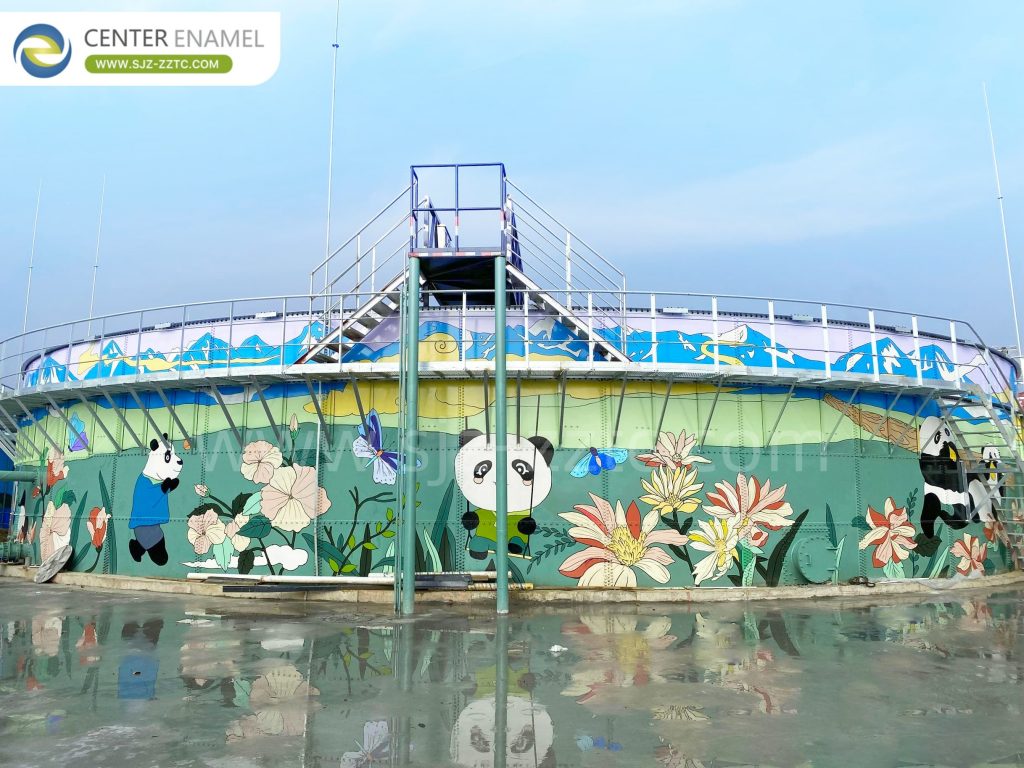
The core dilemma of livestock manure treatment lies in the structural contradiction of "decentralized generation vs. centralized treatment." Manure generation surges during intensification, but supporting treatment facilities lag behind. Digestate resource utilization channels are obstructed, with safety risks from heavy metal and antibiotic residues constraining farmland application. At the enforcement level, farmers' environmental awareness varies, with illegal discharges occurring frequently; at the policy level, subsidies and incentives are insufficient to effectively drive voluntary compliance. Biogas grid connection difficulties and limited digestate transport radius further compress the economic viability of resource utilization.
To overcome these systemic obstacles, stakeholders must invest in resilient infrastructure that guarantees long-term operational success. The choice of containment technology is the first critical step toward building a sustainable facility. By integrating advanced GFS Tanks, operators can ensure structural reliability even in the most challenging environmental conditions.
GFS Tanks Adaptable to Extreme Climates
GFS Tanks can undergo customized wind and seismic design based on project site climate and geological conditions, with environmental adaptability far superior to concrete tanks. Concrete tanks are cast-in-place monolithic structures, with seismic and wind resistance entirely dependent on on-site construction quality. In remote areas, typhoon-prone zones, and earthquake belts, construction quality is difficult to control. Under strong earthquakes or typhoons, concrete tanks are prone to cracking and base settlement damage, with subsequent reinforcement costs equivalent to rebuilding.
GFS tanks undergo collection of local seismic intensity, maximum wind pressure, and foundation bearing capacity data before construction, with customized thickened steel panels, stiffening ribs, and anchored base components-all factory-prefabricated to standardized specifications. The bolted panel structure has excellent stress distribution capability, making it less prone to overall fracture under seismic and typhoon impacts, and minor foundation settlement will not cause through-cracking. Structural parameters can be flexibly adjusted for mountainous, coastal typhoon-zone, and high-seismic-zone projects, providing long-term protection against extreme natural climate damage.
A robust tank structure serves as the heart of an efficient Biogas Power Plant, but the biological performance relies on the precision of the reactor's internals. Optimizing the conversion of organic matter into clean energy requires specialized equipment designed for durability and consistency. Implementing the right UASB Process and associated components is essential for maximizing gas yields.
UASB Supporting Equipment
Core equipment includes the GFS anaerobic reactor tank, with the internal three-phase separator being the key component for gas-liquid-solid separation and sludge retention. The bottom high-precision distribution system (distribution pipes, distributors, pressure regulators) ensures uniform influent distribution, preventing short-circuiting and sludge accumulation. Supporting equipment includes influent lift pumps, equalization tanks, and flow meters to stabilize influent conditions. The top biogas collection system includes gas collection hoods, gas piping, desulfurization/dehydration equipment, and gas storage. Online temperature, pH, and COD monitoring instruments are integrated. Bottom sludge discharge pipes and pumps periodically remove excess sludge. The complete equipment package is compact, with no rotating wear parts, low equipment loss, and high operational stability.
Technical equipment must be seamlessly integrated into a standardized workflow to address the specific needs of modern agricultural and industrial sectors. Providing comprehensive solutions allows for the effective management of high-pollution waste streams in diverse settings. The following standardized approach illustrates our methodology for achieving environmental compliance.
Livestock Wastewater Standardized Treatment Solutions
Adapted to agricultural and rural settings, the core uses a low-cost treatment train of "solid-liquid separation + anaerobic digestion + ecological polishing," specifically addressing high-suspended-solids, high-concentration organic wastewater. Pretreatment uses solid-liquid separation equipment and sedimentation tanks to rapidly remove solid impurities like manure and feed residues, significantly reducing biochemical load. The main stage uses USR/CSTR anaerobic processes for efficient organic degradation with simultaneous biogas energy recovery. Subsequent A/O biological treatment precisely removes nitrogen and phosphorus, with final constructed wetlands or stabilization ponds for polishing. Digester tanks use Center Enamel GFS tanks, resistant to manure corrosion and with convenient assembly for rural projects. The entire process has strong shock load resistance, adapts to significant water quality and quantity fluctuations, is simple to operate, and achieves both pollution control and resource recycling.
The efficacy of these standardized solutions is proven through successful implementation in complex international environments. By analyzing real-world project benchmarks, we can understand the practical application of our technologies. Our work in Southeast Asia demonstrates how these integrated systems provide tangible benefits for industrial clients.
Indonesia Palm Oil Biogas Project
Specifically designed for high-concentration palm oil wastewater treatment with 3 GFS fermentation tanks, each 19.86 m diameter × 8.4 m height. Installation began November 2009 with only 7 construction personnel, completing all tank assembly in 40 days-highly efficient and time-saving. Tanks are fitted with dual-membrane gas storage covers for POME anaerobic digestion-degrading organics and recovering biogas energy while eliminating palm industry pollution. This is an early benchmark POME biogas treatment project in Southeast Asia.
To achieve such results globally, a sophisticated support system is required to guide clients from the planning phase to final commissioning. Our team leverages extensive international knowledge to navigate regulatory, financial, and technical landscapes. The expertise of our marketing and technical departments ensures that every facility is optimized for its specific regional requirements.
Center Enamel Marketing Team
The marketing team brings together environmental industry multi-skilled professionals and multilingual foreign trade specialists, with deep expertise in global biogas, wastewater treatment, and biomass new energy markets-accumulating extensive practical project experience in Southeast Asia, Africa, Europe, and the Americas.
The team is proficient in various countries' wastewater discharge regulations, biogas subsidy policies, and carbon trading rules-providing one-stop preliminary site survey, solution planning, and investment return analysis consulting services. With multilingual capabilities (English, French, Spanish, Arabic), the team effectively communicates with clients worldwide-precisely matching regional industrial resources, project budgets, and environmental requirements-customizing high-cost-performance GFS tanks and anaerobic reactor solutions based on client production capacity, treatment targets, and gas production expectations. Leveraging extensive overseas project experience, the team proactively helps clients avoid risks in overseas approvals, equipment import, and construction implementation-building a globally adaptable integrated environmental equipment business service system.
Underpinning our service is a rigorous commitment to quality that meets the highest international standards. These certifications serve as a testament to the reliability and safety of our equipment, ensuring peace of mind for international project developers. This institutional foundation is what allows us to participate in large-scale tenders around the world.
Comprehensive International Authoritative Certifications
Center Enamel holds CE, NSF, WRAS, ISO9001, BSCI, ASME, and other global certifications-fully clearing EU, North American, Southeast Asian, and African project tendering barriers-providing critical hard credential advantages for large overseas project bidding.
Frequently Asked Questions (FAQ)
How does a Biogas Power Plant benefit from using GFS Tanks?
GFS tanks are superior for biogas power plants due to their exceptional corrosion resistance, structural durability in extreme climates, and fast assembly. They provide a secure, leak-proof environment for anaerobic digestion, ensuring the long-term containment of biogas while reducing maintenance costs compared to traditional concrete tanks.
Why is the UASB Process critical for high-concentration wastewater?
The UASB process is essential for treating high-concentration organic wastewater as it efficiently degrades pollutants using a granular sludge bed. This anaerobic method maximizes biogas production for energy recovery while significantly reducing the organic load, making it a highly cost-effective solution for industrial and agricultural waste treatment.
What advantages does Center Enamel provide for international projects?
Center Enamel offers a comprehensive, one-stop service including customized engineering design, high-quality GFS tank manufacturing, and expert consulting. Backed by international certifications like CE and NSF, we help clients navigate regulatory barriers, optimize investment returns, and ensure the successful, timely delivery of large-scale environmental projects globally.