
Customized Anaerobic Solutions and Robust GFS Tanks for Myanmar Fruit and Vegetable Waste Biogas Project
As an agriculture-dominated nation in Southeast Asia, Myanmar boasts vast fruit and vegetable plantations spread across Ayeyarwady Delta, Mandalay, Shan State and Tanintharyi Region. Rapid development of crop cultivation, small-scale agro-processing and domestic fresh food trade generates massive volumes of organic fruit and vegetable waste every harvest season. Traditional disposal methods including random roadside stacking, open landfilling and uncontrolled field incineration fail to comply with Myanmar’s ongoing environmental protection policies, rural carbon reduction goals and circular agricultural development plans.
As a globally professional full-chain EPC contractor specializing in organic waste recycling, Center Enamel delivers tailor-made full-set Anaerobic Solutions for Myanmar’s local Fruit and Vegetable Waste Biogas Project. Supported by diversified mature anaerobic processes and long-service-life GFS Tanks, the enterprise converts large quantities of discarded fruit and vegetable residues into affordable clean biogas to help Myanmar realize waste minimization, resource cyclic reuse and sustainable low-carbon rural development.
Source of Myanmar’s fruit and vegetable waste
Myanmar’s fruit and vegetable waste mainly originates from four core industrial and agricultural segments. Large-scale rural plantations in Ayeyarwady Delta and Mandalay generate damaged, immature and deformed mango, jackfruit, banana and leafy vegetable stalks and discarded outer leaves during annual seasonal harvesting. Small rural roadside markets and downtown fresh produce stalls in Yangon discard rotten, overripe unsold fruits and vegetables daily without standardized waste sorting facilities.
Local small-sized fruit juice, canned fruit and pickled vegetable workshops produce substantial peel, pomace and fruit core residues during simple deep processing. In addition, numerous family-run catering shops and rural village eateries create daily kitchen vegetable trimmings, forming steady feedstock reserves for local Fruit and Vegetable Waste Biogas Project.
Disposal challenges of Myanmar’s fruit and vegetable waste
Myanmar faces prominent practical obstacles in fruit and vegetable waste governance. Most organic leftovers are casually piled along riverbanks, rural field edges and suburban vacant land, leading to severe stench diffusion, river water contamination and spontaneous methane greenhouse gas release from natural decomposition. Open-air incineration is widely adopted in remote mountainous areas of Shan State, releasing harmful smoke and worsening regional air quality.
Underdeveloped nationwide waste classification systems lead to plastic bags and inorganic impurities mixed into organic waste, sharply raising pre-treatment expenses for subsequent resource recovery. Restricted government fiscal budget results in extreme shortage of centralized organic waste disposal infrastructure across countryside. Besides, high moisture and fast spoilage features of tropical fruit and vegetable waste make conventional open composting low-efficiency and uneconomical, accelerating local demand for reliable Anaerobic Solutions and standardized Fruit and Vegetable Waste Biogas Project.
How fruit and vegetable waste produces biogas via mature Anaerobic Solutions
Biogas generation from fruit and vegetable waste is completed inside airtight GFS Tanks and matched anaerobic reactors through four sequential biochemical reactions, the core constituent of complete Anaerobic Solutions.
Hydrolysis: microorganisms secrete specific enzymes to break down large-molecule cellulose, pectin, starch and plant protein into small soluble organic compounds.
Acidification: acid-forming bacteria convert soluble small organics into volatile fatty acids and intermediate alcohols.
Acetogenesis: intermediate metabolites are further transformed into acetic acid, hydrogen and carbon dioxide. Methanation: strict anaerobic methanogens produce raw biogas with methane content ranging from 55% to 70%.
After desulfurization, dehydration and compression purification, refined biogas can be used for factory power generation, farm heating and rural household cooking fuel; post-fermentation digestate is processed into premium organic fertilizer for Myanmar’s farmland and orchard planting.
Core benefits of Fruit and Vegetable Waste Biogas Project for Myanmar
The construction of Fruit and Vegetable Waste Biogas Project with professional Anaerobic Solutions brings comprehensive multi-aspect gains for Myanmar’s rural and industrial development. Environmentally, it drastically reduces landfill intake and random waste accumulation, curbs soil, river pollution and methane emissions to help Myanmar advance national carbon reduction targets. In energy dimension, self-produced biogas lessens rural dependence on expensive imported coal and firewood, easing frequent power shortages in remote villages.
Economically, it builds closed circular industrial chain of “crop planting → waste recycling → biogas supply → organic fertilizer returning farmland”, cutting waste handling costs for local small agro-processing factories and lifting their green market competitiveness. Socially, the project creates new employment posts in waste collection, biogas plant operation and equipment maintenance to increase grassroots rural income and narrow urban-rural development gaps.
Advanced Anaerobic Technologies: CSTR, UASB, USR, IC
Center Enamel equips Myanmar’s biogas projects with four differentiated anaerobic technologies as core parts of customized Anaerobic Solutions, tailored for varied waste characteristics and project scales across urban and rural regions:
CSTR: Fitted with mechanical stirring equipment inside matched GFS Tanks, it achieves full uniform mixing of high-moisture fruit pomace and microbial sludge to avoid material crusting and stratification, featuring strong anti-shock load capacity and stable high biogas output, ideal for medium-large centralized biogas plants in Yangon industrial suburbs.
UASB: Built on high-activity granular sludge bed with outstanding COD removal efficiency and low power consumption, suitable for pre-treated fruit and vegetable leachate after solid-liquid separation.
USR: Simple internal layout, low initial construction investment and superior anti-clogging performance, directly treats high-solid raw fruit and vegetable waste without complicated pre-processing, perfectly fits scattered small rural biogas stations across Myanmar’s countryside.
IC: High-load internal circulation reactor with treatment efficiency 3–5 times higher than traditional anaerobic equipment, designed for super-large centralized waste disposal hubs in core urban agglomerations.
Advantages of GFS Tanks for Fruit and Vegetable Waste Biogas Project
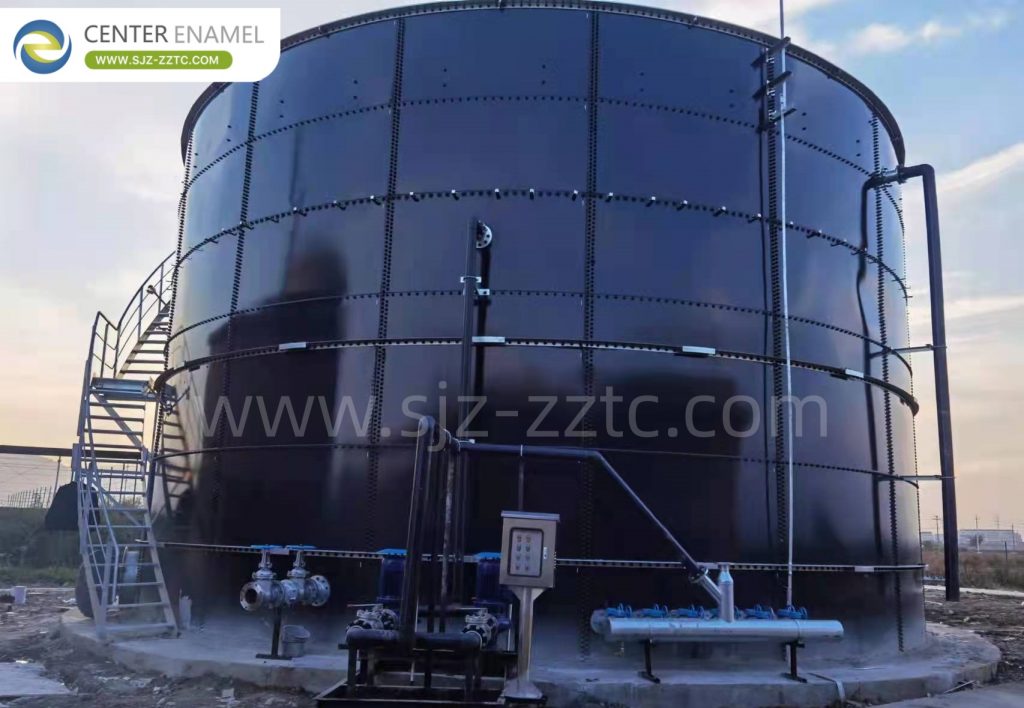
As indispensable core hardware supporting full-set Anaerobic Solutions, GFS Tanks (Glass-Fused-to-Steel Tanks) perfectly adapt to Myanmar’s tropical high-temperature, rainy and coastal humid climate.
- High-temperature sintered enamel coating delivers exceptional acid, alkali and salt corrosion resistance against acidic fermentation liquor and Ayeyarwady Delta’s coastal salt mist, guaranteeing over 30 years of steady service life.
- Exclusive customized sealing structure ensures superior airtightness to prevent biogas leakage and clean energy waste.
- Modular bolted prefabricated design enables rapid on-site assembly without field welding, greatly shortening construction period and lowering on-site construction risks.
- Smooth inner tank surface effectively avoids organic pomace scaling and adhesion to slash daily maintenance expenditure; tank effective volume can be flexibly expanded according to seasonal fluctuation of fruit and vegetable waste yield and matches all four anaerobic processes for multi-purpose fermentation and raw material storage.
Reasons to select Center Enamel as full-service EPC contractor
- Own over 200 independent enamel technology patents; all standardized GFS Tanks are manufactured strictly in accordance with ISO and AWWA international quality control standards.
- Provide full turnkey EPC services covering project engineering design, equipment production, cross-border logistics transportation, on-site installation, system commissioning, operator training and lifelong after-sale maintenance.
- Complete localized customized design based on Myanmar’s fruit and vegetable waste composition, tropical monsoon climate and scattered construction site terrain to optimize overall Anaerobic Solutions parameters and maximize unit biogas yield.
- Possess abundant Southeast Asian rural biogas project experience to flexibly comply with Myanmar’s local construction codes and environmental management regulations.
- Optimize overall system configuration to reduce equipment failure probability and daily operational cost, securing stable long-term investment returns for local project investors.
- Global after-sales service network provides timely remote technical guidance and on-site overhaul support for ongoing Fruit and Vegetable Waste Biogas Project.
Professional GFS Tanks Installation from Center Enamel
Center Enamel develops climate-adaptive standardized installation solutions matching Myanmar’s construction environment.
Hydraulic jacking top-down installation eliminates high-altitude scaffold erection to boost construction safety for narrow rural farmland and compact urban construction plots.
Full bolted assembly cancels on-site hot welding, preventing hidden corrosion risks triggered by Myanmar’s high air humidity and sudden tropical downpours.
Experienced international engineering supervisors deliver full-process on-site technical guidance and cooperate with local construction crews to accelerate construction progress.
After assembly completion, comprehensive airtightness, pressure resistance and anti-corrosion performance tests are carried out to ensure tanks meet biogas plant operating standards and sustain stable running of the full set of Anaerobic Solutions.
Successful Global Project Cases
Case1: Sweden Biogas Project
Tank Dimensions: φ19.11 × 19.2 m (H) — 1 Unit
Total Volume: 5,510 m³
Completion Date: 2024
Case2: Indonesia Biogas Project
Application: Anaerobic Reactors for Palm Oil Wastewater Treatment Plant
Tank Models: Ø17.58 × 8.4 m; Ø16.82 × 7.2 m
Number of Tanks: 3 GFS Tanks
Installation Date: 2013
Myanmar’s massive agricultural fruit and vegetable waste is both pressing environmental burden and untapped renewable resource, making the development of Fruit and Vegetable Waste Biogas Project supported by mature Anaerobic Solutions and durable GFS Tanks a vital rural green development approach. As a trusted full-cycle EPC provider, Center Enamel delivers localized waste-to-energy schemes tailored to Myanmar’s agricultural layout and monsoon climate.
These biogas projects effectively curb organic waste pollution, increase affordable rural clean energy supply, advance circular agriculture and help Myanmar steadily achieve national carbon reduction targets, laying solid green foundations for long-term sustainable upgrade of Myanmar’s farming and agro-processing industries.