
Customized Biogas Solutions and Reliable GFS Tanks for Vietnam Fruit and Vegetable Waste Biogas Project
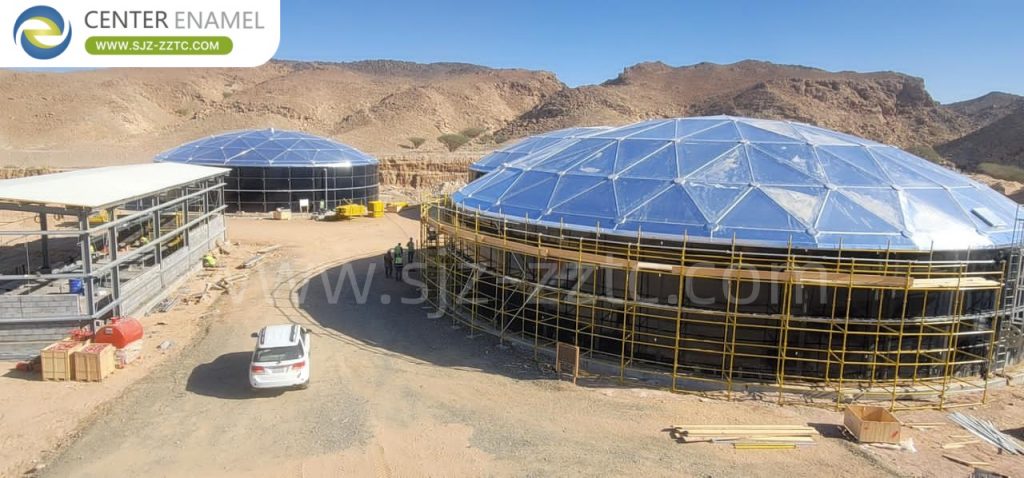
Vietnam is a typical Southeast Asian agricultural powerhouse with booming tropical and subtropical fruit & vegetable cultivation, food processing and tourism catering sectors concentrated in Mekong Delta, Red River Delta, Da Lat and Ho Chi Minh City. Continuous expansion of plantation scale and rising domestic consumption plus thriving inbound tourism generate massive fruit and vegetable waste year-round. Conventional waste disposal such as random landfilling, riverside stacking and open incineration cannot comply with Vietnam’s tightening environmental laws, carbon peaking roadmap and circular agriculture development targets.
As a professional global full-cycle EPC contractor, Center Enamel delivers tailor-made integrated Biogas Solutions for Vietnam’s local Fruit and Vegetable Waste Biogas Project. Relying on diversified anaerobic technologies and corrosion-resistant GFS Tanks, the company converts bulk organic agricultural leftovers into clean biogas to realize waste reduction, resource recycling and low-carbon sustainable development nationwide.
Source of Vietnam’s fruit and vegetable waste
Vietnam’s fruit and vegetable waste mainly stems from four major industries. Large-scale crop plantations in Mekong Delta and Da Lat highland produce bruised, immature, defective fruits, stalk residues and discarded outer leaves during seasonal harvest of mango, dragon fruit, banana, cabbage and chili.
Urban wholesale markets and supermarkets in Hanoi and Ho Chi Minh City abandon rotten and expired fresh produce daily due to strict shelf-life regulations without complete classified collection. Fruit canning, juice and frozen vegetable factories create large quantities of peel, pomace and fruit seeds during deep processing. Besides, numerous tourist restaurants, resort kitchens and street food stalls spawn abundant vegetable trimming waste, providing stable raw feedstock for local Fruit and Vegetable Waste Biogas Project.
Disposal challenges of Vietnam’s fruit and vegetable waste
Vietnam faces multiple tough challenges in organic waste management. Most fruit and vegetable residues end up in unregulated landfills or piled randomly alongside riverbanks and rural idle land, triggering strong odor pollution, underground water seepage contamination and uncontrolled methane greenhouse gas emissions. Open-air waste combustion is prevalent in remote mountainous villages of Central Highlands, releasing toxic fumes and worsening seasonal regional haze.
Mixed garbage collection mode mixes plastic packaging and inorganic impurities into organic waste, drastically increasing pre-processing costs. Insufficient government financial investment leads to scarce centralized waste treatment infrastructure in rural areas. In addition, high moisture and quick rotting characteristics of tropical fruit and vegetable waste make traditional composting low-yield and uneconomical, accelerating market demand for reliable Biogas Solutions and standardized Fruit and Vegetable Waste Biogas Project.
How fruit and vegetable waste turns into biogas via mature Biogas Solutions
The whole biogas conversion is completed inside sealed GFS Tanks and supporting anaerobic reactors via four continuous biochemical reactions, the core component of complete Biogas Solutions.
Hydrolysis: microorganisms secrete biological enzymes to decompose macromolecular cellulose, starch and protein into small soluble organic molecules.
Acidification: acid-forming bacteria convert soluble substances into volatile fatty acids and intermediate alcohols.
Acetogenesis: intermediates are further transformed into acetic acid, hydrogen and carbon dioxide.
Methanation: strict anaerobic methanogens produce raw biogas containing 55%–70% methane content.
After desulfurization, dehydration and compression purification, refined biogas can be used for factory power generation, industrial heating and residential cooking gas supply; post-fermentation digestate is processed into high-quality organic fertilizer for Vietnam’s farmland and orchard planting.
Core benefits of Fruit and Vegetable Waste Biogas Project for Vietnam
The construction of Fruit and Vegetable Waste Biogas Project brings multi-dimensional benefits for Vietnam’s green development backed by professional Biogas Solutions. Environmentally, it effectively cuts landfill volume and random waste accumulation, curbs soil and water pollution and methane emissions to assist Vietnam in fulfilling national carbon reduction commitments. In energy aspect, homemade biogas reduces domestic reliance on imported coal and fossil fuels and alleviates chronic power shortage in remote rural and mountainous regions.
Economically, it builds closed circular industrial chain of “planting → waste recycling → biogas supply → organic fertilizer returning field”, lowering waste disposal cost for local food processing enterprises and improving their green brand competitiveness. Socially, the project creates new jobs covering waste collection, plant operation and equipment maintenance to boost rural resident income and narrow urban-rural development gaps.
Advanced Anaerobic Technologies: CSTR, UASB, USR, IC
Center Enamel configures four mature anaerobic technologies as core components of customized Biogas Solutions, matching varied waste traits and construction scales of Vietnam’s Fruit and Vegetable Waste Biogas Project:
CSTR: Installed with internal mechanical stirring inside matched GFS Tanks, it mixes high-moisture fruit pomace and microbial sludge evenly to avoid material crusting and stratification, with strong anti-shock load capacity, ideal for medium & large centralized biogas plants in industrial parks of Ho Chi Minh City and Hanoi.
UASB: Relying on high-activity granular sludge bed with excellent COD removal rate and low power consumption, suitable for pre-treated fruit and vegetable leachate after solid-liquid separation.
USR: Simple structural design and low upfront investment, capable of directly treating high-solid raw waste without complicated pre-crushing, perfect for scattered small rural biogas stations across Central Highlands villages.
IC: High-efficiency internal circulation reactor with treatment efficiency 3–5 times higher than conventional equipment, designed for super-large urban centralized waste disposal hubs.
Advantages of GFS Tanks for Fruit and Vegetable Waste Biogas Project
As core supporting equipment for full-set Biogas Solutions, GFS Tanks (Glass-Fused-to-Steel Tanks) are highly compatible with Vietnam’s hot, rainy and coastal humid tropical climate.
High-temperature sintered enamel coating delivers outstanding acid, alkali and salt corrosion resistance against acidic fermentation liquid and coastal salt fog to secure over 30 years of stable service life.
Professional sealing structure guarantees superior airtightness to prevent biogas leakage and energy loss.
Modular bolt prefabricated design enables fast on-site assembly without field welding, shortening construction cycle remarkably.
Smooth inner tank surface avoids organic pomace scaling and cuts regular maintenance expenditure; tank volume can be flexibly expanded along with seasonal waste output fluctuation and fits all four anaerobic processes for multi-purpose fermentation and raw material storage.
Reasons to select Center Enamel as full-service EPC contractor
- Own over 200 independent enamel technical patents; all standard GFS Tanks are manufactured strictly complying with ISO and AWWA international quality standards.
- Provide full turnkey EPC services including project design, equipment production, cross-border shipment, on-site installation, system commissioning, operator training and long-term after-sales maintenance.
- Complete customized engineering design based on Vietnam’s local waste composition, monsoon climate and construction site terrain to optimize overall Biogas Solutions parameters and maximize biogas production efficiency.
- Possess abundant Southeast Asian biogas project experience to adapt smoothly to Vietnam’s local construction specifications and environmental regulatory requirements.
- Optimize overall system layout to lower equipment failure rate and daily operating cost, ensuring steady long-term economic gains for project investors.
- Global after-sales service network provides timely remote technical guidance and on-site overhaul for local Fruit and Vegetable Waste Biogas Project.
Professional GFS Tanks Installation from Center Enamel
Center Enamel develops climate-adaptive installation techniques fitting Vietnam’s high-temperature and rainy construction environment.
Hydraulic jacking top-down installation cancels high-altitude scaffold setup, greatly improving construction safety for narrow rural and urban construction plots.
Full bolted assembly eliminates on-site hot welding, avoiding hidden corrosion risks caused by Vietnam’s high humidity and sudden seasonal downpours.
Experienced international engineers provide full-process on-site technical guidance and cooperate with local construction teams to accelerate construction progress.
After assembly completion, strict airtightness, pressure resistance and anti-corrosion testing are carried out to ensure tanks meet biogas plant standards and stable running of the complete set of Biogas Solutions.
Successful Global Project Cases
Case1: Indonesia Biogas Project
Tank Application: Palm Oil Wastewater Treatment Plant
Tank Model: Ø19.86 × 8.4 m
Number of Tanks: 3 GFS Tanks
Installation: 7 personnel, 40 days
Installation Date: November 2009
Case2: Sweden Biogas Project
Tank Dimensions: φ19.11 × 19.2 m (H) — 1 Unit
Total Volume: 5,510 m³
Completion Date: 2024
Abundant fruit and vegetable waste is both environmental burden and valuable renewable resource for Vietnam, making the development of Fruit and Vegetable Waste Biogas Project with mature Biogas Solutions and durable GFS Tanks a key green development strategy.
As a reliable full-cycle EPC supplier, Center Enamel delivers localized waste-to-energy schemes adapting to Vietnam’s agricultural layout and monsoon climate. Such biogas projects effectively ease organic waste pollution, boost domestic clean energy supply, promote circular agriculture and accelerate Vietnam’s carbon reduction goals, laying a solid green foundation for long-term sustainable upgrade of Vietnam’s agricultural and food processing industries.