
How the IC Process Cuts Cost and Footprint in Every Papermaking Wastewater Treatment Project
Papermaking wastewater is the largest-volume, highest-suspended-solids stream in the light industry-and the one where a poorly chosen biological core quietly inflates energy bills for two decades. For mill owners planning a Papermaking Wastewater Treatment Project, the decisive question is not whether to use anaerobic digestion, but which reactor configuration delivers stable degradation inside the land and power budget available. Center Enamel builds those projects around the IC Process, paired with GFS Tanks engineered for alkaline, lignin-bearing service.
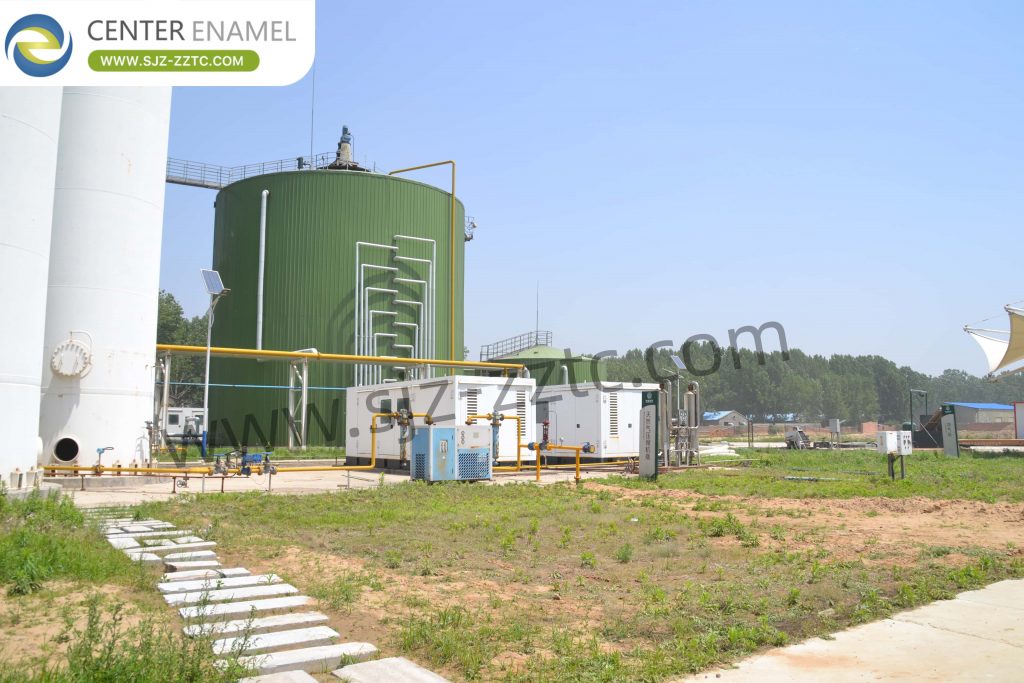
The Three Highs That Define Industrial Wastewater Today
The core challenges of industrial wastewater treatment center on the "three highs"-high difficulty, high cost, and high energy consumption. Wastewater from new energy, chemical, and pharmaceutical industries is complex in composition with numerous characteristic pollutants, and traditional treatment processes are difficult to remove effectively. The industry also faces continuous technological upgrade pressure from increasingly stringent emission standards, plus new requirements for digitalization and low-carbon transformation on operational refinement management.
Papermaking sits squarely inside this pressure. Its effluent combines high suspended solids, high COD, high alkalinity, and large continuous discharge volume, and mills face discharge limits that leave no room for biological upsets. Meeting those limits economically requires a treatment train built around stream segregation and a high-rate anaerobic core.
Why the IC Process Fits Papermaking Wastewater
The IC Process-Internal Circulation anaerobic reactor-is the third-generation high-efficiency anaerobic technology built on UASB principles. Its defining feature is a built-in gas-lift internal circulation system that recirculates wastewater without external return pumps. Biogas generated during degradation drives the circulation, lifting mixed liquor to a top gas-liquid separator, where gas is collected and the degassed sludge-water mixture returns by gravity through downcomers to the reactor bottom. This autonomous loop repeatedly enhances pollutant degradation.
The reactor uses a dual-zone configuration: a lower main reaction zone for high-rate degradation and an upper polishing zone for final treatment and sludge-water separation. Because the internal circulation keeps the sludge bed expanded and the upflow velocity high, the reactor achieves a footprint only one-third that of traditional anaerobic processes for the same treatment capacity-a decisive advantage where mill land is fixed.
IC Process vs. Traditional Anaerobic Reactor:
| Dimension | Traditional Anaerobic | IC Process |
| Footprint for equal load | Baseline | ~1/3 of conventional |
| Internal mixing | External recirculation pump required | Self-driven by biogas gas-lift |
| Reactor zones | Single chamber | Dual zone: high-load + polishing |
| Shock-load tolerance | Moderate | Strong hydraulic and organic resistance |
| Sludge retention | Prone to washout | Highly granulated, low washout |
| Energy demand | Higher parasitic load | No external return pumps |
The Complete IC Supporting Equipment Package
The reactor is only the core. Around it, the system integrates a GFS tank with built-in gas-lift internal circulation and upper and lower three-phase separators-the key components for autonomous circulation and sludge-water separation. A bottom precision distribution system and pressure-regulating feed device ensure uniform, stable influent, while influent lift pumps, equalization tanks, and flow meters provide precise influent control. Top-mounted high-efficiency biogas collection, desulfurization, dehydration, and storage equipment handles gas recovery. High-precision online monitoring covers real-time temperature, pH, COD, and level.
Bottom and mid-section dedicated sludge discharge pipes and recirculation control devices eliminate the need for external return pumps. The complete system is highly integrated, with no excess external equipment, compact structure, and high automation-an important consideration for mills with limited operator resources.
The Standardized Papermaking Treatment Train
A well-designed Papermaking Wastewater Treatment Project follows a combined train of white water recirculation, physicochemical pretreatment, anaerobic digestion, and aerobic treatment, with the core strategy of maximizing recycling to reduce discharge volume.
White water recirculation is the central water-saving measure. Paper machine white water is treated by microfiltration, DAF, and disc filters to recover fiber for repulping, reducing discharge by 60–80%. Pretreatment uses screens and fine screens to recover fiber and filler suspended solids for sale, while coagulation/sedimentation and DAF further remove colloids and fine suspended solids. Cooking black liquor is collected separately-alkali recovery boilers recover alkali and burn lignin for steam, reducing pollution at source.
The main biochemical stage uses IC or UASB anaerobic processes followed by A/O aerobic treatment for dissolved organic pollutant degradation. Final advanced treatment applies chemical decolorization and membrane filtration as required by discharge standards. Throughout the train, tanks use Center Enamel GFS tanks resistant to high alkalinity and lignin corrosion.
GFS Tanks: Corrosion Resistance That Outlasts Concrete
Containment determines whether the process survives its environment. Concrete tank interiors are riddled with pores, allowing wastewater and acid/alkaline media to penetrate and corrode the structural layer. Long-term use leads to internal wall spalling, water seepage, and rebar corrosion-problems that are difficult to repair and cannot be fundamentally resolved.
Center Enamel's independently developed double-sided double-layer enameling technology applies high-temperature enamel to both interior and exterior surfaces of steel panels, creating a dense, non-porous finish that blocks corrosive liquids and biogas permeation. The enamel layer has extremely strong chemical stability, resisting acids, alkalis, salts, and microbial corrosion. Concrete tanks typically develop extensive corrosion and leakage after 5–8 years, while GFS tank anti-corrosion service life can exceed 30 years with no need for frequent internal lining repairs.
Concrete vs. GFS Tank Performance:
| Criterion | Concrete Tank | Center Enamel GFS Tank |
| Surface structure | Porous, permeable | Dense, non-porous enamel |
| Failure onset | 5–8 years (spalling, seepage, rebar corrosion) | No lining repair needed |
| Anti-corrosion service life | Limited, repair-dependent | 30+ years |
| Chemical resistance | Moderate | Acids, alkalis, salts, microbial corrosion |
| Coating failure modes | Cracking, delamination | No peeling or blistering |
| Leakage risk to groundwater | Significant over time | Fundamentally eliminated |
GFS tank coatings carry no risk of peeling or blistering and are adaptable to highly corrosive conditions such as palm oil mill effluent, livestock manure, and chemical high-salinity wastewater, with outstanding long-term comprehensive cost advantages.
Roofing Choices: Match the Cover to the Service
Not every tank in a papermaking plant needs gas-tight sealing. For atmospheric-pressure storage without air-tightness requirements-drinking water storage, agricultural irrigation, firewater reserve, and general production wastewater temporary storage-the FRP Roof Cover offers an economical solution in flat and dome styles. Integrally molded from resin and fiberglass, it is lightweight, naturally water-resistant, mildly acid/alkali resistant, and will not rust or rot in humid environments, eliminating the frequent anti-corrosion maintenance metal roofs require. The dome style drains well and resists snow load and wind; the flat style accommodates walkways, level gauges, and vents. It is fully insulated with no galvanic corrosion risk and will not contaminate drinking water.
The FRP roof is only suitable for atmospheric-pressure tanks without biogas collection or pressurization, and is not recommended for anaerobic fermentation gas-producing conditions-where aluminum dome covers or GFS-integrated gas collection should be specified instead.
Service and Certification Behind Every Project
Delivering projects across regions requires more than equipment. Leveraging regional sales centers in China and overseas local agent networks, Center Enamel has established a complete after-sales service loop covering all markets: a 24/7 rapid response mechanism, on-site domestic and overseas installation services, full-project-cycle after-sales support, and long-term warranty protection. The chain runs from preliminary site survey through mid-term construction management to long-term inspection and maintenance, uniformly adapted to domestic and international standards and coordinating personnel, materials, and on-site scheduling across simultaneous multi-region projects.
Center Enamel holds CE, NSF, WRAS, ISO9001, BSCI, and ASME certifications, clearing EU, North American, Southeast Asian, and African project tendering barriers-a critical credential advantage for large overseas bids.
FAQ
Why does the IC Process suit papermaking wastewater?
Its gas-lift internal circulation delivers high-rate degradation in one-third the footprint of conventional reactors, tolerating the shock loads typical of mill production cycles without external return pumps.
How much discharge does white water recirculation reduce?
Treating paper machine white water through microfiltration, DAF, and disc filters recovers fiber for repulping and cuts discharge volume by 60–80%.
Can GFS tanks handle black liquor alkalinity?
Yes. The fused enamel resists high alkalinity and lignin corrosion, with a service life exceeding 30 years compared with 5–8 years for concrete.
Send us your mill's water quality data and discharge targets, and our engineers will size the IC Process reactor and GFS tank configuration for your Papermaking Wastewater Treatment Project. Talk to Center Enamel today to turn your compliance requirements into a buildable process train-we will return a technical scope and delivery schedule tailored to your site.