
Daily Treatment Plant: Why Rated Capacity Depends On The Volume Basis
A daily treatment plant rated at '1,000 m3/day' does not fix a unique tank size. Daily flow is converted to tank volume through retention time, and the number you get depends on which volume basis you use - geometric, working or effective - and on the peak factor applied. Two quotes for the same daily rating can differ by a large margin simply because one used nominal geometric volume and the other used effective working volume. Comparing quotes without agreeing the basis is comparing different things.
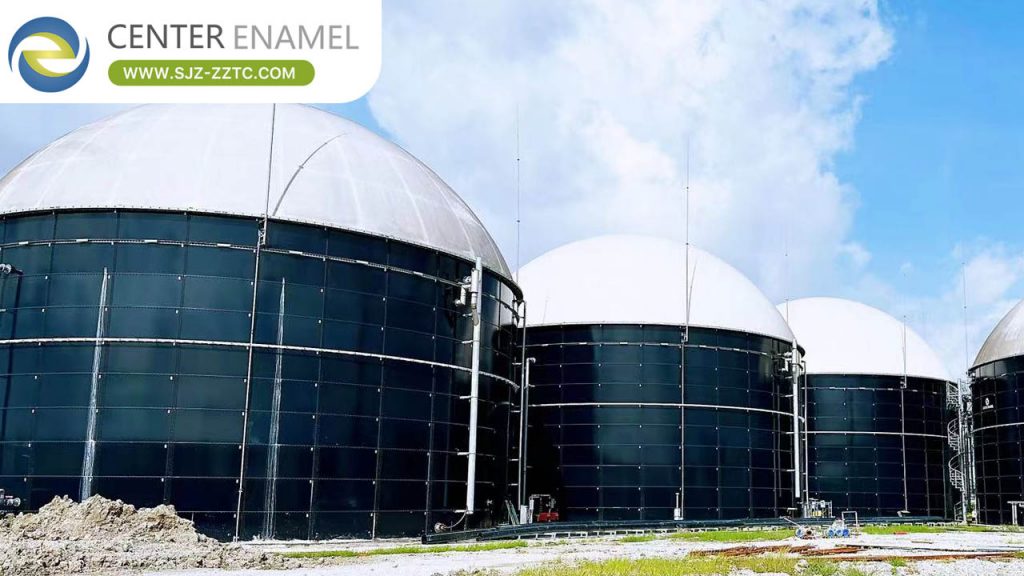
Four Volume Bases That Get Confused
The same tank has several 'volumes', and suppliers may quote different ones. Geometric volume is the full internal space of the empty vessel. Working volume is what is usefully held between normal operating levels. Effective (or biological) volume is the portion where the reaction actually happens - exclude dead zones, sludge storage and freeboard. Nominal volume is a rounded catalogue label. Only effective volume does treatment work.
| Volume basis | Definition | Use |
| Geometric | Full internal vessel space | Fabrication / freight |
| Working | Between normal operating levels | Hydraulic sizing |
| Effective | Where reaction occurs | Retention / loading |
| Nominal | Rounded catalogue label | Marketing only |
From m3/Day To Tank Volume
The conversion chain is short but easy to abuse. Daily flow (Q) sets the average hourly flow (Q/24). Multiply by a peak factor to get the design hourly flow. Multiply the design flow by the required retention time to get the volume; then divide by the usable fraction to get the physical tank size. Skip the peak factor, or confuse effective with geometric volume, and the quoted tank is too small.
| Step | Operation | Why it matters |
| 1. Average flow | Q / 24 = m3/h | Base rate |
| 2. Peak flow | average x peak factor | Absorbs swings |
| 3. Required volume | peak flow x retention time | Process need |
| 4. Physical volume | required / usable fraction | What you buy |
Why Two Quotes Differ
If supplier A sizes on average flow and geometric volume, and supplier B sizes on peak flow and effective volume, B will specify a much larger - and more expensive - tank for the same '1,000 m3/day' label. Neither is necessarily wrong; they answered different questions. The fix is to tender on the basis, not the label: state the peak factor, the retention time and the volume basis you want priced. A verified reference in the library is a UASB process package for landfill leachate in Jiangxi; the source confirms the UASB process and application, but retention time and tank dimensions are Not Specified in the Available Source, so they are not claimed here.
Check The Peak Factor And The Usable Fraction
Two numbers deserve scrutiny in any daily-rating quote. The peak factor reflects how uneven the incoming flow is - a plant with batch discharges needs a higher factor than one with a steady feed. The usable fraction is the share of the physical tank that counts as effective volume after allowing for sludge, freeboard and dead space. Ask both to be stated explicitly and you turn a vague 'm3/day' into a comparable specification.
About Company
Shijiazhuang Zhengzhong Technology Co., Ltd (Center Enamel) is a comprehensive high-tech enterprise specializing in wastewater engineering, process section contracting, and equipment manufacturing. The company delivers biogas and wastewater projects through three main lines - EPC (turnkey) contracting, equipment supply, and process packages - covering livestock and municipal wastewater, biomass energy, industrial wastewater, and food waste. Its reactor portfolio spans CSTR, USR, UBF, UASB, IC, and EGSB, backed by in-house Glass-Fused-to-Steel tank manufacturing (enamel firing at 820-930 C) and certifications including ISO 9001, NSF/ANSI 61, and CE-EN 1090. With 35+ years of operation, a 150,000 m2 manufacturing base, and projects in 100+ countries, Center Enamel provides the single-responsibility engineering behind daily treatment plants quoted on an explicit volume basis, so that a stated m3/day rating means the same thing in every offer.
Conclusion
Daily capacity is not a single number: it depends on the peak factor, the retention time and whether the tank is measured on geometric, working or effective volume. Agree the basis before comparing quotes.
Frequently Asked Questions
Q1: What does a 1,000 m3/day rating actually mean? A1: It is a daily flow; the required tank volume depends on retention time, peak factor and volume basis.
Q2: What is the difference between geometric and effective volume? A2: Geometric is the whole vessel; effective is the part where treatment actually happens.
Q3: Why do two quotes for the same rating differ? A3: They likely use different peak factors or volume bases.
Q4: How do you convert m3/day to tank volume? A4: Flow/24 x peak factor x retention time, then divide by the usable fraction.
Q5: What is a peak factor? A5: A multiplier that turns average flow into the design flow for uneven incoming loads.
Q6: What is a usable fraction? A6: The share of physical tank volume that counts as effective after sludge and freeboard.
Q7: Which volume basis should a tender specify? A7: State the retention time, peak factor and effective-volume basis explicitly.
Q8: Is nominal volume a safe basis? A8: No - it is a rounded label and should not be used for sizing.
Suggested CTA
Send your daily flow, peak profile and required retention time to an engineer to compare plant quotes on one agreed volume basis.