
Daily Treatment Project Design: Building Around the m3/Day Load
A daily treatment project is scoped from the verified daily throughput in m3/day, then built with modular tankage so each stage matches the load. Designing around the real number avoids both overbuilding and permit breaches as demand changes.
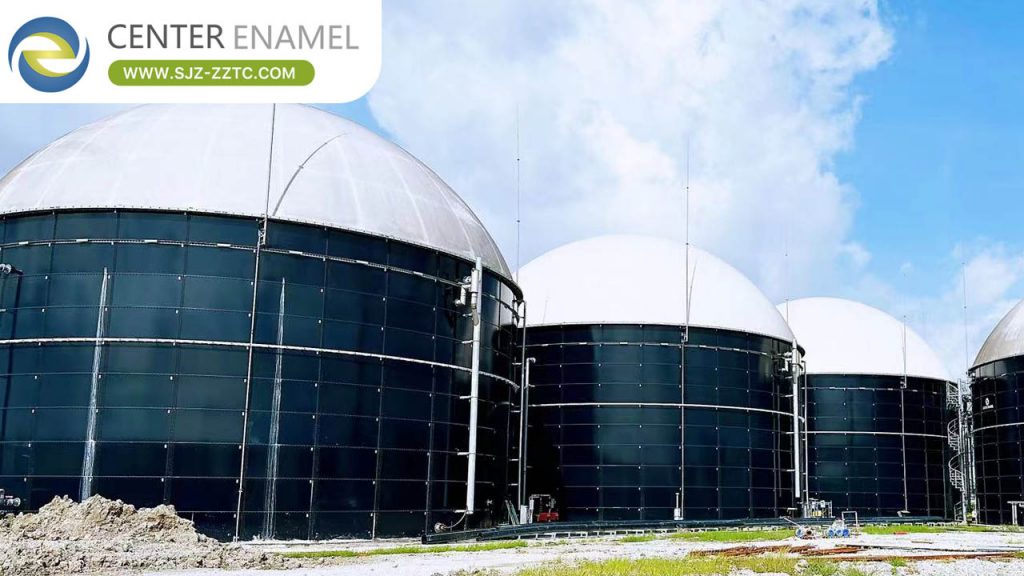
Scoping The Daily Load
A real hoggery wastewater project was built for 300 m3/day of manure-cleaning water. The design fixed that daily figure first, then selected a three-stage train of pre-treatment, USR, and AOAO to meet it without spare capacity that would never be used.
Designing In Stages
| Design Step | Decision | Output |
| Load profiling | Measure daily and peak flow | Q and k |
| Process selection | Match pollutant profile | Train (USR + AOAO etc.) |
| Tank layout | Pick modular sizes | GFS panel count |
| Expansion plan | Reserve footprint | Future rings or units |
Why Modular Tankage
Bolted GFS tanks arrive as panels and can be enlarged by adding height rings or parallel shells. For a daily treatment project, that means the owner pays for today's load and adds capacity when the flow actually arrives, not on a forecast.
Project Case Study: Gaopu Dashun Hoggery Wastewater Project
Project / Application: Hoggery manure-cleaning wastewater, Guangdong, China. Industry: Livestock. Process: Pre-process + USR + AOAO. Key Requirements: Remove organics, nitrogen, and phosphorus from livestock wastewater.
| Field | Value | Source / Evidence |
| Treatment Capacity | 300 m3/day | Company project reference |
| Process | Pre-process + USR + AOAO | Company project reference |
| Wastewater Type | Manure cleaning by water submerging | Company project reference |
| Tank Dimensions | Not provided in the available source | Dimensions Not Provided In The Available Source |
| Source / Evidence | Company project reference (Guangdong) | Company project reference |
About The Supplier
Shijiazhuang Zhengzhong Technology Co., Ltd (Center Enamel) delivers modular GFS tanks for livestock and industrial wastewater, with enamel firing at 820-930 C and ISO 9001, NSF/ANSI 61, and CE-EN 1090 compliance.
Comparison: Fixed Vs Modular Build
| Build Type | Best For | Expansion |
| Fixed concrete | Permanent, high load | Hard to extend |
| Modular GFS | Growing or uncertain load | Add rings or units |
Anchor the project to the measured daily load, choose a process that fits the pollutant profile, and keep expansion as a panel exercise rather than a rebuild.
Frequently Asked Questions
Q1: How is a daily treatment project scoped? A1: Profile the daily and peak flow, then select the process and tank sizes to match.
Q2: Why design around m3/day? A2: It prevents overbuilding and keeps the loading rate in the biological sweet spot.
Q3: Can the plant scale later? A3: Modular GFS tanks accept added height rings or parallel units as flow grows.
Q4: What modular tankage is used? A4: Bolted Glass-Fused-to-Steel tanks for equalisation, anaerobic, and aerobic stages.
Q5: What process fits hoggery wastewater? A5: A pre-treatment plus USR plus AOAO train handles solids, organics, nitrogen, and phosphorus.
Q6: How long does a modular build take? A6: Bolted tanks assemble faster than cast concrete, shortening the schedule.
Q7: What retention time applies? A7: It varies by pollutant load; the referenced 300 m3/day plant used a three-stage train.
Q8: Is modular cheaper upfront? A8: Usually yes for the first phase, with staged capital as demand confirms.
Share your daily flow profile to get a staged treatment design, or request modular tank specifications from an engineer.