
Daily Treatment Volume Solutions: Sizing Tankage To Flow
A daily treatment volume solution sizes every tank from the actual daily throughput (m3/day) multiplied by a peak factor, then divided by the chosen hydraulic retention time. The goal is tankage that matches real demand instead of a generic nameplate that either floods or sits half empty.
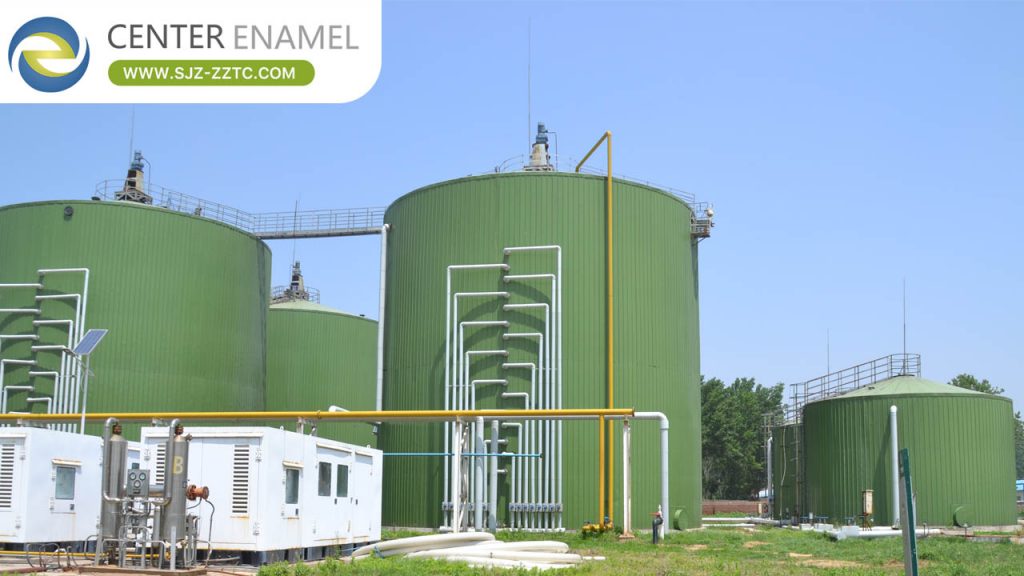
Start From The Daily Load
Design begins with a measured or reliably estimated daily flow, not a hopeful maximum. A livestock plant documented at 580 m3/day was engineered around that figure, with equalisation absorbing hourly swings before the biological stage.
The Sizing Equation
Tank working volume equals (daily flow x peak factor x retention time) divided by 24 for continuous flow, or scaled for batch operation. Peak factor commonly ranges 1.3-2.0 for municipal and industrial streams; misjudging it is the most common cause of either overflow or wasted steel.
| Input | Meaning | Typical Range |
| Daily flow Q | Average m3/day treated | Site measured |
| Peak factor k | Hourly-to-daily ratio | 1.3 - 2.0 |
| Retention time HRT | Hours in the tank | 6 - 40 h by process |
| Working volume V | Q x k x HRT / 24 | Design result |
Why Oversizing Hurts
An oversized anaerobic tank dilutes the organic loading rate, cools the biology, and raises capital for no gain. Undersizing causes washout and permit breaches. The correct daily treatment volume is a balance, not a safety margin padded to the extreme.
Project Case Study: Beijing Pig Farm Wastewater Project
Project / Application: Pig farm wastewater, Beijing, China. Industry: Livestock. Process: UASB + AOAO. Key Requirements: Treat high-strength manure wastewater to discharge.
| Field | Value | Source / Evidence |
| Daily Treatment Volume | 580 m3/day | Company project reference |
| Process | UASB + AOAO (physical + biological + chemical) | Company project reference |
| Tank Dimensions | Not provided in the available source | Dimensions Not Provided In The Available Source |
| Installation Year | 2020 | Company project reference |
| Pollutant | Influent | Effluent |
| COD Cr | >= 10,000 mg/L | <= 200 mg/L |
| BOD5 | >= 8,000 mg/L | <= 100 mg/L |
| Ammonia N | >= 1,000 mg/L | <= 80 mg/L |
| Total P | >= 200 mg/L | <= 8 mg/L |
| SS | >= 10,000 mg/L | <= 100 mg/L |
About The Supplier
Shijiazhuang Zhengzhong Technology Co., Ltd (Center Enamel) supplies bolted GFS tanks for equalisation, anaerobic, and aerobic stages, with enamel firing at 820-930 C and ISO 9001 / NSF/ANSI 61 / CE-EN 1090 certification.
Comparison: Equalisation Strategies
| Strategy | When To Use | Effect On Volume |
| In-line equalisation | Stable daily load | Smaller buffer |
| Extended equalisation | High hourly peaks | Larger upfront tank |
Size from the daily number, prove the peak factor, then let retention time set the volume. Tankage sized this way costs less and performs better than a rounded-up guess.
Frequently Asked Questions
Q1: How do you size tanks to daily flow? A1: Multiply daily flow by a peak factor and retention time, then divide by 24 for continuous operation.
Q2: What peak factor should I use? A2: Typically 1.3-2.0; higher for industrial streams with strong hourly variation.
Q3: Why avoid oversizing? A3: It dilutes loading, cools biology, and wastes steel without improving treatment.
Q4: What tank volume serves 580 m3/day? A4: It depends on the process HRT; the documented plant was engineered to that daily figure with UASB plus AOAO.
Q5: Which tank type fits daily treatment? A5: Bolted GFS tanks suit equalisation, anaerobic, and aerobic stages for corrosion resistance.
Q6: How often should flow be measured? A6: Profile for at least a week across operating shifts before fixing the design flow.
Q7: Does climate affect sizing? A7: Cold sites need heated, insulated tanks, which changes retention time more than volume.
Q8: Can capacity be expanded later? A8: Modular GFS panels allow adding tank rings or parallel units as flow grows.
Send your daily flow and peak profile to request a tankage sizing sheet, or discuss retention time options with an engineer.