
How a Dairy Wastewater Treatment Project EPC Contractor Solves the "Three Highs"
Industrial wastewater treatment today is defined by a persistent set of challenges known as the "three highs": high difficulty, high cost, and high energy consumption. Wastewater from the new energy, chemical, and pharmaceutical industries is complex, carrying numerous characteristic pollutants that traditional treatment processes struggle to remove effectively. At the same time, the industry faces continuous pressure from increasingly stringent emission standards, alongside new requirements for digitalization and low-carbon transformation.
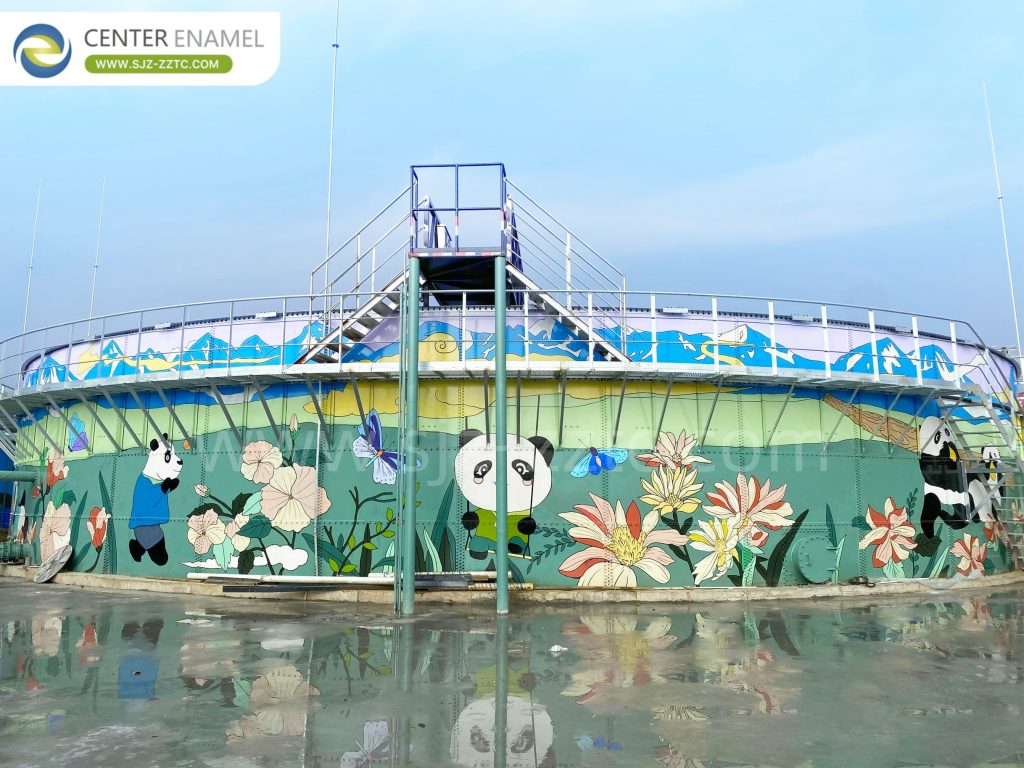
While Chinese companies maintain significant price advantages in mid-to-low-end equipment, overcoming the "three highs" requires advanced process integration and durable infrastructure. This is where the combination of the IC Process and GFS Tanks, delivered by an experienced Dairy Wastewater Treatment Project EPC Contractor, provides a decisive advantage.
The IC Process: Autonomous Circulation for High-Strength Organics
Pretreated high-strength organic wastewater enters the IC reactor's lower main reaction zone from the bottom, mixing with recirculated sludge-water mixture and rising rapidly. Anaerobic microorganisms efficiently degrade organic matter, producing large volumes of biogas. The gas-lift action of biogas carries the mixed liquor upward to the top gas-liquid separator where biogas is collected. Degassed sludge-water mixture returns by gravity through downcomers to the reactor bottom, creating autonomous internal circulation that repeatedly enhances pollutant degradation.
After multiple circulation cycles, the wastewater enters the upper polishing zone for further reaction and sludge-water separation. Remaining trace organics are fully degraded, sludge settles back to the lower reaction zone, treated effluent overflows from the top, and aged sludge is periodically discharged. This fully autonomous circulation ensures efficient continuous operation, cutting both energy use and operational costs.
Why GFS Tanks Outperform Concrete in Fast-Track Projects
GFS Tanks are assembled on-site from prefabricated panels, offering short construction periods and support for expansion, relocation, and reuse-advantages distinctly different from immovable concrete tanks. Concrete pouring requires formwork, rebar tying, pouring, and long curing periods, with a single tank taking months. Rain, snow, and low temperatures force work stoppages. Once poured, concrete tanks are permanent fixed structures that cannot be dismantled, expanded, or relocated-project relocation means complete abandonment.
GFS tank panels are factory-prefabricated, transported to site, and directly assembled with simple procedures. Construction proceeds even in low-temperature, light-rain conditions, with installation time only one-third that of concrete tanks-keeping schedules controllable. For expansion, additional steel panels increase volume; for plant relocation, tanks are fully disassembled and reassembled at the new site, significantly reducing material and construction costs. This makes GFS Tanks ideally suited for short-term environmental projects, phased expansions, and relocated construction projects.
| Comparison | GFS Tanks | Concrete Tanks |
| Installation Time | One-third of concrete | Months per tank |
| Weather Impact | Workable in light rain/cold | Stoppages in rain, snow, cold |
| Expansion | Add steel panels | Not possible |
| Relocation | Fully disassemblable/reusable | Permanent, abandoned on move |
The Dairy Wastewater Challenge: High Load, High Biodegradability
Dairy wastewater presents a unique profile for treatment. It is characterized by high COD, high oil and grease, high protein, high nitrogen/phosphorus, and excellent biodegradability-meaning a high pollution load but easy decomposition. Typical COD ranges from 2,000 to 15,000 mg/L, with high-concentration CIP cleaning wastewater peaking above 30,000 mg/L.
The high fat content (2,000–5,000 mg/L) readily adheres and scales on pipe and equipment surfaces, while high protein content produces high ammonia nitrogen during degradation. However, with a BOD/COD ratio of 0.5–0.7, it is one of the most easily treated food processing wastewaters. Rich in lactose, milk proteins, and milk fats, it decomposes and sours rapidly if left standing, with pH decreasing due to lactic acid fermentation. Because water quality fluctuates intermittently with CIP cleaning cycles, robust buffer capacity and shock-resistant processes like the IC reactor are essential.
| Dairy Wastewater Parameter | Typical Range / Characteristic |
| COD | 2,000 – 15,000 mg/L (peaks >30,000 mg/L) |
| Oil and Grease | 2,000 – 5,000 mg/L |
| BOD/COD Ratio | 0.5 – 0.7 (Excellent Biodegradability) |
| Temperature | 20 – 40°C |
Engineering Excellence: Smart Manufacturing and Tailored Design
To reliably deliver GFS Tanks globally, Center Enamel operates a core intelligent manufacturing base in Hebei Province, China, covering over 150,000 m². The dual-base synergy includes a mature manufacturing facility and a high-end environmental equipment industrial park, featuring dedicated R&D buildings, proprietary material laboratories, and finished product testing centers. Certified as a Provincial Green Factory, the facility meets ISO, NSF, and CE standards, employing over 500 staff with automated production lines placing it among the global top tier of GFS tank manufacturers.
Behind the manufacturing is a specialized design team. Including senior engineers registered in the Hebei Provincial Science and Technology Expert Database, the team aligns with strict European and American safety standards. They provide complete integrated design covering tank structure, anti-corrosion/sealing systems, biogas piping, and anaerobic process integration. Pre-design thoroughly investigates local seismic zones, wind pressure, soil bearing capacity, and water corrosivity-applying thickened panels or reinforced bases as needed to balance safety, economics, and local adaptation.
Economical Covers for Non-Pressurized Storage
For water storage that does not require biogas collection or high-pressure sealing, the Aluminum Alloy Trough Deck Roof offers a cost-effective solution. Integrally formed from anti-corrosion aluminum alloy plates and support trusses, its lightweight design reduces civil construction investment. A dense oxide protective layer resists rain and mild wastewater corrosion, blocking wind, rain, insects, and odor volatilization. The flat roof structure allows easy installation of walkways, guardrails, vents, and level monitoring ports. It is widely used in waterworks clear water tanks, industrial circulating water tanks, and domestic wastewater temporary storage, virtually eliminating anti-corrosion painting maintenance and keeping operational costs extremely low.
Frequently Asked Questions
How does the IC Process handle dairy wastewater fluctuations?
The IC Process features autonomous internal circulation and a dual-zone configuration, providing strong resistance to hydraulic and organic shock loads common in intermittent dairy CIP discharges.
Can GFS Tanks be expanded or relocated?
Yes. GFS Tanks are assembled from bolted panels. They can be easily expanded by adding panels or fully disassembled and relocated to a new site, unlike fixed concrete tanks.
What roof options are available for GFS Tanks?
Center Enamel offers gas-tight covers for anaerobic biogas collection and economical Aluminum Alloy Trough Deck Roofs for standard atmospheric water storage.
Ready to overcome the "three highs" in your next wastewater project? Share your water quality data and site conditions with our engineering team to receive a customized process design and GFS Tank specification.
Partner with Center Enamel today and let our experts serve as your dedicated Dairy Wastewater Treatment Project EPC Contractor, delivering compliant, low-carbon, and highly durable solutions worldwide.