
How a Dairy Wastewater Treatment Project EPC Contractor Uses GFS Tanks to Cut Costs
Industrial wastewater treatment policies worldwide are escalating from "compliance discharge" to mandatory resource recovery and zero liquid discharge. The EU's Circular Economy Action Plan requires member states to raise industrial wastewater reuse rates and extends carbon footprint accounting across the full treatment life cycle. China continuously tightens discharge standards for total nitrogen, total phosphorus, and characteristic pollutants in chemicals, pharmaceuticals, and textile industries, with zero or near-zero liquid discharge mandated in water-scarce regions. Germany enforces differentiated pretreatment standards by industry, requiring specific water quality before discharge into municipal plants.
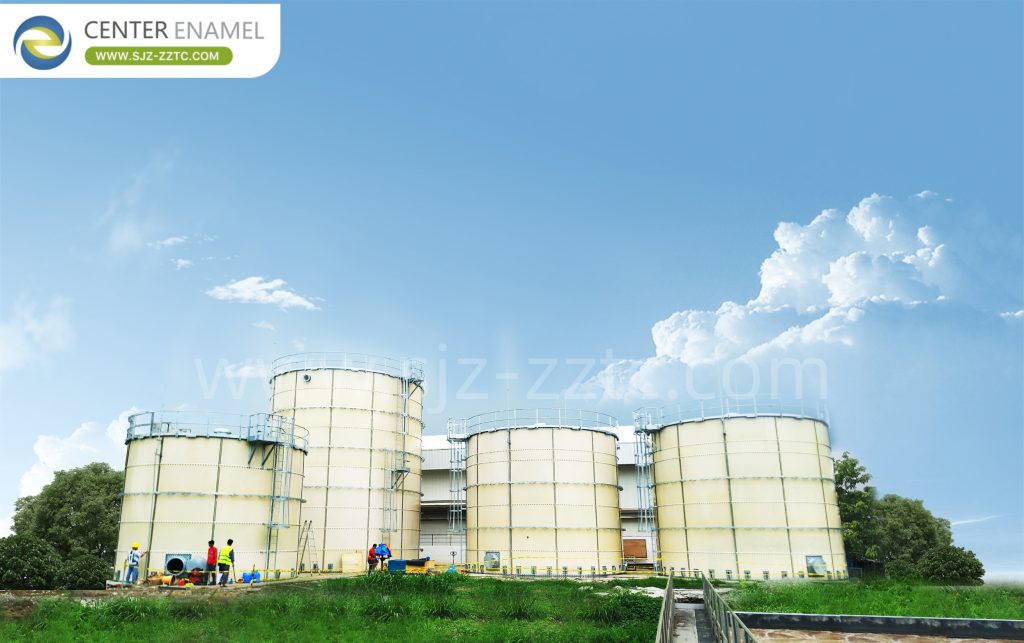
For dairy processors, these rules mean treatment systems must do more than meet limits-they must recover energy and reduce waste. That is where GFS tanks and a capable Dairy Wastewater Treatment Project EPC Contractor become decisive.
Why GFS Tanks Beat Concrete for Wastewater Projects
GFS tanks are assembled on-site from factory-prefabricated panels, with construction periods only one-third that of concrete tanks. Concrete pouring requires formwork, rebar tying, pouring, and long curing periods-a single tank can take months. Rain, snow, and low temperatures force work stoppages. Once poured, concrete tanks are permanent fixed structures that cannot be dismantled, expanded, or relocated; project relocation means complete abandonment.
GFS tank panels arrive factory-prefabricated and are assembled directly in panels with simple procedures. Construction can proceed even in low-temperature, light-rain conditions, keeping schedules controllable. For expansion, additional steel panels increase volume; for plant relocation, tanks can be fully disassembled, transported, and reassembled-significantly reducing material and construction costs for new builds and reconstruction. This makes GFS tanks ideally suited for short-term environmental projects, phased expansion, and relocated construction projects.
Dairy Wastewater O&M Costs: Moderate Spend, Strong Recovery
Dairy wastewater offers outstanding resource recovery benefits and good overall economics. Its excellent biodegradability requires no expensive oxidants or detoxification agents-only small amounts of flocculants and pH adjusters, keeping chemical costs low. Anaerobic digestion runs at high efficiency with large biogas production, providing stable biogas for plant heating and power generation that significantly offsets energy costs. Equipment is simple and durable-conventional pumps, mixers, and aerators-with low failure rates and low maintenance costs. CIP intermittent discharge can be balanced through equalization tanks, reducing frequent parameter adjustments and labor requirements. Recovered oil from oil separation can be sold, further reducing treatment costs.
| Cost Factor | Dairy Wastewater Performance |
| Chemical costs | Low-only flocculants and pH adjusters |
| Energy costs | Offset by biogas for heating and power |
| Maintenance | Simple, durable equipment; low failure rates |
| Labor | Low-equalization tanks balance CIP discharge |
| Revenue recovery | Biogas + recovered oil generally cover O&M costs |
Because dairy products carry high value-added, treatment costs represent a very small proportion of production costs-economics superior to most industrial wastewaters.
Case Snapshot: South Africa Brewery High-Strength Wastewater Project
| Project Parameter | Detail |
| Location | South Africa |
| Industry | Brewing |
| Core Equipment | GFS tanks (anaerobic digestion) + stainless steel tanks |
| Wastewater Challenge | High COD, high sugar, readily decomposable organics |
| System Role | GFS tanks as primary anaerobic digestion system |
| Supporting Use | Stainless steel tanks for transfer and chemical storage |
| Outcome | Long-term stable treatment; solved local brewing pollution challenge |
This mature African case shows how Center Enamel combines GFS tanks with anaerobic digestion for high-strength industrial streams. The GFS tanks serve as the primary anaerobic digestion system, suited to brewery wastewater's high-COD, high-sugar, readily decomposable characteristics for efficient organic pollutant degradation. Stainless steel tanks handle wastewater transfer and chemical storage. The complete equipment package offers excellent corrosion resistance and flexible assembly, delivering long-term stable treatment of production and cleaning wastewater.
Where Anaerobic Digestion Fits Best
Anaerobic systems are primarily for high-concentration, high-flow soluble industrial organic wastewater-covering brewery, beverage, starch, pharmaceutical, chemical, and papermaking high-strength streams. They suit land-constrained projects with high treatment efficiency requirements in large industrial wastewater facilities, and can serve as the primary process for rapid COD/BOD removal. They are ideal for centralized industrial park WWTPs and large enterprise proprietary treatment systems, particularly where wastewater quality fluctuates significantly and pollutant concentrations are extremely high. They are not suitable for high-solids, high-viscosity wastewater. For modern high-efficiency industrial wastewater treatment, anaerobic digestion is the preferred process.
A Global EPC Contractor With Proven Delivery Coverage
Center Enamel's global business covers over 100 countries and regions, with 30,000+ successful overseas projects. Products are exported to Europe, the Americas, the Middle East, Africa, Southeast Asia, and Latin America, supported by a well-established localized service network. Domestically, the company operates through North, South, Central, East, and Southwest marketing regions, serving environmental, water utility, livestock, and petrochemical customers nationwide.
Internationally, the company applies a "standardized products + localized adaptation" model-adjusting tank corrosion protection, sealing, and pressure standards for different national water quality and environmental regulations. Landmark projects include large-volume GFS tanks in Italy, 20 m tower water supply tanks in Colombia, coastal seawater treatment tanks in Costa Rica, and large municipal wastewater aluminum dome projects in Saudi Arabia. The company has established long-term strategic partnerships with many Fortune 500 companies.
Installation Coverage Across Climates and Regulations
Center Enamel is a pioneer of Chinese GFS equipment exports, with installation service coverage across over 100 countries and regions-full delivery capability across climates, regulations, and geographies. Overseas coverage includes Southeast Asia (Vietnam, Thailand, Malaysia, Indonesia, Cambodia, Bangladesh, Nepal), Africa (Ghana, South Africa, Mali, Guinea, Zambia, Kenya), Europe and the Americas (Sweden, USA, Russia), the Middle East, and Latin America-adaptable to tropical rainy high-salt-spray conditions, high-altitude mountainous sites, Nordic severe cold, and high-standard European and American facility requirements. The company uses a dual-service model of own cross-border construction teams combined with local support, ensuring projects are delivered on schedule and commissioned stably.
Frequently Asked Questions
Can GFS tanks be expanded or relocated after installation?
Yes. Additional steel panels can increase volume, and tanks can be fully disassembled, transported, and reassembled at a new site-unlike fixed concrete tanks.
Are GFS tanks suitable for dairy wastewater with high organic load?
Yes. GFS tanks serve as anaerobic digestion systems for high-COD streams, and dairy wastewater's excellent biodegradability supports strong biogas recovery.
How does Center Enamel support overseas projects?
Through own cross-border construction teams plus localized service networks, with standards adapted to each region's climate and regulations.
Planning a dairy wastewater treatment project? Share your flow rate, COD load, and site conditions-our engineering team will respond with a preliminary tank and process recommendation.
Talk to Center Enamel today about GFS tanks and EPC delivery for your next wastewater project, and see why processors in 100+ countries choose our bolted storage and anaerobic systems.