
Dairy Wastewater Treatment Projects: Why GFS Tanks Outperform in Tough Conditions
Dairy processing produces one of the most biodegradable yet most problematic industrial streams in the food sector-high in fat, protein, and lactose, and prone to rapid acidification if left standing. Designing a dairy wastewater treatment project that handles this load reliably for decades depends on two decisions: choosing the right biological process and choosing tankage that survives the site. This is where GFS tanks earn their place, particularly in regions where climate and geology punish weaker structures.
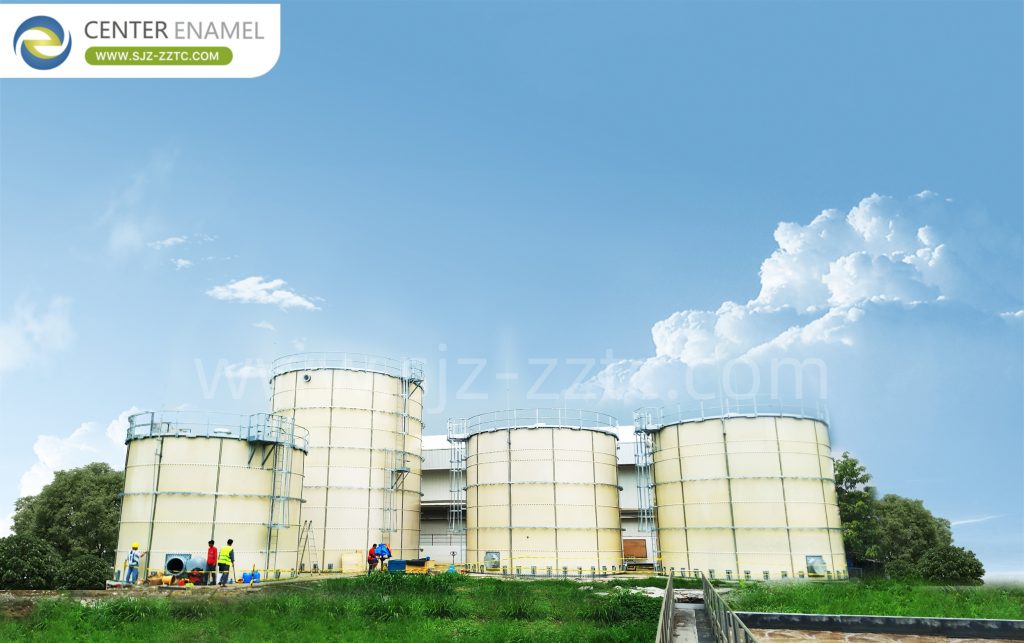
A Regional Market Shifting Toward Long-Term Operations
The Asia-Pacific region, particularly China, has become the world's largest industrial wastewater treatment market, with the operation and maintenance service segment's contribution continuing to rise-marking a shift from project construction to long-term operational management. The North American market focuses on upgrading existing facilities, while Europe emphasizes high-value-added resource recovery technologies. Wastewater from the new energy industry chain (lithium batteries, photovoltaics, hydrogen) has become the most notable emerging growth area due to its complex composition and high treatment difficulty, generating significant demand for customized solutions. The maturity of third-party treatment models in industrial parks continues to improve, driving consolidation in the professional operation market. The Middle East has strong demand for advanced treatment and reuse of industrial wastewater due to water scarcity, while manufacturing transfer in Southeast Asia drives local industrial wastewater treatment facility construction demand. For dairy processors, this regional divergence matters: a project in Southeast Asia may prioritize rapid capacity build-out, while a European project may prioritize energy recovery and carbon accounting.
What Dairy Effluent Actually Contains
Dairy wastewater is characterized by high COD, high oil and grease, high protein, high nitrogen and phosphorus, and ready decomposability-a high pollution load with excellent biodegradability. The table below summarizes the design-critical parameters.
Typical Dairy Wastewater Quality Parameters
| Parameter | Typical Range / Value | Design Implication |
| COD | 2,000–15,000 mg/L; CIP cleaning peaks above 30,000 mg/L | Anaerobic stage essential for concentrated streams |
| Oil and grease (whole milk wastewater) | 2,000–5,000 mg/L | Adheres and scales on pipes and equipment; pretreatment required |
| BOD/COD ratio | 0.5–0.7 | Excellent biodegradability; among the easiest food wastewaters |
| Nitrogen and phosphorus | High, from milk proteins and phosphates | Nutrient management and possible recovery |
| pH | Slightly acidic to neutral; drops with lactic acid fermentation | Rapid acidification risk if stored unstabilized |
| Temperature | 20–40 °C | Mesophilic anaerobic conditions favorable |
| Flow pattern | Intermittent fluctuation with CIP cleaning cycles | Equalization capacity critical |
The high fat content is the parameter most often underestimated. Oil and grease readily adheres and scales on pipe and equipment surfaces, which means pretreatment-typically dissolved air flotation or grease separation-must precede biological treatment. High protein content degrades into high ammonia nitrogen, which can inhibit anaerobic biomass if not managed. And because dairy effluent is rich in lactose, milk proteins, and milk fats, it decomposes and sours readily, with rapid acidification if left standing-making equalization and pH control non-negotiable.
The IC Reaction Process at the Heart of Treatment
Once pretreatment removes fats and equalizes flow, the concentrated organic load is best handled anaerobically. Pretreated high-strength organic wastewater enters the lower main reaction zone from the bottom, mixing with recirculated sludge-water mixture and rising rapidly. Anaerobic microorganisms efficiently degrade organic matter, producing large volumes of biogas. The gas-lift action of biogas carries the mixed liquor upward to the top gas-liquid separator where biogas is collected. Degassed sludge-water mixture returns by gravity through downcomers to the reactor bottom, creating autonomous internal circulation that repeatedly enhances pollutant degradation. After multiple circulation cycles, the wastewater enters the upper polishing zone for further reaction and sludge-water separation. Remaining trace organics are fully degraded, sludge settles back to the lower reaction zone, treated effluent overflows from the top, and aged sludge is periodically discharged-fully autonomous circulation and efficient continuous operation, without external return pumps. For dairy effluent's readily degradable profile, this process converts pollution load into biogas rather than merely consuming energy to remove it.
GFS Tanks Engineered for Extreme Climates
The biological process is only as reliable as the vessel containing it. GFS tanks can undergo customized wind and seismic design based on project site climate and geological conditions, with environmental adaptability far superior to concrete tanks. Concrete tanks are cast-in-place monolithic structures, with seismic and wind resistance entirely dependent on on-site construction quality. In remote areas, typhoon-prone zones, and earthquake belts, construction quality is difficult to control. Under strong earthquakes or typhoons, concrete tanks are prone to cracking and base settlement damage, with subsequent reinforcement costs equivalent to rebuilding.
GFS tanks take a different approach. Before construction, local seismic intensity, maximum wind pressure, and foundation bearing capacity data are collected, with customized thickened steel panels, stiffening ribs, and anchored base components-all factory-prefabricated to standardized specifications. The bolted panel structure has excellent stress distribution capability, making it less prone to overall fracture under seismic and typhoon impacts, and minor foundation settlement will not cause through-cracking. Structural parameters can be flexibly adjusted for mountainous, coastal typhoon-zone, and high-seismic-zone projects, providing long-term protection against extreme natural climate damage. For a dairy wastewater treatment project sited in a coastal typhoon belt or an earthquake-prone inland region, this adaptability directly reduces lifecycle risk.
Manufacturing Scale and Field Experience Behind Every Tank
Adaptability in design must be matched by capacity in production. Center Enamel's core intelligent manufacturing base is located in Hebei Province, China, covering a total area of over 150,000 m², with a mature Phase I manufacturing facility and a Phase II high-end environmental equipment industrial park-dual-base synergy ensuring stable production capacity. The base includes dedicated R&D office buildings, proprietary material laboratories, and finished product testing centers, with full-process quality control systems meeting ISO, NSF, CE, and other international standards. The facility operates to green manufacturing standards and is certified as a Provincial Green Factory. The company maintains 6 marketing service centers across China, establishing a nationwide production-sales network that ensures stable global order delivery. The base is adjacent to expressway networks and major logistics hubs, with complete container shipping capabilities supporting simultaneous large-scale tank projects globally. With over 500 staff and multiple parallel automated production lines, facility scale and production capacity place the company firmly among the global top tier of GFS tank equipment manufacturers.
That capacity is backed by field experience. Center Enamel's global installation record is unmatched among domestic peers-over a decade covering multiple regions and all industry sectors. In 2009, the company completed its first overseas GFS tank installation, sending a team to Niger, Africa for a drinking water storage tank project. In 2015, it broke industry ground with China's first GFS tank export and installation to the US, passing strict US acceptance standards. All installed projects have operated stably for years, covering livestock biogas, POME, municipal wastewater, and drinking water storage applications. Construction has covered Southeast Asia, Africa, the Americas, and other regions-accumulating specialized solutions for complex sites including mountainous terrain, coastal salt spray, tropical high temperatures, and high-standard European and American facility conditions.
Global Installation Milestones and Reference Projects
| Year / Scope | Project or Milestone | Relevance to Dairy and High-Strength Wastewater |
| 2009 | First overseas GFS tank installation, Niger, Africa | Proof of remote-site delivery capability |
| 2015 | First Chinese GFS tank export and installation to the US | Passed strict US acceptance standards |
| Multi-sector | Livestock biogas, POME, municipal wastewater, drinking water storage | Anaerobic and high-organic load experience |
| South Africa | Brewery high-strength wastewater treatment project | GFS tanks as primary anaerobic digestion system; stainless steel tanks for transfer and chemical storage |
| Multi-region | Southeast Asia, Africa, the Americas | Solutions for mountainous, coastal, tropical, and high-standard sites |
The South Africa brewery project is particularly instructive for dairy processors. Focusing on high-concentration organic wastewater treatment in South Africa's brewing industry, it features both GFS tanks and stainless steel tanks as core equipment. GFS tanks serve as the primary anaerobic digestion system, suited to brewery wastewater's high-COD, high-sugar, readily decomposable characteristics for efficient organic pollutant degradation. Stainless steel tanks are used for wastewater transfer and chemical storage supporting processes. The complete equipment package has excellent corrosion resistance and flexible assembly, providing long-term stable treatment of brewery production and cleaning wastewater. Dairy effluent shares the same fundamental profile-high COD, readily degradable, fat-laden-making this African reference directly transferable.
Frequently Asked Questions
Why does dairy wastewater need pretreatment before anaerobic treatment?
Oil and grease at 2,000–5,000 mg/L adheres and scales on pipes and equipment, so fat separation and equalization must precede biological stages to protect biomass and equipment.
Are GFS tanks suitable for earthquake and typhoon zones?
Yes. Site seismic intensity and wind pressure data drive customized panel thickness, stiffening ribs, and anchored bases-all factory-fabricated, so quality does not depend on on-site casting conditions.
Can dairy wastewater treatment recover energy?
Yes. The high BOD/COD ratio of 0.5–0.7 makes anaerobic digestion highly effective, converting organic load into biogas that can offset plant energy demand.
Share your dairy plant's flow rate, fat load, and site conditions with our engineers for a preliminary process and tank configuration review.
Reach out to Center Enamel to discuss how GFS tanks and anaerobic treatment can be tailored to your dairy wastewater treatment project-wherever your facility is located.