
Dairy Wastewater Treatment Solutions: Advanced Anaerobic Digestion and EPC Engineering by Center Enamel
The dairy processing industry generates substantial volumes of wastewater containing organic matter, fats, proteins, lactose, and suspended solids. From milk production and cheese manufacturing to yogurt fermentation and milk powder processing, each production stage contributes to wastewater streams with varying compositions and pollutant concentrations. Without effective treatment, these effluents can create significant environmental challenges, increase operating costs, and affect the sustainability of dairy manufacturing operations.
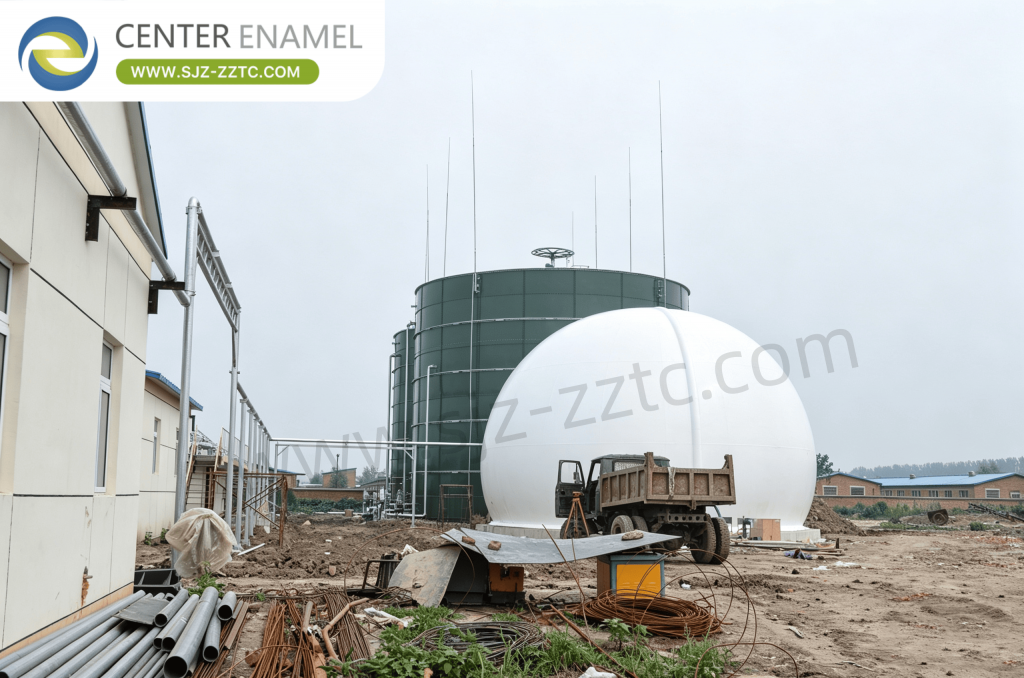
As environmental regulations become increasingly stringent and industrial facilities seek greater resource efficiency, advanced dairy wastewater treatment has become an essential part of modern dairy production. Among the available technologies, Anaerobic Digestion offers an effective approach to reducing organic pollution while recovering renewable energy in the form of biogas.
As an experienced Dairy Wastewater Treatment Project EPC Contractor, Center Enamel provides integrated environmental engineering solutions supported by advanced Glass-Fused-to-Steel (GFS) tanks, anaerobic treatment technologies, and customized engineering services. By combining equipment manufacturing, process engineering, and EPC project delivery, Center Enamel helps dairy producers develop reliable wastewater treatment infrastructure that supports long-term environmental and operational objectives.
Understanding Dairy Wastewater Sources and Characteristics
Dairy wastewater originates from almost every stage of dairy processing. Its composition varies depending on the products manufactured, production capacity, cleaning procedures, and operating schedules.
Unlike ordinary domestic wastewater, dairy effluent generally contains high concentrations of biodegradable organic substances, making it suitable for biological treatment but also requiring careful process management.
Major wastewater sources include:
| Processing Stage | Main Wastewater Sources | Typical Pollutants |
| Raw Milk Reception and Storage | Milk pipeline and storage tank cleaning | Milk residues, proteins, fats |
| Pasteurization and UHT Processing | Equipment washing and cooling operations | Organic matter, milk residues |
| Separation and Homogenization | Centrifuge and processing equipment cleaning | Cream, fats, suspended solids |
| Yogurt and Cheese Production | Fermentation tank and production line cleaning | Lactose, proteins, organic acids |
| Milk Powder Manufacturing | Spray dryer and equipment washing | Milk powder residues, concentrated organics |
| Filling and Packaging | Filling equipment and pipeline cleaning | Milk residues, detergents |
| Facility Cleaning | Floor washing and equipment sanitation | Organic matter, cleaning chemicals |
One of the most important wastewater sources is the Clean-in-Place (CIP) system. Dairy processing facilities use CIP procedures to clean production pipelines, tanks, and equipment without dismantling them. These operations often generate intermittent wastewater discharges with fluctuating organic concentrations, temperatures, and pH levels.
Consequently, wastewater characteristics can change considerably between production cycles and product changeovers. Large and medium-sized dairy facilities may generate hundreds to thousands of tons of wastewater daily, making properly designed collection, equalization, and treatment systems essential.
Understanding these characteristics provides the foundation for selecting an appropriate treatment process and designing an efficient wastewater treatment project.
Key Challenges in Dairy Wastewater Treatment
The treatment of dairy wastewater involves several technical challenges that directly influence process selection, equipment configuration, and operational stability.
High Organic Concentrations
Dairy wastewater contains substantial quantities of lactose, proteins, and fats. These biodegradable substances contribute to high Chemical Oxygen Demand (COD) and Biochemical Oxygen Demand (BOD). If discharged without adequate treatment, they can deplete dissolved oxygen in receiving water bodies and cause serious environmental pollution.
Fluctuating Wastewater Quality
Production schedules, product changes, and CIP cleaning cycles result in significant variations in wastewater flow, pH, and organic loading. Sudden changes in influent conditions can affect biological treatment performance and disrupt microbial activity.
Fats, Oils, and Grease Accumulation
Fat-rich wastewater can cause floating layers, equipment fouling, and operational difficulties in biological treatment systems. Effective pretreatment and appropriate reactor configurations are therefore important for maintaining stable operation.
High Treatment Capacity Requirements
Large dairy processing facilities generate considerable wastewater volumes. Treatment systems must accommodate both average and peak flows while maintaining consistent treatment performance.
Environmental Compliance and Resource Recovery
Modern dairy manufacturers must balance wastewater discharge requirements with energy consumption, operating expenses, and sustainability targets. Treatment solutions that recover biogas and support water reuse can create additional environmental and economic value.
To address these challenges, dairy wastewater treatment projects require an integrated engineering approach rather than relying on a single treatment unit.
Anaerobic Digestion: An Effective Technology for Dairy Wastewater Treatment
Anaerobic Digestion is an important biological treatment technology for high-strength organic wastewater. It uses microorganisms in an oxygen-free environment to break down biodegradable organic substances, producing biogas primarily composed of methane and carbon dioxide.
For dairy processing facilities, this technology provides two major benefits: organic pollutant reduction and renewable energy recovery.
During anaerobic treatment, complex organic compounds are progressively converted through four main biological stages:
Hydrolysis: Complex organic substances, including proteins, fats, and carbohydrates, are broken down into simpler soluble compounds.
Acidogenesis: Fermentative microorganisms convert these compounds into volatile fatty acids, alcohols, hydrogen, and carbon dioxide.
Acetogenesis: Intermediate products are converted into acetate, hydrogen, and carbon dioxide.
Methanogenesis: Methanogenic microorganisms convert acetate and hydrogen-based compounds into methane-rich biogas.
The resulting biogas can be collected and utilized as a renewable energy source, depending on its quality, project configuration, and available gas utilization equipment.
For dairy wastewater treatment, anaerobic systems can reduce the organic loading entering downstream biological treatment units. This helps improve overall treatment efficiency and creates opportunities for energy recovery.
However, successful operation requires appropriate control of pH, temperature, organic loading, hydraulic retention time, and microbial conditions. Proper pretreatment is also essential to minimize excessive fats, solids, and other substances that may affect reactor performance.
IC Anaerobic Reactor Technology for High-Strength Industrial Wastewater
The Internal Circulation (IC) Anaerobic Reactor is an advanced high-rate anaerobic treatment technology developed from the Upflow Anaerobic Sludge Blanket (UASB) process.
Its defining feature is an internal gas-lift circulation system that uses the biogas generated during treatment to drive wastewater recirculation. This reduces the need for external return pumps and improves contact between wastewater and anaerobic sludge.
The IC reactor generally consists of two reaction zones:
Lower Main Reaction Zone
The lower section is responsible for the primary anaerobic degradation process. Organic wastewater flows upward through the active sludge bed, where microorganisms break down biodegradable pollutants and generate biogas.
Upper Polishing Zone
The upper section provides additional treatment and separation. The internal circulation system helps improve hydraulic conditions and promotes further contact between wastewater and anaerobic microorganisms.
The major advantages of IC technology include:
High Organic Loading Capacity: Suitable for high-concentration organic wastewater generated by industrial processing facilities.
Compact Reactor Design: High treatment efficiency within a relatively small installation footprint.
Enhanced Internal Circulation: Biogas-driven circulation improves wastewater and sludge contact.
Reduced External Pumping Requirements: Internal hydraulic circulation can reduce dependence on external recirculation equipment.
Energy Efficiency: Efficient reactor operation and biogas utilization can contribute to lower overall energy requirements.
For dairy wastewater applications, IC reactors may be suitable when the influent has undergone appropriate pretreatment and contains a sufficiently high proportion of soluble biodegradable organic matter.
The final selection between IC, UASB, CSTR, and other anaerobic technologies should be based on wastewater characteristics, suspended solids concentration, organic loading, treatment capacity, and project-specific operating conditions.
Center Enamel: A Professional Dairy Wastewater Treatment Project EPC Contractor
Selecting an experienced engineering partner is essential for building a reliable industrial wastewater treatment facility. Center Enamel has been engaged in environmental equipment manufacturing and engineering solutions for more than 30 years, gradually expanding from specialized storage tank manufacturing into integrated environmental EPC services.
As a professional Dairy Wastewater Treatment Project EPC Contractor, Center Enamel combines equipment development, engineering design, manufacturing, installation, and project construction capabilities to support customized industrial wastewater treatment projects.
Its integrated service capabilities include:
Engineering Design and Process Selection
Project engineers evaluate wastewater characteristics, treatment capacity, site conditions, and customer requirements to develop suitable engineering configurations.
Environmental Equipment Manufacturing
Center Enamel manufactures GFS tanks and other environmental equipment for wastewater treatment, anaerobic digestion, and biogas-related applications.
Integrated Process and Equipment Solutions
The company provides equipment and process integration capabilities covering anaerobic technologies such as CSTR, UASB, IC, and USR, depending on project requirements.
EPC Project Delivery
Through integrated engineering, procurement, and construction services, Center Enamel helps coordinate equipment supply, engineering implementation, and project execution.
Installation and Technical Support
Professional installation coordination and technical support help customers establish reliable infrastructure and maintain long-term equipment performance.
With more than 30,000 environmental projects delivered globally, Center Enamel has accumulated extensive experience in environmental equipment and engineering applications across different industrial sectors.
South Africa Brewery Wastewater Treatment Project
Center Enamel's experience in high-strength industrial organic wastewater treatment is demonstrated by its brewery wastewater treatment project in South Africa.
Although brewery wastewater differs from dairy effluent in composition, both industries generate organic-rich wastewater from production processes and equipment cleaning operations. Their treatment systems therefore share certain engineering considerations, including organic load management, anaerobic treatment, corrosion resistance, and reliable equipment integration.
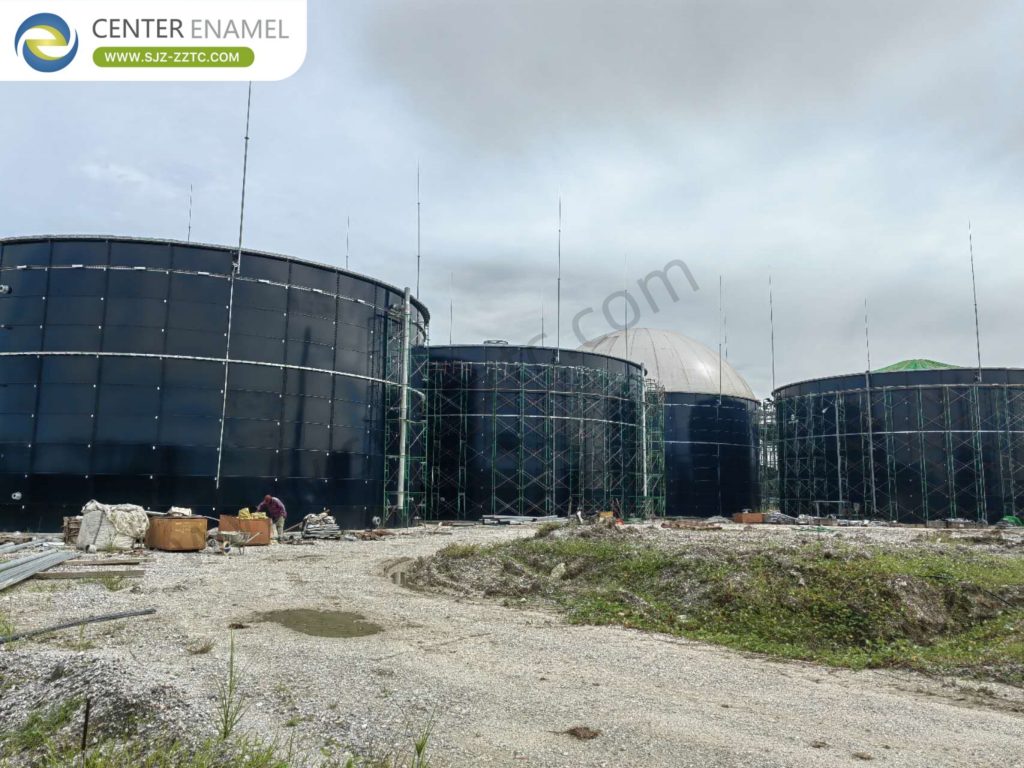
The South African project incorporates Glass-Fused-to-Steel tanks and stainless steel tanks as the primary equipment components.
| Project Component | Equipment Configuration | Main Application |
| Anaerobic Treatment | Glass-Fused-to-Steel (GFS) Tanks | Anaerobic digestion and organic pollutant degradation |
| Wastewater Transfer | Stainless Steel Tanks | Wastewater transfer and process integration |
| Chemical Storage | Stainless Steel Tanks | Supporting chemical storage requirements |
The GFS tanks serve as the core anaerobic treatment vessels, supporting the treatment of brewery wastewater characterized by high organic concentrations, sugar content, and biodegradable substances.
Stainless steel tanks provide supporting functions for wastewater transfer and chemical storage, helping coordinate the overall treatment system.
The integrated equipment configuration offers several practical advantages:
Corrosion-resistant storage and treatment infrastructure.
Modular tank construction for flexible project installation.
Equipment integration for industrial wastewater treatment.
Reliable infrastructure for anaerobic treatment applications.
This project demonstrates Center Enamel's experience in supplying equipment and engineering solutions for high-strength industrial organic wastewater treatment, providing relevant technical experience for other food and beverage wastewater applications.
GFS Tank Technology for Anaerobic Digestion Systems
The performance of an anaerobic wastewater treatment system depends not only on biological process design but also on the quality and durability of its reactor infrastructure.
For high-strength organic wastewater applications, storage and treatment vessels must withstand prolonged exposure to organic acids, moisture, and potentially corrosive gases.
Center Enamel's Glass-Fused-to-Steel (GFS) tanks combine the strength of steel with the chemical resistance of a fused glass coating.
The steel plates and glass enamel are fused at high temperatures, creating a durable composite surface designed for demanding industrial environments.
Advanced Corrosion Protection
Center Enamel has independently developed more than 200 anti-corrosion enamel formulations and proprietary double-sided, double-layer enameling technology. This provides a protective barrier against corrosive wastewater and biogas-related operating conditions.
Long Service Life
Under appropriate design, installation, and operating conditions, GFS tank corrosion protection can provide a service life exceeding 30 years, supporting long-term infrastructure reliability.
Modular Construction
The bolted tank structure allows components to be manufactured under controlled factory conditions and assembled on-site. This provides flexibility in transportation, installation, and project expansion.
Flexible Engineering Configuration
GFS tanks can be customized according to project capacity, structural requirements, local environmental conditions, and specific process applications.
For dairy wastewater treatment projects, GFS tanks can serve as important infrastructure for anaerobic digestion, wastewater equalization, and other compatible storage applications.
FRP Roof Covers for Conventional Water Storage Applications
In addition to tank structures, roof selection is another important consideration in environmental equipment engineering.
Center Enamel's Fiberglass Reinforced Plastic (FRP) roof covers provide an economical option for atmospheric-pressure storage tanks that do not require airtight sealing or biogas collection.
FRP roofs are manufactured using resin and fiberglass composite materials. Their lightweight structure, water resistance, and resistance to mild acidic and alkaline conditions make them suitable for various conventional water storage applications.
Two configurations are available:
Flat FRP Roof
The flat design provides a practical surface for installing maintenance walkways, level gauges, vents, and other supporting equipment. It is suitable for applications where convenient inspection and equipment access are required.
Dome FRP Roof
The curved structure provides effective drainage and helps prevent water accumulation. Its shape also supports resistance to environmental conditions such as wind, rain, and snow loads when properly engineered.
Additional advantages include:
Lightweight modular components for convenient transportation and installation.
Resistance to rust and deterioration in humid environments.
Low maintenance requirements compared with conventional metal roofing.
Economical procurement and installation costs.
Suitability for conventional atmospheric-pressure water storage.
Typical applications include agricultural irrigation water, industrial firewater reserves, waterworks buffer tanks, and temporary wastewater storage.
Important Application Limitation: FRP roof covers are designed for conventional atmospheric-pressure storage applications. They are not suitable for airtight biogas collection or pressurized anaerobic fermentation systems. For anaerobic digestion projects that generate biogas, an appropriately engineered gas-tight roof or dedicated biogas collection system must be selected instead.
Choosing the correct roof configuration according to the actual process requirements is essential for maintaining system safety and operational reliability.
Building Sustainable Dairy Wastewater Treatment Projects with Center Enamel
The growing demand for sustainable dairy production is driving manufacturers to adopt more efficient wastewater treatment technologies and resource recovery solutions.
Anaerobic Digestion provides an effective approach to treating high-strength organic wastewater while creating opportunities for renewable biogas production. When combined with suitable pretreatment, biological treatment, and reliable tank infrastructure, it can become an important component of an integrated dairy wastewater management system.
As a professional Dairy Wastewater Treatment Project EPC Contractor, Center Enamel combines advanced GFS tank technology, anaerobic process expertise, environmental equipment manufacturing, and EPC engineering capabilities to support industrial wastewater treatment projects worldwide.
From customized reactor infrastructure to integrated engineering delivery, Center Enamel is committed to helping dairy manufacturers establish durable, efficient, and environmentally responsible wastewater treatment facilities.
Looking for a reliable partner for your dairy wastewater treatment project? Contact Center Enamel to discuss your wastewater characteristics, treatment capacity, and customized EPC engineering requirements.
Frequently Asked Questions About Dairy Wastewater Treatment
1. Why is Anaerobic Digestion suitable for dairy wastewater treatment?
Dairy wastewater contains biodegradable organic compounds, including lactose, proteins, and fats. Anaerobic Digestion uses microorganisms to break down these substances without oxygen, reducing organic pollution while generating biogas. It is particularly valuable for facilities with high organic loading and opportunities for renewable energy recovery.
2. Which anaerobic reactor is suitable for dairy wastewater?
The choice depends on wastewater concentration, suspended solids, fats, oils, and organic loading. IC and UASB reactors can be suitable for pretreated, high-strength liquid wastewater, while CSTR systems may be preferable for wastewater containing higher solids concentrations. Detailed influent analysis is necessary before selecting a process.
3. What advantages do GFS tanks offer for dairy wastewater treatment projects?
GFS tanks provide excellent corrosion resistance, modular construction, and flexible engineering configurations. Their glass-fused protective coating helps withstand demanding wastewater and biogas environments. They can be used as anaerobic digesters and other compatible treatment or storage vessels, supporting long-term industrial wastewater infrastructure.