
Digestion Process Solution: Selecting A Digestion Process Train
Select a digestion process train by reading the feedstock, not by picking a reactor first. Start from three inputs - organic strength (COD/BOD), suspended solids, and your discharge or recovery target - then choose a sequence: pretreatment where solids or pH need correction, anaerobic digestion where strength is high enough to recover energy, and an aerobic (or other) polish where nitrogen, phosphorus or residual COD remain. The train is the sequence plus the reactors that host each step; define the sequence before the steel.
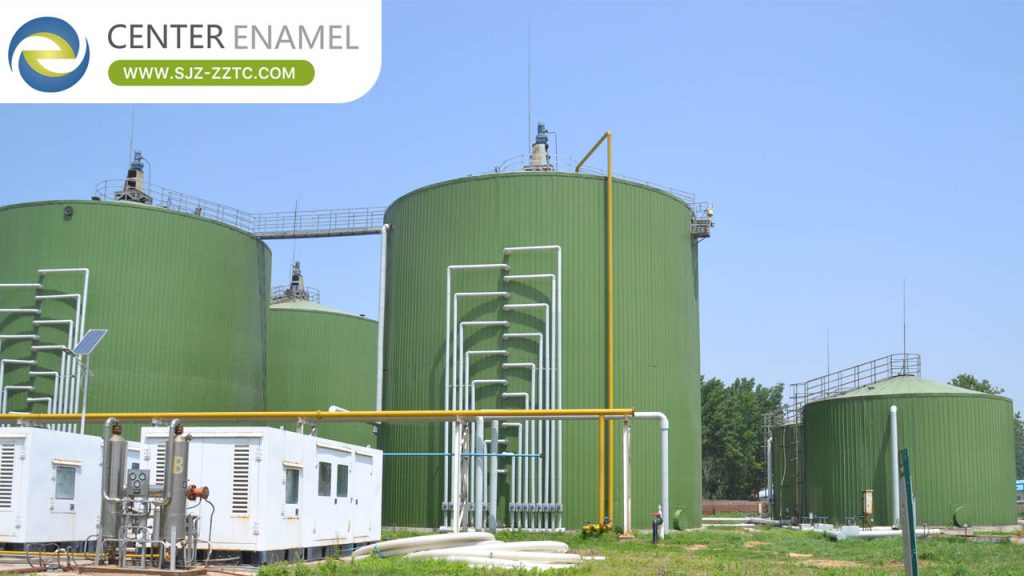
Read The Feedstock First
The three numbers decide everything. Organic strength tells you whether anaerobic digestion will pay back (roughly COD above a few thousand mg/L justifies recovering biogas). Suspended solids tell you whether to separate first or use a solids-tolerant reactor. The target tells you how deep the polish must go - discharge limit versus land-use or reuse. A feedstock that is both strong and solids-heavy needs a different sequence than a clarified, moderate-strength liquid.
| Input | Decides | Example |
| COD strength | Anaerobic worth it? | > 2,000-3,000 mg/L -> yes |
| Suspended solids | Separate or tolerate | High SS -> USR/CSTR |
| Target | Polish depth | Discharge vs reuse |
Pretreatment - When To Add A Step
Pretreatment is added when the raw feed would damage or unbalance the core process. Solid-liquid separation protects a UASB/IC granular bed from blinding. pH or alkalinity correction stabilizes acidogenic shocks. For some industrial streams, conditioning or equalization is the real pretreatment, not a reactor. Add steps only where the feed demands them - every added stage is capital and O&M you must justify.
| Trigger | Pretreatment | Why |
| High SS before UASB/IC | Solid-liquid separation | Protects granular bed |
| Acid / variable pH | Equalization + dosing | Stabilizes biology |
| Grease / fibers | Screening / flotation | Avoids clogging |
Anaerobic First, Then Polish
For high-strength streams, lead with anaerobic digestion to convert organics to biogas and cut the load cheaply, then polish. The polish choice follows the target: AOAO (anoxic-oxic) for nitrogen and residual COD, sand or membrane filtration for tighter suspended solids, and disinfection where reuse or strict limits demand it. Selecting the polish is part of the train, not an afterthought bolted on.
| Remaining need | Polish option | Removes |
| NH3 + COD | AOAO | N, P, residual COD |
| Fine SS | Filtration / MBR | Turbidity, solids |
| Pathogens | Disinfection | Coliforms |
Single Versus Multi-Stage
A single anaerobic stage suits most steady, moderate feeds. Move to two-stage anaerobic (acidogenesis then methanogenesis) only for very high-strength or shock-loaded wastes where stability pays for the extra step. Likewise, add an aerobic polish only to the depth the target requires - over-polishing a stream destined for land application wastes energy and chemicals. Match the number of stages to the feed and the limit, not to a template.
About Company
Shijiazhuang Zhengzhong Technology Co., Ltd (Center Enamel) is a comprehensive high-tech enterprise specializing in wastewater engineering, process section contracting, and equipment manufacturing. The company delivers biogas and wastewater projects through three main lines - EPC (turnkey) contracting, equipment supply, and process packages - covering livestock and municipal wastewater, biomass energy, industrial wastewater, and food waste. Its reactor portfolio spans CSTR, USR, UBF, UASB, IC, and EGSB, backed by in-house Glass-Fused-to-Steel tank manufacturing (enamel firing at 820-930 C) and certifications including ISO 9001, NSF/ANSI 61, and CE-EN 1090. With 35+ years of operation, a 150,000 m2 manufacturing base, and projects in 100+ countries, Center Enamel provides the single-responsibility engineering behind biogas and wastewater engineering that selects the process train from the feedstock - pretreatment only where needed, anaerobic first for energy, polish matched to the target - then pairs each stage with the right reactor.
Conclusion
A digestion process solution is selected from feedstock strength, solids, and target: add pretreatment only where the feed demands it, lead high-strength streams with anaerobic digestion, and polish only to the required depth - define the sequence before choosing the reactors.
Frequently Asked Questions
Q1: What is a digestion process solution? A1: The sequence of pretreatment, anaerobic digestion and polishing chosen for a feedstock, hosted in matched reactors.
Q2: How do I select a digestion process train? A2: Read strength, solids and target, then set the sequence; choose reactors only after.
Q3: Pretreatment before digestion - when? A3: When high SS would blind a UASB/IC, or when pH/variability needs equalization and dosing.
Q4: Anaerobic then aerobic or aerobic only? A4: High-strength -> anaerobic first for energy, then aerobic polish; low-strength -> aerobic only.
Q5: What polishing follows anaerobic digestion? A5: AOAO for N/P and residual COD; filtration for fine SS; disinfection for reuse.
Q6: Single or multi-stage anaerobic? A6: Single for steady moderate feeds; two-stage for very high-strength or shock loads.
Q7: How is a process train sized? A7: From feedstock volume and loading rate via retention time; the daily-biogas and reactor articles give the math.
Q8: What should a process-train scope specify? A8: Feedstock basis, sequence, each stage's reactor, polish depth, and written effluent/effluent-gas guarantees.
Suggested CTA
Send your feedstock strength, solids, and target, or request a scoped digestion process-train outline that defines the sequence before the reactors.