
Does Bagasse Cause Pollution? How Biogas Projects Turn Sugarcane Waste into Clean Energy
Sugarcane bagasse—the fibrous residue left after juice extraction—is produced in massive quantities globally. With over 2 billion tonnes of sugarcane harvested annually worldwide, bagasse represents one of the most abundant agricultural byproducts . While this biomass has energy potential, its management often creates significant environmental problems.
The core issue is how bagasse is typically disposed of. A substantial portion is either left to decompose in the open or burned in the fields. Open decomposition releases methane—a potent greenhouse gas with a global warming potential far exceeding CO₂—while burning contributes to air pollution that harms surrounding communities. Research confirms that approximately 50% of bagasse in some regions is simply discarded as waste with minimal economic value .
Does Burning Bagasse Cause Air Pollution?
Yes, burning bagasse is a major source of air pollution. While bagasse combustion in boilers is common in sugar mills for cogeneration, studies reveal concerning emission profiles.
Field monitoring of bagasse-fired biomass boilers shows that flue gas contains significant pollutants including particulate matter (PM2.5), nitrogen oxides (NOx), carbon monoxide (CO), volatile organic compounds (VOCs), and heavy metals . VOC speciation analysis identified oxygenated compounds as dominant in small boilers, while aromatics and alkenes prevailed in larger systems. These VOCs contribute to ozone formation potential (OFP) and secondary organic aerosol formation potential (SOAFP), highlighting their role in creating secondary pollution that affects regional air quality .
Furthermore, incomplete combustion in bagasse boilers leads to elevated CO emissions exceeding 1000 mg/m³ in some cases . Heavy metals present in bagasse, including Cu, Cr, Ni, and Pb, can migrate to fly ash and flue gas, with elements like Hg and Mn showing notable volatility .
How Bagasse Decomposition Contributes to Greenhouse Gas Emissions
When bagasse is left to decompose in landfills or open environments, the anaerobic breakdown of organic matter produces methane—a greenhouse gas approximately 28 times more potent than carbon dioxide over a 100-year period. This methane release contributes directly to climate change. The carbon-to-nitrogen ratio of bagasse (90-101:1) makes it particularly challenging to manage through traditional composting methods , meaning that much of this biomass continues to be disposed of unsustainably.
Sugarcane Bagasse to Biogas: A Sustainable Solution
The answer to bagasse pollution lies in anaerobic digestion technology. Instead of burning or discarding bagasse, the organic waste can be converted into renewable biogas through a biological process that occurs in the absence of oxygen.
Research demonstrates that sugarcane bagasse is a highly suitable substrate for anaerobic digestion. Studies have achieved methane yields up to 114.5 mL/g VS with methane ratios reaching 81.6% under optimal conditions . The biogas produced—primarily composed of methane (CH₄) and carbon dioxide (CO₂)—can be utilized for electricity generation, heat production, or upgraded to biomethane for vehicle fuel.
This approach addresses pollution at its source by diverting bagasse from disposal methods that generate emissions, while simultaneously producing clean energy and reducing reliance on fossil fuels.
The CSTR Process: Core Technology for Bagasse Biogas
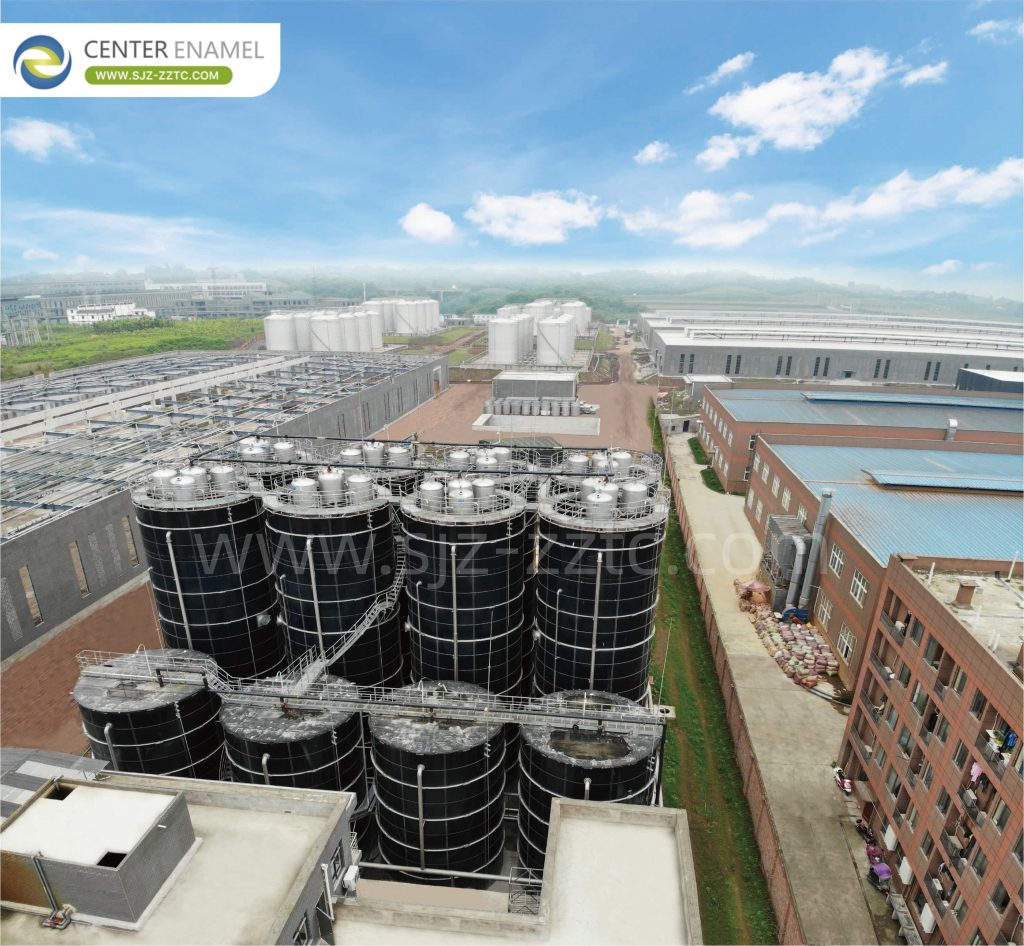
At the heart of any efficient Biogas Project lies the CSTR Process (Continuous Stirred-Tank Reactor). This technology is specifically engineered to handle the challenging characteristics of high-solid organic feedstocks like sugarcane bagasse.
The CSTR reactor operates as a completely mixed, closed vessel, ensuring that fermentation raw materials and anaerobic microorganisms maintain constant and thorough contact. A mechanical stirring device continuously agitates the slurry, preventing the formation of a floating scum layer and ensuring uniform distribution of nutrients and microorganisms. By feeding the reactor continuously at a constant temperature—typically under mesophilic conditions—the CSTR Process effectively degrades organic matter, maximizing biogas production.
This technology is recognized as one of the most efficient and reliable systems for anaerobic digestion, capable of converting organic waste into high-quality biogas while minimizing environmental impact.
GFS Tanks: The Premier Storage Solution for Biogas Projects
For optimal biogas capture and storage, GFS Tanks (Glass-Fused-to-Steel) provide exceptional durability and performance. Center Enamel's GFS Tanks are engineered with a glass coating applied by firing at 820-930°C, creating an inert, inorganic bond that combines the strength and flexibility of steel with outstanding corrosion resistance .
This coating is impermeable to the aggressive organic acids and hydrogen sulfide generated during digestion, ensuring a service life exceeding 30 years with minimal maintenance. The smooth glass surface prevents biofilm buildup and is easy to clean, making GFS Tanks ideal for the challenging environments of biogas production .
Key advantages of GFS Tanks include :
Exceptional corrosion resistance against H₂S and organic acids
pH resistance from 1-14, suitable for aggressive environments
Zero-leakage containment for biogas storage
Low maintenance with no need to recoat during the tank's lifetime
Rapid installation with modular bolted design
Long service life of 30-50 years
Double Membrane Roof systems complement GFS Tanks in biogas applications, providing superior airtightness necessary for gas collection and odor control. The integrated design forms a single, efficient structure that saves on the cost and space of separate ground-mounted gas holders .
Center Enamel: Your One-Stop Biogas Project Partner
Center Enamel has been committed to water, wastewater, and biogas projects, establishing itself as the largest manufacturer of Glass-Fused-to-Steel (GFS) tanks in Asia . With over 36 years of experience and a 150,000 m² R&D and production base, the company delivers unparalleled expertise in designing and executing turnkey Biogas Projects worldwide.
Comprehensive EPC Services Include:
Engineering & Design: Tailored solutions meeting international standards including ISO 28765, AWWA D103, and EN 1090
Procurement: High-quality materials, equipment, and technologies including biogas storage tanks, CSTR reactors, and digesters
Construction: Professional project management ensuring safe, timely, and cost-effective construction
Commissioning: Full support during startup to guarantee optimal operation
Center Enamel provides an integrated solution covering the entire biogas lifecycle—from feedstock receiving to biogas utilization—ensuring that every component works together seamlessly . Their global presence and local support, operating in more than 100 countries, enable tailored solutions for specific regional conditions .
Successful Biogas Projects Using GFS Tanks
Center Enamel has delivered numerous successful biogas projects worldwide.
Biogas Project in Canada
Tank dimensions: φ8.4m x 7.2m (H) (2 units)
Total volume: 798 m³
Completion year: 2024
Biogas Project in Indonesia
Tank application: Palm oil wastewater treatment plant
Tank model: Ø19.86m x 8.4m
Number of tanks: 3 GFS tanks
Installation: 7 personnel, 40 days
Installation date: November 2009
Conclusion: From Pollution to Sustainable Energy
Does bagasse cause pollution? The evidence is clear: yes, bagasse causes significant environmental harm when burned or discarded unsustainably. However, this agricultural byproduct need not remain a pollution source. Through advanced anaerobic digestion technology—utilizing the CSTR Process and durable GFS Tanks—sugarcane bagasse can be transformed from a waste problem into a valuable renewable energy resource.
Center Enamel offers comprehensive biogas solutions that address both the environmental challenges of bagasse disposal and the growing demand for clean energy. By converting this abundant biomass into biogas, we can reduce greenhouse gas emissions, improve air quality, create sustainable energy streams, and contribute to a circular economy.
Frequently Asked Questions (FAQ)
1. Why are GFS Tanks ideal for biogas projects?
GFS Tanks offer exceptional corrosion resistance against the aggressive hydrogen sulfide and organic acids produced during anaerobic digestion. The glass coating creates an impermeable barrier that withstands harsh conditions, ensuring a service life exceeding 30 years with minimal maintenance and no need for recoating .
2. How does the CSTR Process handle sugarcane bagasse digestion?
The CSTR Process uses continuous mechanical mixing to maintain a homogeneous slurry, preventing floating scum formation and ensuring maximum contact between microorganisms and the fibrous bagasse. This constant agitation optimizes the breakdown of cellulose and hemicellulose for maximum biogas production .
3. Can Center Enamel provide a complete turnkey biogas solution?
Yes, Center Enamel is an expert EPC contractor providing comprehensive one-stop solutions covering design, supply, and installation of the entire Biogas Project—including the CSTR Process, GFS Tanks, double membrane roofs, and all associated equipment .