
Does Low Sludge Mean No Handling?
No - low sludge does not mean no handling; anaerobic yield is only 0.05-0.10 kg VSS per kg COD, so the residue still exists and must be dewatered, stabilized, and spread or composted, and on a farm the digestate from the solids digester is a separate, larger stream that must be stored and applied under regulation. Low sludge shrinks the burden, it does not delete it.
1. What Low Actually Means
Low means far less than aerobic, not zero. The UASB or granular reactor produces a small, concentrated granular sludge that is mostly retained and only occasionally wasted. But the farm's CSTR or USR also produces digestate - the undigested fiber and stabilized liquor - which is the bulk of the material that still needs a home.
2. The Two Residue Streams
| Stream | Source | Handling |
| Granular sludge | UASB (small) | Retain, occasional waste |
| Digestate | CSTR/USR (large) | Separate, store, land-apply |
| Dewatered cake | Both | Compost or spread |
3. Treating Digestate as a Product
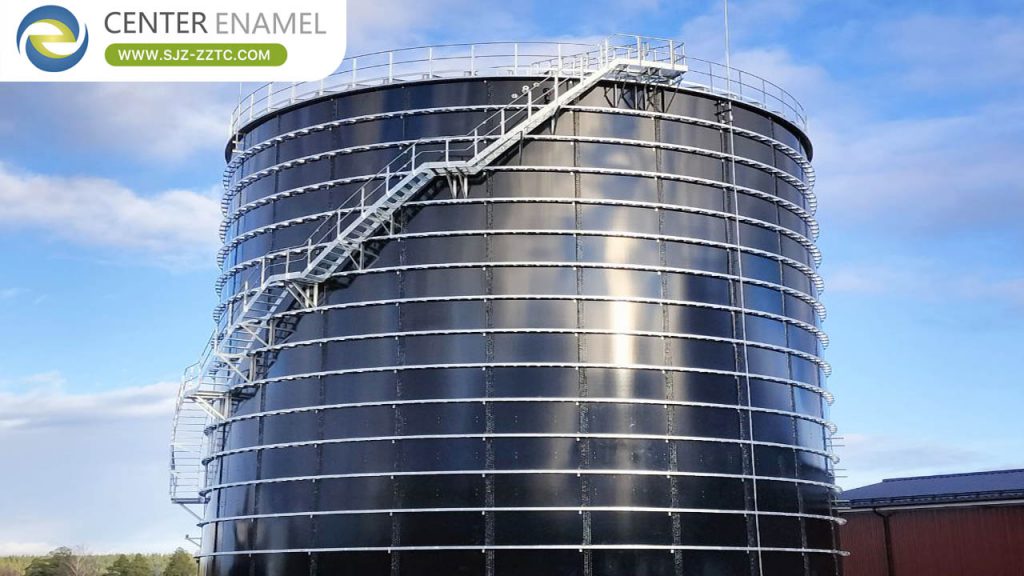
On a farm, digestate is best treated as a fertilizer outlet: separated into fiber and liquor, stored in corrosion-resistant GFS tanks, and spread to land at an agronomic rate. That closes the nutrient loop and protects the permit. Bolted GFS tanks (200-60,000 m3, fused at 820-930 C) resist the acidic, H2S-bearing liquor and ship flat-pack.
Project Case Study
Zhaqi Biogas Project in Inner Mongolia. A mesophilic AD plant processing 900 m3/day of farm animal manure and agricultural waste across 4 CSTR reactors, producing 20,000 m3 of biogas daily - a delivered example where the digestate from the solids digester is the residue stream that must be stored and applied, not the small UASB sludge.
| Project | Zhaqi Biogas Project in Inner Mongolia |
| Location | Xing'an, Inner Mongolia, China |
| Industry | Agriculture / Renewable Energy |
| Application | Manure digestion - digestate handling |
| Product | 4 CSTR reactors (25.98 x 8.4 m, GFS) |
| Output | 20,000 m3 biogas/day |
| Status | Delivered 2017 |
About Shijiazhuang Zhengzhong Technology Co., Ltd (Center Enamel)
Shijiazhuang Zhengzhong Technology Co., Ltd (Center Enamel) brings international project experience to residue handling: tankage and reactor packages have shipped to multiple countries and climates for livestock, municipal, and industrial duties, including the digestate storage tanks that turn a low-sludge claim into a managed, permitted nutrient outlet.
Comparison: Burden, Not Absence
| View | Reality |
| Low sludge = no handling | False, residue still exists |
| Digestate = waste | Better as fertilizer product |
| Storage needed | Yes, GFS tanks |
Low sludge is a smaller burden, not no burden: handle the granular sludge and especially the digestate with storage and land application. Send your feedstock and we will size the GFS digestate and reactor tanks so the residue is managed, not ignored.
Frequently Asked Questions (FAQ)
Q1: Does low sludge mean no handling?
A: No; anaerobic yield is 0.05-0.10 kg VSS/kg COD and digestate is a separate large stream.
Q2: What happens to UASB sludge?
A: It is mostly retained as granules and only occasionally wasted.
Q3: Is digestate a waste?
A: Best treated as a fertilizer product, separated and land-applied at agronomic rate.
Q4: How is digestate stored?
A: In corrosion-resistant GFS tanks (200-60,000 m3) before spreading.
Q5: What tank capacity is available?
A: GFS tanks from 200 m3 to 60,000 m3.
Q6: What standards apply?
A: GFS tanks follow ISO 28765 and AWWA D103; ISO 9001 quality system.
Suggested CTA
Send your feedstock and residue plan. We will size the GFS reactor and digestate storage tanks so the residue is managed and permitted.