
Does UASB Recover Biogas?
Yes. A UASB (Upflow Anaerobic Sludge Blanket) reactor recovers biogas as a natural product of anaerobic treatment: microorganisms in the granular sludge convert dissolved organic matter to methane and carbon dioxide, and the gas is collected at the top of the reactor rather than lost to the atmosphere. Typical yield is 0.30-0.45 m³ of biogas per kg of COD removed, with 55-65% methane, so the unit acts as both a treatment step and an energy source.
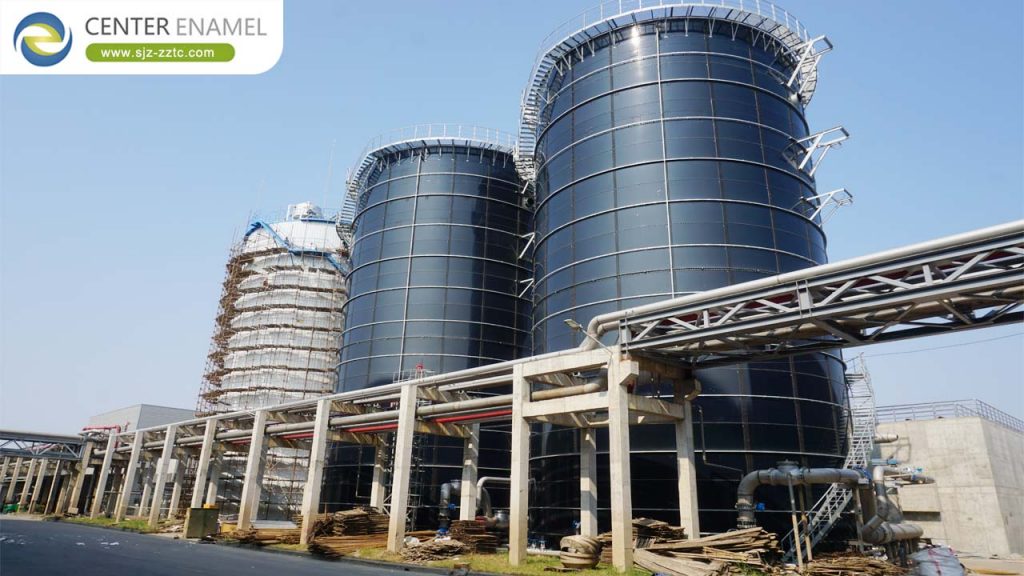
How a UASB Captures Biogas
Wastewater enters at the bottom and flows up through a dense blanket of granular sludge. Anaerobic microbes attach to the granules, releasing biogas that lifts the liquid and drives contact. At the top, a three-phase separator splits gas, liquid, and solids; the biogas is drawn off through a collection header while treated water spills over the weir. Because the gas path is built into the reactor, recovery needs no separate digester dome.
What Drives the Biogas Yield
| Design parameter | Typical value or range | Why it matters |
| Organic loading rate | 5-15 kg COD/m³/day | Sets reactor size for soluble feed |
| Methane content | 55-65% | Rest is CO₂ plus trace H₂S |
| Gas yield | 0.30-0.45 m³/kg COD removed | Scales with COD removal |
| Temperature | 35-38°C mesophilic | Stability beats exact setpoint |
| Granular sludge | 20-40 g VSS/L | Retains active biomass |
| Limitation to check | Feed COD >1,500-2,000 mg/L | Dilute streams need polishing |
Where UASB Biogas Recovery Pays Off
The strongest payback is in warm, soluble, high-strength streams: food and beverage, brewery, pulp and paper, pharmaceutical, and distillery effluents. There the UASB recovers energy while cutting the load sent to downstream polishing, lowering both disposal cost and plant carbon intensity. For cold or very dilute municipal sewage, a UASB is usually followed by an aerobic polish rather than used alone.
Project Case Study
Jiangdong Pharmaceutical Wastewater Project, Hangzhou. A granular-sludge anaerobic system of six reactors (12.66 × 24 m each) treats mixed extraction, domestic, and industrial wastewater, achieving COD removal of at least 70% under high-salinity conditions up to 6,000 mg/L — an example of anaerobic biogas recovery from a tough industrial stream.
| Project | Jiangdong Pharmaceutical Wastewater Project |
| Location | Xiaoshan District, Hangzhou, China |
| Industry | Pharmaceutical / Industrial Wastewater |
| Application | Granular-sludge anaerobic biogas recovery |
| Product | 6 granular anaerobic reactors (12.66 × 24 m) |
| Result | COD 11,200 → 3,024 mg/L, ≥ 70% removal |
| Status | Delivered 2019 |
About Shijiazhuang Zhengzhong Technology Co., Ltd (Center Enamel)
Shijiazhuang Zhengzhong Technology Co., Ltd (Center Enamel) contributes the engineering capability that lets a UASB also be a dependable gas producer: bolted Glass-Fused-to-Steel (GFS) digester and gas-holder tanks are engineered for wet, H₂S-bearing, acidic biogas duty, with the glass-to-steel enamel fused at 820-930°C for an inert barrier, built to ISO 28765 / AWWA D103 and CE-EN 1090. The reactor hydraulics and the tank are engineered as one package rather than solved on site.
Advantages and Limitations
A UASB recovers biogas and uses almost no energy for aeration, which is its core advantage. Limits: it needs warm, soluble, high-strength feed and a granular seed; suspended solids and FOG can upset the bed, and an aerobic stage is still required for full nutrient removal.
Comparison: UASB Biogas vs Aerobic Treatment
| Factor | UASB (anaerobic) | Aerobic treatment |
| Biogas recovery | Yes, 0.30-0.45 m³/kg COD | None |
| Energy demand | Low (no aeration) | High, 0.5-1.5 kWh/kg COD |
| Excess sludge | Low, 0.05-0.10 kg VSS/kg COD | High, 0.3-0.6 |
| Footprint | Compact | Larger for equal load |
A UASB does recover biogas, and that recovery is the reason it is the default front end for high-strength industrial wastewater. Size it to an organic load of 5-15 kg COD/m³/day at 35-38°C, keep the feed soluble, and the reactor pays back through energy and reduced sludge. Send your influent profile and we will size the UASB and the gas holder.
Frequently Asked Questions (FAQ)
Q1: Does a UASB produce biogas?
A: Yes. Anaerobic granules convert organics to 55-65% methane biogas, collected at the reactor top, at 0.30-0.45 m³ per kg COD removed.
Q2: What is the methane content of UASB biogas?
A: Typically 55-65% methane, with the balance mostly CO₂ plus trace H₂S that must be treated before use.
Q3: How much biogas does a UASB make per kg COD?
A: About 0.30-0.45 m³ of biogas per kg of COD removed, scaling directly with treatment performance.
Q4: Does UASB work for low-strength wastewater?
A: It is designed for soluble high-strength streams (COD >1,500-2,000 mg/L); dilute municipal sewage needs polishing after UASB.
Q5: What tank holds the UASB gas?
A: Biogas is collected in the reactor and stored in a low-pressure GFS or membrane holder sized to demand.
Q6: Is UASB biogas worth recovering?
A: Yes, where feed is warm, soluble, and high-strength; recovered methane offsets energy cost and cuts emissions.
Suggested CTA
Share your influent COD, flow, and temperature. We will size the UASB reactor and the GFS gas holder and align them with your polishing stage.