
Does UASB Save Energy?
Yes — UASB (Upflow Anaerobic Sludge Blanket) saves substantial energy because anaerobic treatment needs no dissolved-oxygen aeration, the single largest power draw in wastewater plants (about 0.5–1.5 kWh per kg COD removed in aerobic systems). UASB also recovers energy as biogas (55–65% CH₄), so a plant can offset pumping and heating. Only gentle upflow mixing and effluent/pump duty consume electricity.
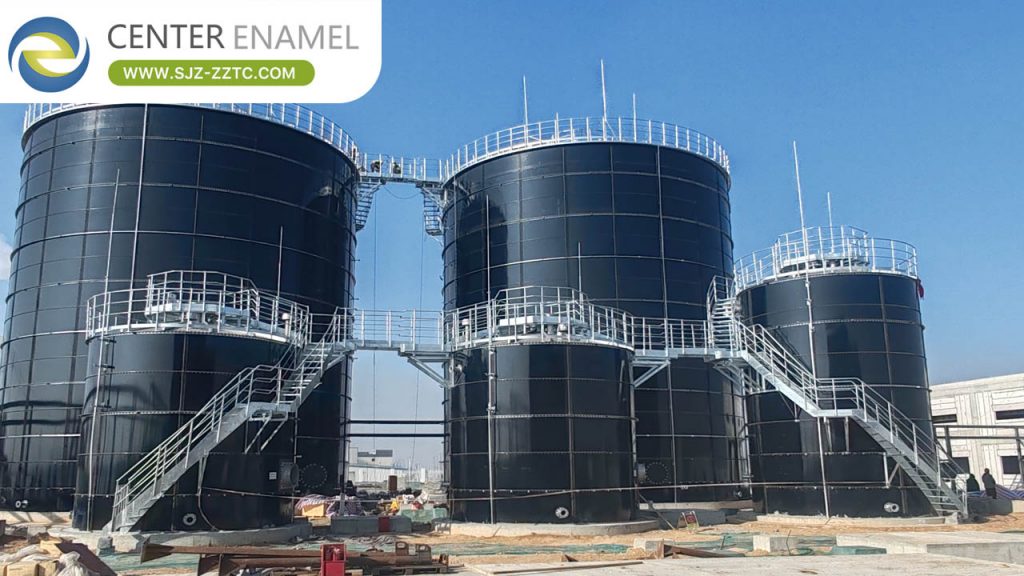
The Aeration Energy Gap
Activated-sludge and aerobic processes blow air to sustain microbes, burning 0.5–1.5 kWh/kg COD. UASB relies on a passive sludge blanket and upward flow, eliminating that load entirely. For a plant treating high-strength wastewater, this difference is often the majority of the site energy bill.
UASB Recovers Biogas
As organics are converted, UASB yields roughly 0.30–0.45 m³ biogas per kg COD removed. Captured and used in a boiler or CHP (35–45% electrical, 80–90% total efficiency), that gas becomes a net energy credit — turning a cost center into a partial power source.
| Process | Aeration energy | Biogas output | Net energy |
| Aerobic (activated sludge) | 0.5–1.5 kWh/kg COD | none | net consumer |
| UASB (anaerobic) | near zero | 0.30–0.45 m³/kg COD | net saver |
| UASB + CHP | pumping only | recovered + power | credit |
Technical Considerations
UASB suits soluble, warm (20–38°C), high-COD wastewater at OLR 5–15 kg COD/m³·day and 6–12 h HRT. Granular-sludge beds tolerate shocks and keep biomass retained without recycle blowers. Size the gas holder and use H₂S-resistant GFS or steel tankage; pre-heat only if influent drops below ~20°C.
How to Scope an Energy-Saving UASB
Confirm COD, temperature, and solubility; size the UASB by OLR and HRT; add a gas collection and (optional) CHP train; then specify corrosion-resistant tankage. A COD-and-flow sheet lets suppliers quantify the energy and biogas balance.
Project Case Study
Domestic Sewage Treatment Project in Ghana. A 1,800 m³/day municipal plant combining UBF (Upflow Blanket Filter, a UASB-family process) with A²/O, achieving COD reduction from 1,000 to 100 mg/L. As an international anaerobic project it demonstrates energy-light treatment plus biogas potential on a municipal scale.
| Project | Domestic Sewage Treatment Project in Ghana |
| Location | Ghana |
| Industry | Municipal / Domestic Sewage |
| Application | UBF + A²/O municipal treatment |
| Product | UBF + A²/O + sedimentation tanks |
| Capacity | 1,800 m³/day |
| Quantity | 1 UBF + 1 sedimentation + 2 A²/O |
| Material | Glass-Fused-to-Steel (GFS) |
| COD result | 1,000 → 100 mg/L |
| Status | Delivered 2021 |
About Center Enamel
Center Enamel demonstrates its international project experience with anaerobic tankage delivered across Ghana, China, Indonesia, and the Middle East. The company supplies bolted Glass-Fused-to-Steel (GFS) tanks for UASB, UBF, and A²/O trains — engineered for the low-energy, biogas-recovering duty that defines anaerobic treatment — with documented overseas municipal and industrial installations.
Advantages and Limitations
UASB slashes aeration energy and recovers biogas, especially on high-strength soluble wastewater. Limits: it needs warm, soluble feed; cold or heavily suspended loads favor other routes; and biogas use requires gas handling. Where it fits, the energy saving is decisive.
Comparison: Energy Footprint
| Scenario | Energy use | Biogas | Verdict |
| Aerobic only | high | none | cost center |
| UASB only | low | produced | saver |
| UASB + CHP | low + credit | to power | best |
UASB saves energy by removing aeration (0.5–1.5 kWh/kg COD) and recovering biogas (0.30–0.45 m³/kg COD) for heat or CHP. It fits soluble, warm, high-COD wastewater at OLR 5–15 kg COD/m³·day, and pairs with H₂S-resistant GFS tankage.
Frequently Asked Questions (FAQ)
Q1: Does UASB save energy?
A: Yes — it needs no aeration and recovers biogas, so only pumping and light mixing draw power.
Q2: How much energy does aeration use?
A: Aerobic treatment typically consumes 0.5–1.5 kWh per kg COD removed; UASB avoids nearly all of it.
Q3: Does UASB make biogas?
A: Yes, about 0.30–0.45 m³ per kg COD removed, usable in boilers or CHP (35–45% electrical).
Q4: When is UASB most efficient?
A: On warm (20–38°C), soluble, high-COD wastewater at OLR 5–15 kg COD/m³·day.
Q5: What tank material suits UASB?
A: Glass-Fused-to-Steel or steel with H₂S-resistant lining; GFS glass fused at 820–930°C is inert.
Q6: What project experience exists?
A: Delivered UBF + A²/O municipal tankage in Ghana and UASB livestock systems in China.
Share your COD, temperature, and flow. We will size a UASB/UBF by OLR and HRT, estimate biogas and energy savings, and quote GFS tankage for your plant.