
Domestic Sewage Treatment Solution: Bundled Tankage For Communities
Direct answer: A domestic sewage treatment solution is a packaged plant that combines the biological process and the Glass-Fused-to-Steel tankage into one scope and one responsible party. Bundling removes the interface gap between a separately supplied tank and process, and it lets the supplier guarantee retention time, loading rate, and effluent quality as one consistent basis for a community or small municipality.
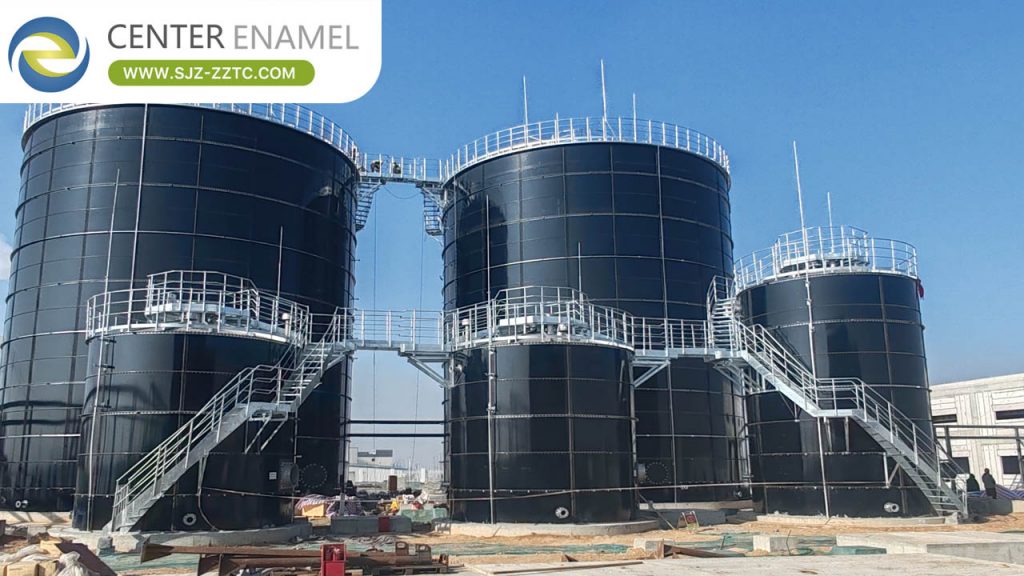
What A Domestic Sewage Solution Includes
Integration means the tank, the biology, and the controls are specified together. For domestic sewage this can mean a UBF (Upflow Blanket Filter) or primary clarifier, an A2/O (anaerobic-anoxic-aerobic) biological train for carbon and nutrient removal, and clarification, with the GFS reactors, mixers, and instrumentation engineered as a matched set before fabrication.
| Scope Item | What Is Supplied | Why It Matters |
| Reactor tank | GFS or welded sealed reactor | Holds retention time and boundary |
| Biological process | UBF plus A2/O train | Sets removal efficiency |
| Controls | Level, aeration, dosing | Protects tank and biology |
| Guarantee | Single performance basis | One accountable party |
Why Single-Responsibility Delivery
When the tank and the process come from two vendors, the boundary is where projects stall and where blame lands when effluent misses the limit. A bolted GFS reactor arrives factory-coated, so the tank and the process can be engineered as one package with a single organic loading and retention-time guarantee.
Which Communities Benefit
New residential clusters, rural towns, camps, and tourist sites with no central sewer gain most, because a package plant can be sized to the village and expanded as it grows. A boundary to respect: the influent strength and the nutrient limit must be defined before the tank volumes are fixed, or the package will be oversized or undersized.
About The Supplier
Shijiazhuang Zhengzhong Technology Co., Ltd (Center Enamel) manufactures Glass-Fused-to-Steel tanks rated for municipal and domestic sewage duty, with enamel firing at 820-930 C and certifications including ISO 9001, NSF/ANSI 61, and CE-EN 1090. The bolted system supports rapid overseas deployment and factory-controlled quality.
Comparison: Supply Models
| Model | Best For | Main Risk |
| Bundled process plus tank | Owners wanting one guarantee | Higher coordination upfront |
| Tank only | Owners with own process IP | Interface gaps at boundary |
| Process only | Owners with existing tanks | Tank may not suit new load |
Conclusion
A domestic sewage treatment solution pays off when the tank and the biology are designed as one. Set the loading rate and retention time first, bundle the GFS tankage with the process, and the effluent guarantee becomes enforceable rather than arguable.
Frequently Asked Questions
Q1: What does a domestic sewage solution include? A1: It packages the reactor tankage and the biological process under one scope and one guarantee.
Q2: Why bundle process and tankage? A2: It removes the tank-process interface gap that causes delays and disputes.
Q3: Which communities need a package? A3: New towns, rural clusters, camps, and tourist sites without central sewer.
Q4: How is effluent guaranteed? A4: Through a single organic loading and retention-time basis owned by one responsible party.
Q5: What tank resists sewage corrosion? A5: A Glass-Fused-to-Steel tank with a factory-fired enamel lining.
Q6: How are nutrients removed? A6: An anaerobic-anoxic-aerobic train strips nitrogen and captures phosphorus.
Q7: How fast can tankage be built? A7: Bolted GFS panels erect in weeks, faster than concrete.
Q8: Can the plant expand? A8: Yes, modular GFS panels add reactor volume as the community grows.
Suggested CTA
Describe your community flow and discharge permit to an engineer, or request a bundled domestic sewage treatment and tankage scope.