
Municipal Sewage Treatment Project EPC Contractor: Efficient A²O Technology and Durable GFS Tanks
Urban expansion, stricter environmental regulations and rising energy prices are placing increasing pressure on municipal sewage treatment infrastructure. Municipalities must improve wastewater collection, maintain stable effluent quality and control operating costs while upgrading aging treatment facilities.
Several challenges make these objectives difficult to achieve. Incomplete sewer networks and combined sewer systems increase the complexity of wastewater collection. Meanwhile, energy-intensive treatment processes create pressure to reduce electricity consumption and carbon emissions. Emerging contaminant removal technologies also require substantial investment, making infrastructure upgrades increasingly expensive.
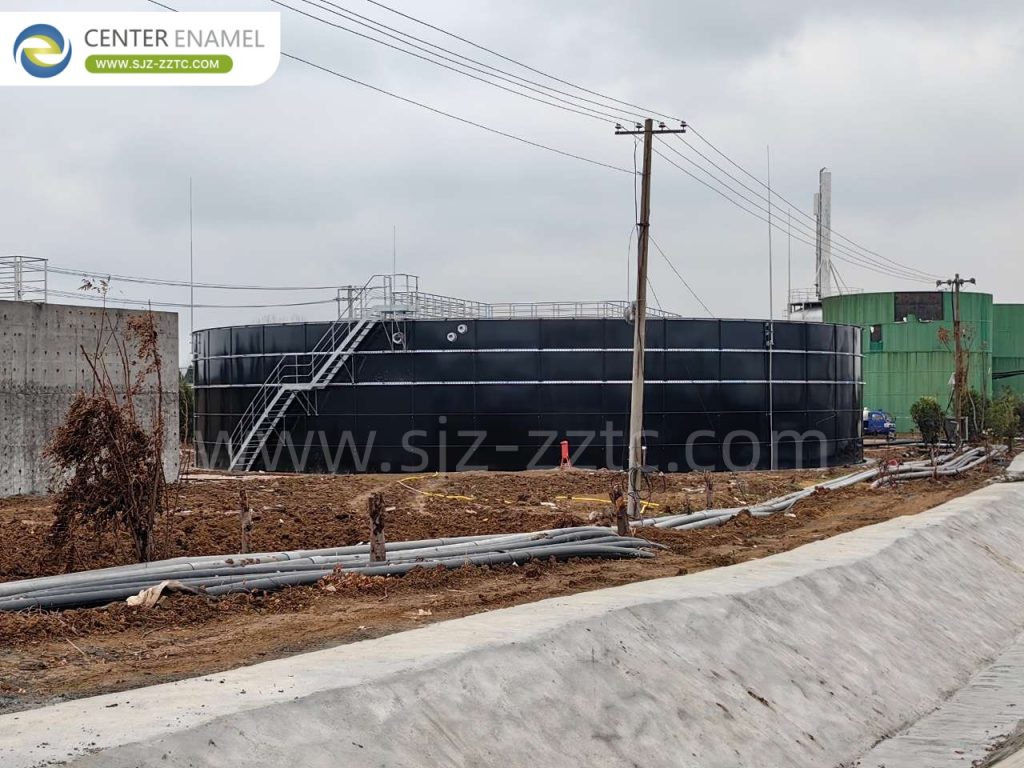
For project owners, selecting an experienced Municipal Sewage Treatment Project EPC Contractor is therefore essential. Beyond treatment technology, a successful project requires reliable equipment, corrosion-resistant structures, efficient construction and long-term technical support.
Center Enamel provides GFS tank solutions for municipal wastewater infrastructure, combining specialized enamel technology, modular manufacturing and international project experience to support demanding environmental applications.
Why GFS Tanks Suit Diverse Wastewater Conditions
Municipal wastewater facilities often handle more than domestic sewage. Depending on the project, storage and treatment infrastructure may also encounter sludge, high-organic wastewater, saline water and other challenging media.
Traditional concrete tanks generally require additional protective linings when exposed to aggressive wastewater. These coatings may deteriorate under changing operating conditions, increasing maintenance requirements and the risk of leakage.
Center Enamel has independently developed more than 200 specialized enamel frit formulations and supporting patents. These technologies allow enamel compositions to be customized according to the characteristics of the stored medium.
GFS Tanks offer several important advantages:
Chemical resistance: Specialized enamel formulations can be designed for strong acids, strong alkalis, high organic concentrations and high-salinity environments.
Adaptability: Tank specifications can accommodate different wastewater and fermentation feedstock requirements.
Durability: The fused enamel coating provides a dense protective surface against corrosive media.
Modular construction: Factory-produced panels simplify transportation and on-site bolted assembly.
Multi-industry applications: Suitable for municipal wastewater, anaerobic digestion, livestock farming, food processing and industrial water treatment.
This flexibility helps project owners select a consistent tank technology across different environmental infrastructure applications without relying on conventional concrete structures alone.
Applying A²O Technology to Municipal Sewage Treatment
Among biological treatment technologies, the A²O process is widely applied to municipal domestic wastewater requiring simultaneous nitrogen and phosphorus removal.
A²O stands for Anaerobic-Anoxic-Oxic. It combines three biological environments to remove organic pollutants and control nutrient concentrations before treated water is discharged.
The process is particularly suitable for large municipal wastewater treatment plants in cities, counties and townships, as well as residential communities, schools and industrial parks with predominantly domestic wastewater.
Its main treatment stages include:
Anaerobic Treatment
In the anaerobic zone, dissolved oxygen and nitrate are absent. Phosphorus-accumulating organisms release phosphorus and take up readily biodegradable organic compounds, preparing the biomass for subsequent biological phosphorus removal.
Anoxic Treatment
The anoxic zone supports denitrification. Microorganisms convert nitrate into nitrogen gas using available organic carbon, reducing nitrogen concentrations in the wastewater.
Oxic Treatment
In the aerobic zone, microorganisms degrade organic pollutants and convert ammonia into nitrate through nitrification. Phosphorus-accumulating organisms also absorb phosphorus, which is subsequently removed through sludge discharge.
After biological treatment, secondary clarification separates activated sludge from treated water.
The integrated process makes A²O a practical choice for municipal sewage projects targeting organic matter, nitrogen and phosphorus removal.
Where A²O Technology Delivers the Best Results
Although A²O is well established in municipal wastewater treatment, its effectiveness depends on influent characteristics and project objectives.
Its principal application scenarios include:
Large-scale urban and county-level municipal wastewater treatment plants.
Township sewage treatment facilities.
Residential communities, schools and public institutions.
Industrial park domestic wastewater treatment.
Suitable mixed domestic and light industrial wastewater.
River sewage interception and existing treatment plant upgrades.
The process is especially appropriate for low-concentration, high-flow wastewater with good biodegradability and simultaneous nitrogen and phosphorus removal requirements.
However, it is not designed as a universal solution for high-concentration, high-solids industrial wastewater. Such applications require separate process evaluation and potentially specialized pretreatment.
Selecting the correct treatment configuration from the beginning helps avoid unnecessary equipment investment and operational difficulties.
Controlling Municipal Wastewater Treatment Operating Costs
Capital expenditure is only one part of a municipal sewage treatment project's financial requirements. Electricity, chemicals, labor, equipment maintenance and sludge management all influence long-term operating expenses.
A²O offers a relatively mature and straightforward biological treatment configuration. Under suitable wastewater conditions, its operating requirements are manageable, and its treatment efficiency benefits from stable influent characteristics.
Several factors contribute to cost control:
Manageable chemical consumption: Biological nutrient removal reduces dependence on continuous chemical dosing, although supplementary chemicals may be needed to meet stringent discharge limits.
Stable operation: Properly designed systems require fewer frequent adjustments when wastewater characteristics remain consistent.
Routine maintenance: Standardized equipment and process configurations simplify daily operation.
Economies of scale: Larger facilities can distribute operating costs across higher treatment volumes.
Resource recovery opportunities: Sludge treatment and biogas utilization may help offset part of the plant's energy and disposal expenses.
When combined with durable GFS tank structures, these operational advantages help project owners consider both treatment efficiency and infrastructure lifecycle costs.
Global Municipal Wastewater Projects and Engineering Experience
Choosing a reliable tank supplier or engineering partner requires evaluating manufacturing capabilities, project experience and international delivery performance.
Center Enamel's global business covers more than 100 countries and regions, with over 30,000 successful overseas projects. Its products serve customers across Europe, the Americas, the Middle East, Africa, Southeast Asia and Latin America.
Its international project portfolio includes large-volume GFS tanks in Italy, 20-meter tower water supply tanks in Colombia, coastal seawater treatment tanks in Costa Rica and large municipal wastewater aluminum dome projects in Saudi Arabia.
The company's international delivery approach combines standardized manufacturing with localized adaptation. Tank corrosion protection, sealing configurations and pressure requirements can be adjusted to suit local water quality, environmental conditions and applicable regulations.
| Project / Market | Application | Engineering Focus |
| Italy | Large-volume GFS tanks | Modular tank manufacturing and installation |
| Colombia | 20 m tower water supply tanks | Water storage infrastructure |
| Costa Rica | Coastal seawater treatment tanks | Corrosion-resistant tank solutions |
| Saudi Arabia | Municipal wastewater aluminum dome projects | Wastewater tank covering systems |
These references demonstrate experience across different water and environmental infrastructure requirements, supporting Center Enamel's ability to serve international engineering and procurement clients.
Manufacturing and After-Sales Support for Long-Term Reliability
A successful municipal sewage treatment project depends on more than manufacturing quality. Professional technical support throughout installation and operation is equally important.
Center Enamel provides full-lifecycle support through its technical and after-sales teams, following three core principles: rapid response, professional service and efficient problem-solving.
Standard remote support includes equipment fault diagnosis, process parameter adjustment and tank corrosion-protection maintenance guidance.
For overseas and domestic projects requiring additional assistance, technical personnel can be dispatched for on-site inspections, annual maintenance and equipment refurbishment.
The company also works with external technical experts to support anaerobic process commissioning, biogas upgrading operation and maintenance, and wastewater treatment upgrades.
This service model helps clients maintain equipment performance, address operational challenges and improve the long-term reliability of wastewater infrastructure.
Choosing the Right Tank Roof for Municipal Applications
Tank roof selection should be based on the stored medium, operating pressure and gas collection requirements.
For atmospheric-pressure storage applications without airtightness requirements, Center Enamel offers FRP roof solutions.
Manufactured from resin and fiberglass, FRP roofs are lightweight, resistant to moisture and offer mild acid and alkali corrosion resistance. They are available in flat and dome configurations.
Dome roofs provide effective rainwater drainage and help prevent water accumulation, while flat roofs facilitate the installation of walkways, vents and level monitoring equipment.
These roofs are suitable for drinking water storage, agricultural irrigation, firewater reserves and general production wastewater storage.
However, FRP roofs are not recommended for anaerobic fermentation tanks requiring biogas collection or pressurized sealing. Such applications require appropriately engineered gas-tight roof systems.
Selecting the correct roof configuration ensures that tank structures match actual operating requirements.
Frequently Asked Questions
1. What should I look for in a Municipal Sewage Treatment Project EPC Contractor?
Evaluate engineering experience, process suitability, manufacturing quality, international project references, installation capabilities and after-sales support. Also clarify the contractor's actual scope of responsibility, including civil works, process equipment and commissioning.
2. Why are GFS Tanks suitable for municipal wastewater treatment?
GFS Tanks feature a fused enamel coating that provides corrosion protection and a modular bolted structure. They are suitable for wastewater storage, sludge treatment, clarifiers and other applications when designed according to project conditions.
3. Can A²O technology treat all types of wastewater?
No. A²O is primarily suitable for municipal domestic wastewater and suitable low-strength mixed wastewater requiring nitrogen and phosphorus removal. High-concentration industrial wastewater generally requires additional pretreatment or alternative treatment configurations.
Partner with Center Enamel for Your Municipal Sewage Project
Planning a new municipal wastewater treatment plant or upgrading existing infrastructure? Contact Center Enamel to explore customized GFS tank solutions and discuss how our manufacturing and engineering capabilities can support your project.
Share your design capacity, wastewater characteristics and project specifications with our team. Let Center Enamel help you identify suitable tank configurations and build more reliable wastewater infrastructure.