
Durable GFS Tanks for Efficient Anaerobic Digestion in Your Beverage Wastewater Treatment Project
The global industrial wastewater treatment market is experiencing significant regional diversification. Understanding these regional trends is crucial for selecting the right technology partner, as local demands directly influence treatment requirements and infrastructure needs.
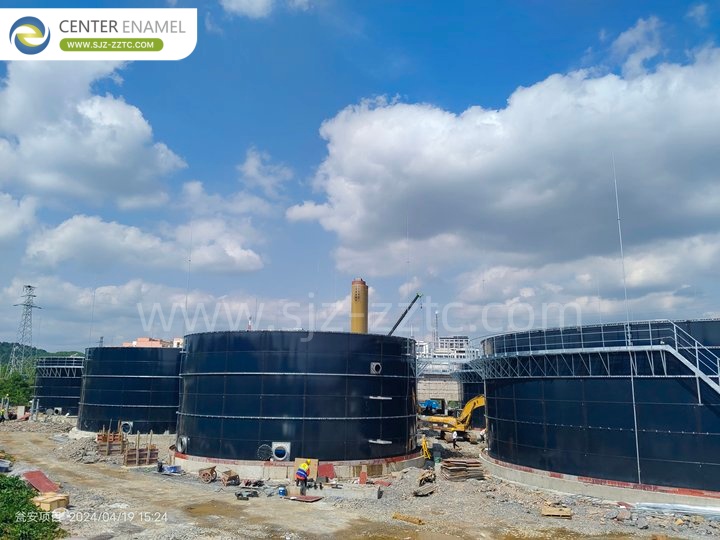
The Asia-Pacific region, particularly China, has become the world's largest industrial wastewater treatment market, with the operation and maintenance service segment's contribution continuing to rise. This marks a clear shift from project construction to long-term operational management. In contrast, the North American market focuses on upgrading existing facilities, while Europe emphasizes high-value-added resource recovery technologies. Wastewater from the new energy industry chain (lithium batteries, photovoltaics, hydrogen) has become the most notable emerging growth area due to its complex composition and high treatment difficulty, generating significant demand for customized solutions.
The maturity of third-party treatment models in industrial parks continues to improve, driving consolidation in the professional operation market. The Middle East has strong demand for advanced treatment and reuse of industrial wastewater due to water scarcity, while manufacturing transfer in Southeast Asia drives local industrial wastewater treatment facility construction demand. These diverse regional requirements demand flexible and robust equipment, making GFS tanks and proven anaerobic digestion processes essential components for successful project implementation worldwide.
The Strategic Advantage of GFS Tanks in Modern Facilities
Given the varied and often space-constrained industrial environments across regions, treatment equipment must offer maximum adaptability. This is where the physical and operational characteristics of GFS tanks provide a decisive advantage over traditional construction methods.
GFS Tanks: Ideal for Compact and Intensive Plant Layouts
GFS tanks offer flexible customization of size and appearance, with higher land utilization rates, ideally suited for modern compact plant layouts. They present significant advantages over fixed poured concrete tanks. Concrete tanks cannot alter volume or shape after pouring, with heavy bases occupying large areas, making placement difficult on narrow or irregular plots. Their rough, uniform appearance cannot match modern facility aesthetic requirements.
GFS tank volume can be precisely customized as needed, with capacities ranging from dozens of cubic meters to 50,000 cubic meters freely selectable. Tank height and diameter can be flexibly combined to fit narrow or irregularly shaped plots, effectively saving plant land occupation. Enamel color customization is also supported, achieving visual harmony with plant buildings and environmental facilities. During later plant expansion, GFS tanks can be directly adjusted in layout and expanded; concrete tanks, being monolithic structures, must be demolished and rebuilt, offering less flexibility in land resource utilization. This aligns well with the intensive construction and aesthetic operation and maintenance needs of industrial parks, making GFS tanks the preferred containment solution for modern anaerobic digestion systems.
Understanding the Anaerobic Digestion Process
The effectiveness of a treatment plant hinges on its core biological process. For high-strength organic wastewater, anaerobic digestion, particularly the UASB process, is a proven and efficient technology that works synergistically with GFS tank systems.
The UASB Reaction Process: A Detailed Overview
After pretreatment through screens and equalization tanks to remove impurities and balance water quality and flow, wastewater is uniformly fed into the reactor through the bottom distribution system. The wastewater rises at a constant rate through the high-concentration granular sludge bed at the bottom, where anaerobic microorganisms rapidly degrade most organic matter, converting it into biogas, clean water, and a small amount of sludge. Gentle hydraulic mixing maintains sludge suspension, expanding microbial contact area.
Remaining pollutants continue to degrade in the mid-section suspended sludge layer, with the mixed liquor finally entering the top three-phase separator for gas, solid, and liquid separation. Biogas is collected upward for utilization, sludge settles back to the reaction zone, treated effluent overflows from the top, and aged sludge is periodically discharged. This fully automated continuous operation is a hallmark of effective anaerobic digestion, and the entire process is reliably contained within durable GFS tanks, ensuring both efficiency and longevity.
Key Characteristics of Beverage Wastewater
The beverage industry produces a very specific type of high-strength wastewater. Understanding its key characteristics is essential for designing an effective treatment system that leverages anaerobic digestion within robust GFS tanks.
Defining Water Quality Parameters for Beverage Effluent
Beverage wastewater is characterized by high COD, high sugar content, low suspended solids, slightly acidic pH, excellent biodegradability, and significant fluctuations. COD typically ranges from 3,000-20,000 mg/L, with high-concentration CIP cleaning wastewater peaking above 50,000 mg/L. Core pollutants are soluble sugars-sucrose, fructose, glucose-which are highly degradable organics, with BOD/COD typically 0.5-0.65-industry-leading biodegradability.
The wastewater has low suspended solids, primarily consisting of fruit pulp, tea residues, and fiber impurities. The pH is slightly acidic-juice wastewater pH is typically 3-4, while carbonated beverage wastewater contains phosphoric acid. The appearance is clear to slightly turbid, with color varying by beverage type (juice has high color, tea has tea color). Temperature is moderate at 20-40°C. Importantly, water quality fluctuates intermittently with CIP cleaning cycles and product changeovers, alternating between high-concentration CIP and low-concentration filling wastewater. This variability necessitates a robust and flexible treatment system, where durable GFS tanks and efficient anaerobic digestion processes provide stable performance despite influent changes.
Proven Application: Ghana Municipal Wastewater Project
The practical application of these technologies in challenging environments confirms their reliability. The Ghana municipal project is a testament to how robust anaerobic digestion processes and high-quality GFS tanks can meet strict discharge standards effectively.
Case Study: UBF + A²/O Process with GFS Tanks in Ghana
Completed installation in 2021, this project treats 1,800 m³/day of municipal wastewater using UBF anaerobic + A²/O nitrogen/phosphorus removal mature processes. It is equipped with multiple Center Enamel GFS tanks including 1 UBF anaerobic reactor, 1 secondary clarifier, and 2 internal/external double-layer A²/O biological tanks. Influent has high COD, BOD, suspended solids, and nitrogen/phosphorus concentrations. After full treatment, effluent parameters are significantly reduced with pH stable at 6.5-9.0, fully meeting local environmental discharge standards.
The corrosion-resistant, conveniently assembled GFS tanks efficiently solve urban domestic wastewater pollution while balancing treatment effectiveness and O&M economics. This project serves as a mature municipal wastewater case in Africa, demonstrating how integrated solutions combining anaerobic digestion and premium tank systems can be successfully deployed in remote or challenging locations, providing a model for similar applications worldwide.
Center Enamel's Engineering Expertise
The success of complex projects is built on the expertise of the engineering team. Center Enamel's design capabilities ensure that every system, from GFS tanks to the anaerobic digestion process, is optimized for local conditions and project requirements.
Comprehensive Design Capabilities for Global Projects
The design team includes senior engineers registered in the Hebei Provincial Science and Technology Expert Database, with design standards aligned with strict European/American high-end equipment safety standards. The team can provide complete integrated design for differentiated overseas projects in livestock biogas, POME, municipal wastewater, hazardous waste storage, seawater desalination, etc.-covering tank structure, anti-corrosion/sealing systems, biogas piping, and anaerobic process integration.
Pre-design thoroughly investigates local seismic zone, wind pressure, soil bearing capacity, water quality corrosivity, and local environmental discharge standards-applying thickened panels, reinforced anchored bases, and optimized sealing/corrosion structures as needed. Complete customized equipment solutions can be tailored to customer plant area, wastewater load, treatment targets, and budget-balancing safety, economics, and local adaptation. This ensures compliant, stable, and highly adaptable equipment structural design support for global environmental projects, including complex beverage wastewater treatment projects.
Integrated Delivery and Global Support
Delivering a turnkey project requires seamless integration of manufacturing, logistics, and construction. Center Enamel's full-industry-chain capability ensures that every element, from GFS tank production to anaerobic digestion system installation, is executed with precision.
Full-Industry-Chain Integrated Delivery Capability
Center Enamel is the only company globally integrating proprietary enamel frit R&D, self-manufactured tanks, and EPC general contracting. This enables full-process self-control from solution design, equipment production, cross-border logistics, overseas construction, to post-construction O&M. This integration significantly reduces client coordination and time costs, ensuring efficient project execution.
With over 30,000 environmental projects completed globally and more than 30 years of experience, Center Enamel's commitment to quality and innovation in GFS tanks and anaerobic digestion technologies is unmatched. This end-to-end service model guarantees that every beverage wastewater treatment project benefits from the highest standards of engineering, manufacturing, and professional support.
Frequently Asked Questions (FAQ)
1. Why are GFS tanks preferred for anaerobic digestion in beverage wastewater treatment?
Glass-Fused-to-Steel (GFS) tanks offer superior corrosion resistance, essential for the acidic and high-salt environment of anaerobic digesters. Their modular design allows for flexible sizing and easy on-site assembly, which is ideal for compact plant layouts. The durable enamel coating ensures a long service life with minimal maintenance, making them a cost-effective containment solution.
2. What makes the UASB process suitable for high-strength beverage wastewater?
The Upflow Anaerobic Sludge Blanket (UASB) process is highly efficient for treating soluble organic pollutants like sugars found in beverage wastewater. It operates without mechanical mixing, saving energy, and produces biogas as a renewable byproduct. Its compact design and ability to handle high COD loads (3,000-20,000 mg/L) make it an ideal biological treatment step for this industry.
3. How does Center Enamel ensure project success for international beverage wastewater projects?
Center Enamel provides a complete EPC service, managing everything from initial design and equipment manufacturing to logistics, on-site construction, and commissioning. Their in-house design team tailors solutions to local conditions (seismic, wind, soil), while their global construction teams ensure professional installation. This integrated approach minimizes client coordination and ensures timely, budget-conscious project delivery.