
Optimized Biogas Plant Design for Efficient Anaerobic Digestion in Beverage Wastewater Treatment Projects
The global wastewater treatment market is experiencing a clear divergence, with leading companies consolidating their influence through integrated service capabilities and strategic capital operations. As industry concentration steadily increases, Chinese manufacturers are solidifying their competitive edge in mid-tier equipment exports, while international giants focus on high-end clients and complex industrial wastewater challenges. Simultaneously, local players effectively occupy the mid-to-low-end segments and industrial park centralized treatment markets by leveraging superior service responsiveness and cost advantages.
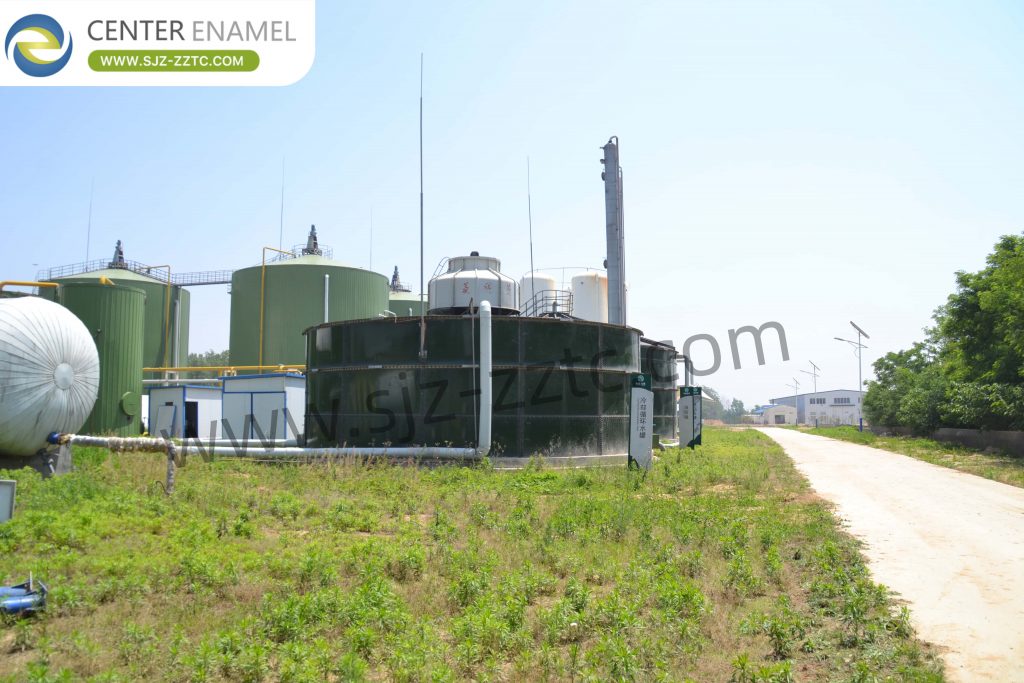
This competitive dynamic directly influences technology selection, particularly in the anaerobic treatment sector, where effective biogas plant design is paramount. In this context, anaerobic solutions such as UASB, EGSB, and IC reactors have become indispensable for high-concentration organic wastewater pretreatment across food processing, pharmaceutical fermentation, alcohol brewing, and chemical industries. These reactors, which utilize steel tank shells, demand exceptional corrosion resistance and gas-tightness to ensure long-term operational stability. As a result, the application value of glass-fused-to-steel (GFS) tanks in these demanding scenarios is becoming increasingly prominent, bridging the gap between robust engineering and reliable performance.
Unpacking the Advantages of the UASB Process for Anaerobic Digestion
To achieve efficient anaerobic digestion, selecting the right reactor technology is crucial, and the UASB process offers distinct advantages for beverage wastewater treatment projects. No mechanical mixing equipment is required, with sludge suspension achieved through hydraulic action, resulting in very low overall energy consumption. High-concentration anaerobic granular sludge can be cultivated, with high sludge concentration, strong activity, excellent settleability, low sludge washout, and low sludge yield, significantly reducing sludge disposal costs.
The integrated design combines reaction, sedimentation, and separation simultaneously, with small footprint and moderate capital investment. Its simple structure leads to low failure rates and convenient maintenance. The process boasts a high volumetric loading rate with excellent organic pollutant degradation efficiency and good shock load resistance. Furthermore, it ensures stable biogas production with high resource recovery value. As the process is mature and widely adopted, with well-established construction, commissioning, and O&M systems, it is exceptionally suitable for large-scale industrial wastewater treatment, making it a cornerstone of effective biogas plant design for beverage industry applications.
Environmental Toxicity of Beverage Wastewater Pollutants
Understanding the nature of beverage wastewater is essential for designing an effective treatment system that relies on anaerobic digestion. Beverage wastewater pollutants are entirely natural food components (sugars, fruit juice, tea)-no synthetic toxic chemicals-resulting in extremely low chemical toxicity and good environmental safety. Core pollutants are high-concentration soluble sugars-non-toxic to aquatic organisms, but direct discharge leads to rapid aerobic decomposition, severely depleting dissolved oxygen and causing fish suffocation-a classic oxygen-demanding pollution problem.
Fruit juice organic acids can lower receiving water pH, affecting aquatic life, while tea polyphenols affect water color and taste at trace levels. High sugar content promotes rapid microbial growth, mold, and decomposition/odor. Long-term discharge causes organic pollution, algal blooms, and eutrophication. Overall, the pollution is primarily oxygen-demanding organic pollution-with no heavy metals or persistent organic accumulation risks-and pollutants are rapidly naturally degradable with short environmental recovery periods. This profile makes these wastewaters ideal candidates for anaerobic digestion, which not only treats the pollution but also recovers energy, highlighting the value of professional biogas plant design.
Case Study: Ghana Municipal Domestic Wastewater Treatment Project
The practical application of Center Enamel’s GFS tanks and anaerobic digestion expertise is best illustrated through successful global projects. In Ghana, a municipal domestic wastewater treatment project was completed in 2021, treating 1,800 m³/day of municipal wastewater using a UBF (Upflow Blanket Filter) anaerobic reactor combined with A²/O nitrogen and phosphorus removal mature processes. The facility is equipped with multiple Center Enamel GFS tanks, including one UBF anaerobic reactor, one secondary clarifier, and two internal/external double-layer A²/O biological tanks.
The influent is characterized by high COD, BOD, suspended solids, and nitrogen/phosphorus concentrations. After full treatment, effluent parameters are significantly reduced, with pH stabilized at 6.5-9.0, fully meeting local environmental discharge standards. The corrosion-resistant, conveniently assembled GFS tanks efficiently solve urban domestic wastewater pollution while balancing treatment effectiveness and O&M economics. This project stands as a mature municipal wastewater case in Africa, demonstrating the reliability of Center Enamel's integrated solutions in diverse climates and challenging conditions, and underscoring their capabilities in biogas plant design for various wastewater types.
Core R&D Capabilities and Global Authoritative Certifications
Behind every successful biogas plant design is a foundation of continuous research and development. Technology R&D is Center Enamel's core competitive advantage. The company independently masters over 200 differentiated anti-corrosion enamel formulations, with full self-control over the enamel raw material chain, holding nearly 100 invention and utility patents. Products have passed NSF, WRAS, ASME, BSCI, CE, ISO9001, and other global certifications, ensuring compliance with international standards.
Company certifications and honors include: National High-Tech Enterprise, National Specialized and Sophisticated "Little Giant," Hebei Manufacturing Single Champion, Provincial Smart Factory, Provincial Green Factory; complete environmental engineering and special equipment manufacturing compliance qualifications. The company maintains long-term collaborative research with multiple universities through joint materials laboratories-continuously iterating anti-corrosion coatings and large bolted tank structural design technologies. The proprietary material technology barrier creates an irreplaceable competitive advantage, with product performance comparable to high-end imported European/American storage equipment. This R&D strength directly supports the development of durable, efficient GFS tanks essential for modern biogas plant design.
Extensive Global Benchmark Project Cases
The true test of any technology is its real-world application across diverse environments. Center Enamel's project portfolio covers over 100 countries across Southeast Asia, Africa, Europe, and the Americas-30,000+ mature projects-accumulating complete industry solutions across palm oil, livestock, municipal, brewing, and food waste biogas. This extensive experience enables the company to rapidly match customized solutions for different regional climates, water quality, and regulations.
This global footprint is a testament to Center Enamel's ability to deliver effective anaerobic digestion and biogas plant design solutions for varied applications, including beverage wastewater treatment projects. The company's ability to adapt its GFS tanks and processes to local conditions ensures that clients worldwide receive reliable, high-performance systems tailored to their specific needs, backed by a proven track record of success.
FRP Roof Cover Solution: A Cost-Effective Option
Complementing the core treatment systems, ancillary components like tank covers play a vital role in overall plant efficiency and cost management. The FRP Roof is a general-purpose economical roof for atmospheric pressure storage tanks without air-tightness requirements, suitable for drinking water storage, agricultural irrigation water, firewater reserve, and general production wastewater temporary storage. It is available in two styles: flat and dome, allowing flexible selection based on tank specifications and site aesthetic requirements.
The roof is integrally molded from resin and fiberglass, lightweight, with natural water resistance and mild acid/alkali corrosion resistance. It will not rust or rot in long-term humid environments, eliminating the frequent anti-corrosion maintenance required for metal roofs. The dome style features excellent drainage performance due to its curved structure, resisting water accumulation, dust buildup, snow load, and strong winds. The flat style facilitates the installation of maintenance walkways, level gauges, and vents on top, making inspection and operation convenient. The product is fully insulated with no risk of galvanic corrosion, will not contaminate drinking water quality, and meets environmental standards for domestic water storage. The modular design with low individual component weight allows for simple on-site hoisting and assembly, offering high construction efficiency and affordable procurement and installation costs. It is only suitable for atmospheric pressure water storage tanks without biogas collection or pressurization requirements, and is not recommended for anaerobic fermentation gas-producing conditions, making it a cost-effective general-purpose roof choice for conventional water storage applications within a broader biogas plant design.
Frequently Asked Questions (FAQ)
1. Why is anaerobic digestion preferred for treating beverage wastewater?
Beverage wastewater is high in soluble sugars, making it an ideal substrate for anaerobic digestion. This process efficiently breaks down organic pollutants, produces valuable biogas for energy recovery, and significantly reduces sludge production compared to aerobic treatment, offering both environmental and economic benefits.
2. What does Center Enamel's biogas plant design service include?
Center Enamel provides comprehensive biogas plant design services, including customized engineering of GFS tanks, selection of UASB/UBF reactors, integration of mixing and collection systems, and adaptation to local climate and regulatory standards, ensuring a complete, turnkey solution for projects worldwide.
3. What certifications ensure the quality of Center Enamel's GFS tanks?
Center Enamel's GFS tanks and systems hold numerous international certifications, including NSF, WRAS, ASME, CE, and ISO9001. These certifications verify that the products meet stringent global standards for safety, quality, and environmental performance, facilitating project approval and long-term reliability.