
Efficient CBG Plant EPC Solutions for Brewery Wastewater Treatment with Durable GFS Tanks
As industrial wastewater regulations tighten globally, the need for integrated, reliable, and sustainable treatment solutions has never been greater. This is especially true for the food and beverage sector, where high-strength organic effluents like brewery wastewater demand robust and flexible approaches. Effective Brewery Wastewater Treatment requires a comprehensive strategy, and this is where professional CBG Plant EPC Solutions excel. By combining advanced anaerobic digestion processes with durable GFS Tanks, industries can achieve superior pollutant removal, recover valuable biogas, and ensure long-term project viability from a single source.
Regional Development Status of the Industrial Wastewater Market
Understanding regional market dynamics is crucial for any global EPC provider. The Asia-Pacific region, particularly China, has become the world's largest industrial wastewater treatment market, with the operation and maintenance service segment's contribution continuing to rise, marking a shift from project construction to long-term operational management. The North American market focuses on upgrading existing facilities, while Europe emphasizes high-value-added resource recovery technologies.
Wastewater from the new energy industry chain (lithium batteries, photovoltaics, hydrogen) has become the most notable emerging growth area due to its complex composition and high treatment difficulty, generating significant demand for customized solutions. The maturity of third-party treatment models in industrial parks continues to improve, driving consolidation in the professional operation market. The Middle East has strong demand for advanced treatment and reuse of industrial wastewater due to water scarcity, while manufacturing transfer in Southeast Asia drives local industrial wastewater treatment facility construction demand. These diverse regional needs require a partner offering flexible and proven CBG Plant EPC Solutions that can be adapted to local conditions.
The GFS Tank Advantage for EPC Projects
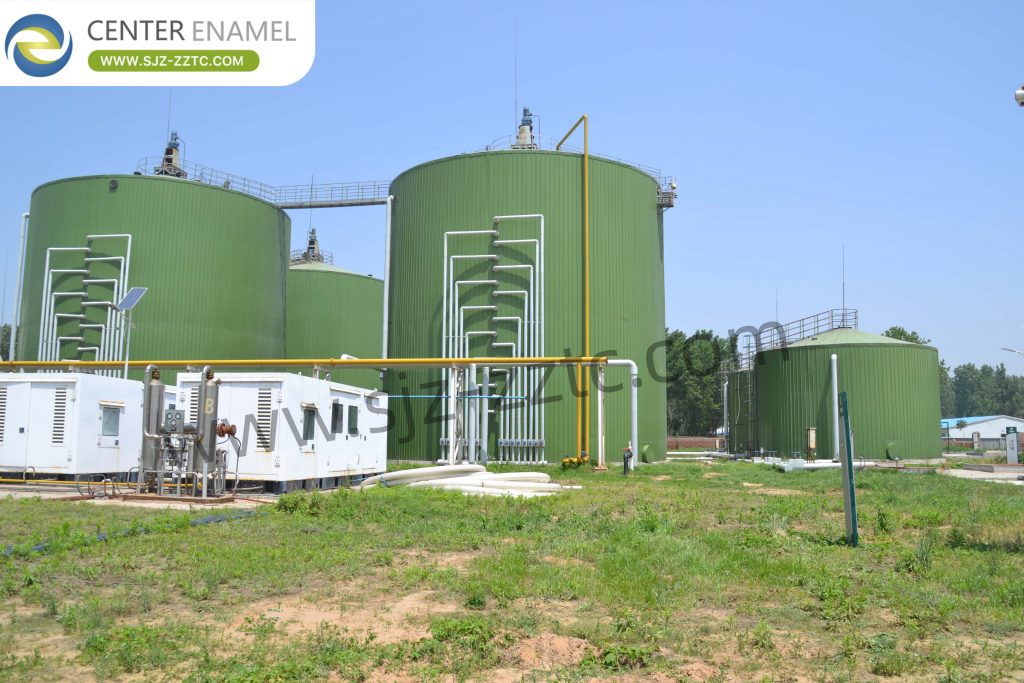
A core component of any successful CBG Plant EPC Solution is the selection of durable and adaptable storage technology. GFS Tanks are assembled on-site from prefabricated panels, with short construction periods and support for expansion, relocation, and reuse-advantages distinctly different from immovable concrete tanks. Concrete tank pouring requires formwork, rebar tying, pouring, and long curing periods, with a single tank construction taking months. Rain, snow, and low temperatures force work stoppages and delays. Once poured, they are permanent fixed structures that cannot be dismantled, expanded, or relocated-project relocation means complete abandonment.
In contrast, GFS Tanks panels are all factory-prefabricated, transported to site, and directly assembled in panels with simple procedures. Construction can proceed even in low-temperature, light-rain conditions, with installation time only one-third that of concrete tanks-construction schedules are controllable. For expansion, additional steel panels can be installed to increase volume; for plant relocation, tanks can be fully disassembled with panels transported to new sites for reassembly and reuse, significantly reducing material and construction costs for new construction and reconstruction. This flexibility makes them ideally suited for short-term environmental projects, phased expansion projects, and relocated construction projects, which are common in global CBG Plant EPC Solutions.
Key Advantages of the UASB Process in EPC Design
The operational excellence of our CBG Plant EPC Solutions is driven by the inherent benefits of the UASB process. No mechanical mixing equipment is required, with sludge suspension achieved through hydraulic action, resulting in very low overall energy consumption. High-concentration anaerobic granular sludge can be cultivated, with high sludge concentration, strong activity, excellent settleability, low sludge washout, and low sludge yield, significantly reducing sludge disposal costs.
The integrated design combines reaction, sedimentation, and separation simultaneously, with small footprint and moderate capital investment. The simple structure results in low failure rates and convenient maintenance. A high volumetric loading rate provides excellent organic pollutant degradation efficiency and good shock load resistance. Stable biogas production offers high resource recovery value. The process is mature and widely adopted, with well-established construction, commissioning, and O&M systems, suitable for large-scale industrial wastewater treatment. These advantages make the UASB process a cornerstone of effective Brewery Wastewater Treatment within comprehensive CBG Plant EPC Solutions.
Environmental Toxicity Profile of Brewery Wastewater
Understanding the specific nature of the effluent is key to designing the right solution. Brewery Wastewater Treatment deals with pollutants that have no chemical toxicity-it is purely natural organic wastewater with very low ecotoxicological risk and easy environmental restoration. All pollutants are natural organics from grain fermentation-starches, sugars, alcohols, amino acids, proteins-containing no heavy metals, bacteriostats, or persistent toxic organics.
They do not inhibit biochemical bacteria and have no acute or chronic toxicity to soil, water, or plants. The core pollution is only high-concentration oxygen-demanding organics-direct discharge rapidly depletes dissolved oxygen, causing oxygen depletion, black-odor conditions, algal blooms, and channel siltation. Pollutants have no bioaccumulation potential and are rapidly decomposed by microorganisms and natural water bodies-no long-term persistent ecological harm. This profile makes it an ideal candidate for biological treatment processes like anaerobic digestion, which are central to our CBG Plant EPC Solutions for the brewing industry.
Full-Process Standardized Installation Quality Control
Delivering on the promise of reliable CBG Plant EPC Solutions requires rigorous quality control. Demonstrating high-standard installation quality through long-term stable global project performance, Center Enamel has established full-chain quality control standards across four dimensions: factory protection, on-site assembly construction, completion inspection, and long-term warranty-ensuring quality control for every GFS Tank.
At the factory stage, all enameled panels, seals, and structural components receive rust-proof and moisture-proof independent packaging with dedicated protective supports-preventing damage during sea and land transport and avoiding enamel coating damage. On-site construction strictly follows unified assembly process specifications-panel by panel tightening and leak testing in layers, with air-tightness and verticality testing after each tank section completion-dual-membrane covers and anaerobic piping undergo simultaneous pressure testing and acceptance.
Differentiated quality acceptance standards are customized for different regions: EU/US projects follow stringent CE/NSF inspection criteria; Southeast Asian hot humid regions receive enhanced corrosion protection and sealing acceptance; remote African sites have additional foundation settlement re-inspection procedures. Upon project completion, complete construction inspection reports, pressure test records, and anti-corrosion appearance acceptance documents are issued, with full photo/video archives retained. Over 10,000 tanks delivered globally have operated long-term without large-scale leakage or structural deformation-preventing future O&M issues at source. This meticulous approach is the hallmark of a trusted CBG Plant EPC Solutions provider.
Center Enamel's Extensive Global Benchmark Project Cases
Our expertise as a provider of CBG Plant EPC Solutions is validated by a global portfolio of successful projects. Center Enamel's project portfolio covers over 100 countries across Southeast Asia, Africa, Europe, and the Americas-30,000+ mature projects-accumulating complete industry solutions across palm oil, livestock, municipal, brewing, and food waste biogas. This experience allows us to rapidly match customized solutions for different regional climates, water quality, and regulations. These benchmark cases demonstrate our ability to handle diverse challenges, from Brewery Wastewater Treatment in temperate climates to POME treatment in tropical regions, solidifying our reputation as a reliable EPC partner.
Advanced Sealing Solutions: Aluminum Geodesic Dome Roof
Complementing our core GFS Tanks and CBG Plant EPC Solutions are advanced accessories like the Aluminum Geodesic Dome Roof. This roof, independently developed by Center Enamel, is manufactured using high-strength aluminum alloy plates through integral stamping. It features a triangular grid spherical self-supporting structure, enabling large-span full coverage without internal support columns. Made of aluminum alloy, the roof offers excellent weather resistance and corrosion resistance, capable of long-term protection against acid rain, salt spray, and UV radiation, suitable for various extreme outdoor climate conditions.
The structural design complies with international AWWA D108 standards, with aluminum plate thickness, rib cross-sections, and joint connections all verified by finite element stress analysis, ensuring wind and snow load resistance that meets building code requirements across different global regions. The weight of the Aluminum Geodesic Dome Roof is only one-third to one-half of a steel roof with the same span, significantly reducing the load on the tank top and allowing direct installation without tank wall reinforcement.
The roof provides superior overall sealing performance, with double sealing between panels using specialized sealant strips and mechanical interlocking, enabling both airtight gas storage and enclosed odor control, suitable for biogas collection and storage, wastewater tank odor control, and drinking water contamination prevention. The support-column-free design does not interfere with the installation and operation of internal equipment such as mixers and water distributors. The aluminum material does not support microbial growth, requiring no anti-corrosion maintenance over long-term use, resulting in low total life-cycle costs. This integration of high-quality components is central to delivering top-tier CBG Plant EPC Solutions.
FAQ
Q1: Why are CBG Plant EPC Solutions beneficial for brewery wastewater treatment?
A: CBG Plant EPC Solutions provide a single point of responsibility for your entire project. This integrated approach ensures that the UASB process, durable GFS Tanks, and all supporting systems are designed to work together seamlessly for maximum efficiency in Brewery Wastewater Treatment. It also streamlines project management, reduces client coordination, and ensures compliance.
Q2: How do GFS Tanks contribute to the efficiency and flexibility of an EPC project?
A: GFS Tanks are engineered for rapid installation and long-term durability. Their bolted construction allows for easy expansion or relocation, offering unmatched flexibility for growing facilities or changing project requirements. This adaptability is a key asset in any CBG Plant EPC Solution, reducing both initial capital expenditure and future modification costs.
Q3: What quality control measures does Center Enamel implement for its global EPC projects?
A: We implement a full-chain quality control system that begins with factory packaging and extends through on-site assembly, completion inspection, and long-term warranty. This includes customized acceptance standards for different regions (e.g., CE/NSF for EU/US), ensuring our CBG Plant EPC Solutions meet the highest international standards for safety and performance in every application, including Brewery Wastewater Treatment.