
CSTR Reactors for Municipal Wastewater Treatment: A Comprehensive Guide to Advanced Anaerobic Digestion Solutions
The growing demand for sustainable and efficient wastewater treatment systems has led to the widespread adoption of Continuous Stirred Tank Reactors (CSTR) in municipal and industrial applications worldwide. As environmental regulations tighten and communities seek energy-neutral wastewater solutions, anaerobic digestion technologies have emerged as a cornerstone of modern treatment infrastructure . Center Enamel, a global leader in advanced wastewater treatment technologies, offers CSTR reactors that provide efficient, reliable, and environmentally friendly solutions for wastewater treatment. These reactors optimize the anaerobic digestion process, reduce pollutants, and generate renewable energy—making them an ideal choice for municipalities and industries seeking sustainable solutions.
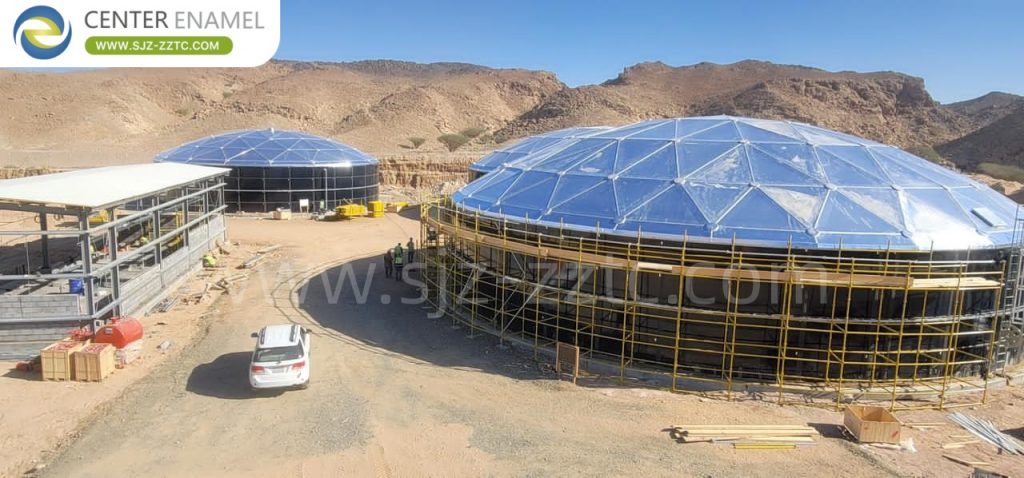
CSTR reactors have demonstrated their effectiveness not only in conventional municipal sludge digestion but also in emerging applications such as co-digestion of blackwater and organic industrial wastes, broadening opportunities for full-scale implementation of resource recovery from wastewater .
Project Overview: Municipal Wastewater Treatment with CSTR Technology
Project Background
The transition from traditional wastewater disposal to resource recovery has placed anaerobic digestion at the center of modern treatment plant design . Municipal wastewater treatment facilities face increasing pressure to:
Meet stringent effluent quality standards
Reduce operational energy consumption
Minimize sludge disposal costs
Generate renewable energy from waste streams
Scope of Work
A comprehensive municipal CSTR wastewater treatment project typically encompasses:
Primary Treatment: Screening, grit removal, and primary clarification
Anaerobic Digestion: CSTR reactors for sludge stabilization and biogas production
Biogas Management: Collection, purification, and energy recovery systems
Digestate Treatment: Dewatering and beneficial reuse of treated biosolids
Effluent Polishing: Final treatment to meet discharge or reuse standards
Key Technologies Used
| Technology Component | Description | Function |
| Glass-Fused-to-Steel (GFS) Tanks | Steel panels fused with high-tech glass enamel at >820°C | Corrosion-resistant primary reactor vessel with 30+ year service life |
| CSTR Anaerobic Digesters | Continuously mixed, suspended-growth reactors | Uniform substrate-microbe contact for optimal organic degradation |
| Double Membrane Gas Storage | Dual-layer roof system for biogas capture and pressure regulation | Safe biogas collection with structural protection |
| Epoxy Coated Tanks | Electrostatic powder-coated steel storage | Auxiliary storage for digestate, equalization, and buffer tanks |
| Aluminum Dome Roofs | Corrosion-resistant geodesic structures | Odor control and rainwater exclusion for storage facilities |
Advantages of CSTR Reactors in Wastewater Treatment
CSTR reactors offer a range of advantages that make them highly effective for wastewater treatment in various settings, from municipal facilities to industrial plants.
Efficient Organic Matter Degradation
One of the primary advantages of CSTR reactors is their ability to degrade organic matter efficiently. The continuous mixing action promotes uniform distribution of microorganisms throughout the reactor, leading to effective breakdown of organic pollutants. Research has demonstrated that CSTR systems achieve COD removal efficiencies of 60-70% under typical operating conditions, with COD loading rates of 2-5 kg/m³·day . This results in significant reductions in biochemical oxygen demand (BOD) and chemical oxygen demand (COD), ensuring treated wastewater is safe for release into the environment or reuse.
Consistent and Reliable Operation
The continuous mixing and flow of wastewater in a CSTR reactor ensure stable and consistent treatment performance. Even when the composition of wastewater fluctuates, CSTR reactors maintain optimal microbial activity. Studies have shown that CSTR systems are particularly robust against shock loads and variable feedstocks, making them a forgiving choice for thick, particulate, or variable feeds . This stability ensures wastewater treatment plants achieve reliable and efficient treatment outcomes regardless of varying influent conditions.
Compact and Scalable Design
CSTR reactors are available in various sizes and configurations, making them suitable for both small and large-scale applications. Their modular design allows for scalability, which is ideal for wastewater treatment plants that need to adjust capacity based on population growth or industrial expansion. Capacities range from 20 m³ to 18,000 m³, offering flexibility for communities and industries seeking long-term, adaptable solutions .
Technical Design Considerations
Hydraulic and Solids Retention Time
In a completely mixed CSTR digester, hydraulic retention time (HRT) equals solids retention time (SRT): HRT = SRT = V/Q . This fundamental relationship is the heart of CSTR design—the volume must give slow-growing methanogens sufficient time to both degrade the feed and reproduce faster than they wash out. For thick, particulate feeds, retention times typically range from 15 to 30 days to allow slow-degrading particulates sufficient time to break down .
Temperature Control and Stability
Temperature plays a critical role in CSTR reactor performance, particularly in anaerobic digestion processes. Most municipal CSTR digesters operate in the mesophilic temperature range (approximately 34-38°C), with retention times of 15-25 days commonly applied for design . Fluctuations in temperature can impact microbial activity and treatment efficiency, making stable temperature control essential for optimal performance.
Wastewater Composition and Characteristics
The composition of wastewater varies significantly depending on source—domestic, industrial, or agricultural. For municipal applications, typical feedstocks include primary sludge, waste activated sludge, and increasingly, co-substrates such as blackwater or food processing wastes . To maximize CSTR efficiency, detailed analysis of wastewater characteristics is essential for proper reactor sizing and optimization of operating conditions.
Importance of CSTR Reactors in the Wastewater Treatment Industry
As countries and industries face increasing pressure to meet stringent environmental regulations and improve wastewater management practices, CSTR reactors play a critical role in advancing treatment processes and supporting sustainable water management.
Biogas Generation and Energy Recovery
A significant advantage of CSTR anaerobic digestion is biogas production—a renewable energy source containing methane and carbon dioxide. The biogas can be captured and utilized in combined heat and power (CHP) units to generate electricity and heat, offsetting facility energy consumption and reducing operational costs . This energy recovery capability is central to achieving energy-neutral or energy-positive wastewater treatment operations.
Supporting Water Reuse and Conservation
Water scarcity is a growing concern in many regions. CSTR reactors contribute to water conservation by enabling treatment of wastewater for reuse in various applications—irrigation, industrial processes, or non-potable domestic uses. This supports more efficient water resource management, helping reduce reliance on freshwater supplies and promoting sustainability.
Cost-Effective Wastewater Treatment
CSTR reactors offer cost-effective solutions due to their energy efficiency and low operating costs. The biogas generated during digestion offsets energy consumption, reducing overall treatment costs. Additionally, reduced need for external chemicals and efficient resource use make CSTR reactors economically viable for municipalities and industries.
Environmental and Public Health Protection
Proper wastewater treatment is essential for protecting public health and the environment. CSTR reactors effectively remove pathogens and contaminants from wastewater, ensuring treated effluent does not pose risks to human health or aquatic ecosystems . This is particularly important for areas with limited access to clean water, where untreated wastewater can contribute to disease spread and pollution.
Project Results and Performance Data
Municipal CSTR Performance Metrics
The following table summarizes typical performance data from municipal wastewater treatment CSTR projects:
| Parameter | Performance Range | Notes |
| COD Loading Rate | 2 – 5 kg/m³·day | Design dependent on feedstock |
| COD Removal Efficiency | 60 – 70% | Typical for municipal sludge |
| Hydraulic Retention Time | 15 – 30 days | Mesophilic operation |
| Biogas Yield | Varies by feedstock | Co-digestion improves yields |
| PHA Storage Capacity | Up to 0.65 gPHA gVSS⁻¹ | Demonstrated in CSTR selection |
| Phosphate Removal | >94% | With WTR addition at 2h HRT |
Co-Digestion Research Findings
Research on co-digestion of municipal sludge with blackwater in CSTR systems has demonstrated:
Stable process performance with up to 34% blackwater COD fraction
Improved biogas yields compared to sludge-only digestion
Effective COD removal maintained during gradual substrate transitions
Factors to Consider When Using CSTR Reactors
While CSTR reactors offer numerous advantages, successful implementation requires careful consideration of several factors.
Wastewater Composition and Characteristics
To maximize CSTR efficiency, conduct detailed analysis of wastewater characteristics for proper reactor sizing, optimization of operating conditions, and selection of appropriate microbial cultures .
Temperature Control and Stability
Maintaining stable reactor temperature is essential for optimal performance. In regions with extreme climate conditions, supplementary heating or cooling systems may be required .
Maintenance and Operational Considerations
Regular maintenance and monitoring are essential for long-term success. Routine checks on reactor performance—including microbial health, temperature, and gas production—help identify potential issues early. Operators should be trained to handle the reactor efficiently and troubleshoot challenges .
Why Choose Center Enamel for CSTR Reactor Solutions
Center Enamel has established itself as a global leader in advanced wastewater treatment solutions, with over thirty years of innovation and project experience in more than one hundred countries .
Innovative and High-Quality Products
Center Enamel's CSTR reactors are built using the latest technology and high-quality materials, ensuring durability and long-term performance. Glass-Fused-to-Steel tanks undergo fusion at temperatures exceeding 820°C, creating a material with both structural strength and chemical inertness .
Customized Solutions for Diverse Applications
Understanding that every wastewater treatment facility has unique requirements, Center Enamel offers customized CSTR reactor designs tailored to each project's specific needs—whether handling domestic wastewater, industrial effluent, or a combination of both.
Comprehensive Support Services
From initial design and installation to ongoing maintenance and optimization, Center Enamel provides comprehensive support throughout the reactor lifecycle, including troubleshooting, operational training, and system upgrades .
Client Testimonials
"Center Enamel's CSTR solution transformed our municipal treatment plant's energy balance. The biogas we're now generating covers over 60% of our facility's electricity needs, dramatically reducing our operational costs and carbon footprint."
"The modular design and corrosion-resistant GFS tanks have proven invaluable for our expanding community. The system handles variable loads reliably and has significantly simplified our sludge management."
Frequently Asked Questions (FAQ)
What is a CSTR reactor in wastewater treatment?
A Continuous Stirred Tank Reactor (CSTR) is a completely mixed anaerobic digester that uses continuous mixing to maintain uniform distribution of microorganisms and substrate throughout the reactor. It is designed for high-solids and slurry feeds where granular systems cannot form, making it ideal for municipal sludge treatment .
How does a CSTR differ from other anaerobic digesters?
Unlike UASB or IC reactors that rely on granular biomass formation, CSTRs keep the entire contents fully mixed with long retention times. This makes CSTRs more robust and forgiving for thick, particulate, or variable feedstocks, though they require larger reactor volumes than high-rate granular systems .
What retention time is required for a municipal CSTR?
Municipal CSTR digesters typically operate with hydraulic retention times (HRT) of 15 to 30 days in the mesophilic temperature range. This allows slow-growing methanogens sufficient time to degrade the feed and reproduce faster than they wash out of the system .
What are the typical COD removal efficiencies for CSTR systems?
CSTR systems typically achieve COD removal efficiencies of 60-70% under normal operating conditions, with COD loading rates of 2-5 kg/m³·day, depending on feedstock characteristics and operating conditions .
Can CSTR reactors handle co-digestion of different waste streams?
Yes, CSTR reactors are well-suited for co-digestion. Research has demonstrated stable operation with increasing proportions of blackwater (up to 34% COD fraction) in municipal sludge digesters, with improved biogas yields maintained during gradual substrate transitions .
What are the advantages of Center Enamel's CSTR technology?
Center Enamel's CSTR solutions feature Glass-Fused-to-Steel tanks with 30+ year service life, double membrane gas storage systems, and comprehensive support services. Their tanks offer unparalleled resistance to organic acids and corrosive hydrogen sulfide generated during wastewater stabilization .