
Efficient Livestock Wastewater Treatment Project Solutions with GFS Tanks and UASB Process
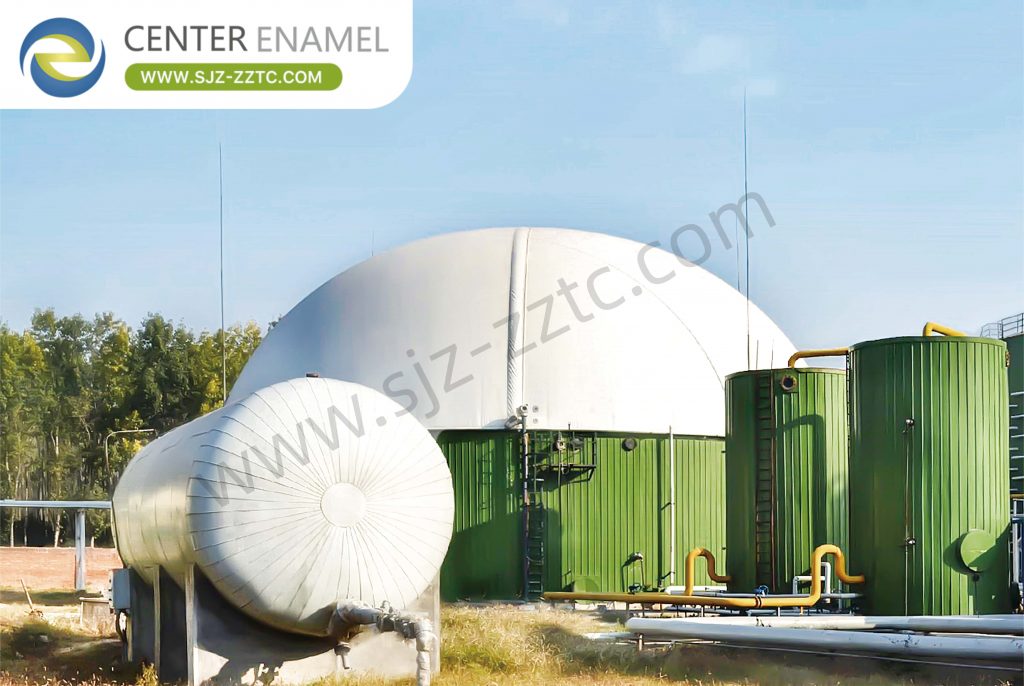
The global livestock manure treatment policy system, with the US and EU as typical representatives, is shifting from end-of-pipe treatment to full-process nutrient management. The US establishes a manure management framework covering the entire livestock production process through Comprehensive Nutrient Management Plans. The EU, through the Nitrates Directive, strictly limits manure application amounts, with Germany and the Netherlands using tax instruments to mandate nitrogen and phosphorus recovery rates, and Denmark demonstrating distinctive features in livestock regulation and ecological compensation. The Netherlands uses a management mechanism linking manure treatment with phosphate quotas. China has issued a series of environmental regulations, with the current legal system providing comprehensive regulation of pollution from large-scale livestock operations.
The regulatory shift towards comprehensive nutrient management underscores the urgent need for advanced technical infrastructure. Implementing a robust Livestock Wastewater Treatment Project ensures that operations meet these increasingly stringent international environmental standards. By adopting integrated systems, farms can effectively manage nutrient recovery while maintaining regulatory compliance.
GFS Tanks Adaptable to Complex Operating Conditions Across All Industries
Center Enamel has independently developed over 200 specialized enamel frit formulations and supporting patents, capable of customizing anti-corrosion enamel based on customer storage media, with adaptability comprehensively superior to concrete tanks. Concrete tanks use a single material, only suitable for neutral clean water storage. When storing corrosive materials such as livestock manure, palm oil mill effluent, chemical wastewater, food waste digestate, high-salinity wastewater, etc., additional anti-corrosion linings must be applied. These linings are prone to failure, preventing long-term stable operation and cannot adapt to alternating high/low concentration storage conditions.
GFS tanks can be specifically formulated with specialized enamels resistant to strong acids, strong alkalis, high organic content, and high salinity. A single tank can switch between multiple wastewater and fermentation feedstock storage requirements. They are universally applicable across biogas anaerobic digestion, municipal wastewater, livestock farming, food processing, and industrial water treatment scenarios, eliminating the need to rebuild tanks for media changes, perfectly meeting the needs of diversified, multi-condition environmental protection projects.
To ensure the long-term reliability of these treatment infrastructures, selecting the right containment technology is crucial. GFS Tanks provide superior corrosion resistance compared to traditional alternatives, making them the ideal choice for demanding environments. This durability is essential for the sustainable operation of any modern waste management system.
What is UASB Process?
UASB, or Upflow Anaerobic Sludge Blanket Reactor, is the benchmark mainstream technology for medium-to-high concentration soluble organic wastewater treatment. It requires no mechanical mixing or media carriers, relying on the upward flow of wastewater to suspend and expand granular sludge within the reactor, forming a stable sludge bed layer. Highly active anaerobic granular sludge efficiently degrades pollutants, with excellent settleability and high microbial concentration. UASB innovatively integrates reaction, sedimentation, and gas-liquid-solid separation functions, simplifying the anaerobic treatment process with advantages of high efficiency, energy savings, and compactness. It is widely used in various medium-to-high concentration soluble organic wastewater treatment applications.
By integrating highly efficient biological treatment methods, facilities can significantly optimize their pollutant degradation rates. The UASB Process serves as a core technology for processing high-concentration organic streams effectively. This process allows for energy recovery while reducing the overall footprint of the treatment facility.
Livestock Wastewater Sources
Livestock wastewater is the core agricultural pollution wastewater from large-scale poultry, livestock, and aquaculture operations, generated primarily during farming operations and facility cleaning. Poultry and livestock wastewater is the main component, including wash water from pig, cattle, and poultry housing, manure and urine seepage, and facility washdown-rich in livestock metabolic residues. Aquaculture wastewater comes from periodic pond water exchange and pond cleaning, with feed residues and metabolic waste as pollutants. Wastewater is primarily generated in peri-urban and rural farming areas. Small-scale farmers lack adequate collection facilities, with wastewater discharged directly to land and water. Large-scale farms have collection systems for centralized treatment, with water production varying with production cycles and cleaning frequency.
Understanding the specific characteristics of the wastewater source is the first step toward effective management and treatment. Accurate assessment allows for the tailored application of advanced treatment technologies. This foundation is essential for designing a system that effectively mitigates agricultural pollution.
Indonesia Palm Oil Biogas Project
Specifically designed for high-concentration palm oil wastewater treatment with 3 GFS fermentation tanks, each 19.86 m diameter × 8.4 m height. Installation began November 2009 with only 7 construction personnel, completing all tank assembly in 40 days-highly efficient and time-saving. Tanks are fitted with dual-membrane gas storage covers for POME anaerobic digestion-degrading organics and recovering biogas energy while eliminating palm industry pollution. This is an early benchmark POME biogas treatment project in Southeast Asia.
Real-world implementation demonstrates the efficiency and scalability of these advanced storage and treatment solutions. Successful projects serve as benchmarks for future environmental initiatives across diverse industries. These cases validate the reliability of high-performance components in challenging field conditions.
Center Enamel Development History
Center Enamel has been deeply engaged in the environmental bolted storage equipment field for over 30 years. Starting with proprietary enamel anti-corrosion material technology, the company has gradually completed the full-industry-chain upgrade from a single tank manufacturer to a comprehensive environmental EPC service provider. Throughout its 30+ year history, the company has been recognized as a National High-Tech Enterprise, National Specialized and Sophisticated "Little Giant," Manufacturing Single Champion, and Provincial Green Factory. It has successfully delivered over 30,000 environmental projects globally, establishing itself as a leading enterprise in the global GFS tank storage industry. The company has fully integrated the entire chain from enamel frit R&D, intelligent environmental equipment manufacturing, to EPC project contracting-every business breakthrough has been achieved through proprietary core anti-corrosion technology.
Building a legacy of excellence requires continuous innovation and a commitment to quality service delivery. Over three decades, Center Enamel has established itself as a trusted partner for complex environmental projects worldwide. This extensive experience ensures that every client receives a solution backed by proven expertise.
Center Enamel Professional Construction Team Manpower Reserve
Center Enamel has established its own domestic and international certified construction teams, with regular practical training on GFS tank installation and overseas construction standards for various countries. Domestically, regional construction teams cover multiple zones, capable of simultaneously deploying multiple teams for large tank farm projects. Internationally, cross-border professional installation teams are equipped to various country construction standards-sufficient manpower reserves ensure uninterrupted construction delivery for remote African sites, high-standard European/American facilities, and other projects.
Professional installation and support are as vital as the technology itself for the long-term success of any infrastructure investment. A dedicated construction team ensures that projects are executed to the highest standards, regardless of location. This commitment to deployment quality ensures consistent performance across all international projects.
Frequently Asked Questions (FAQ)
What is the primary advantage of using GFS Tanks for a Livestock Wastewater Treatment Project?
GFS tanks are specifically designed with a porcelain enamel coating fused to steel, providing unparalleled corrosion resistance against harsh manure and biogas. This ensures a significantly longer service life, minimal maintenance requirements, and high durability in corrosive environments compared to traditional concrete or standard steel tanks.
How does the UASB Process contribute to efficient livestock wastewater management?
The UASB process utilizes anaerobic microorganisms to efficiently break down high-concentration organic pollutants in wastewater without needing oxygen. It is highly effective, energy-efficient, and compact, and it generates methane-rich biogas as a renewable energy byproduct, turning a waste management challenge into an opportunity for sustainable energy recovery.
Why choose Center Enamel as a partner for environmental EPC projects?
Center Enamel combines over 30 years of industry experience with a fully integrated supply chain, from proprietary enamel frit R&D to intelligent manufacturing and professional global construction services. Having delivered over 30,000 projects, they offer reliable, customized, and high-standard engineering solutions tailored to complex global environmental needs.