
Effluent Treatment Solutions: Hitting Discharge Limits on Tough Streams
An effluent solution matches the pollutant profile to the right train - anaerobic for high COD, biological nutrient removal for nitrogen and phosphorus, and polishing - so the stream meets its discharge limit reliably, not by hope but by design. The first step is always the inlet characterization that sets the train.
1. Characterize the Effluent
Tough streams - pharmaceutical, agro-industrial, food - carry high COD, salinity, or variable loads. Measuring the actual inlet range (not a single number) defines the removal duty. Salinity and inhibitors, for instance, steer the design toward salt-tolerant anaerobic biomass rather than a standard train.
2. Match Train to Pollutant
High COD is cut cheapest by anaerobic digestion that also recovers energy. Nitrogen and phosphorus need a nutrient-removal biological stage. Polishing (sand, carbon, or membrane) closes the last gap to the limit. The art is sequencing these so each does the duty it is cheapest at.
3. Prove Compliance with Data
A credible effluent solution shows the inlet-to-outlet numbers, not just a claim. Bolted GFS tanks - glass fused at 820-930 C, 200-60,000 m3, ISO 28765 and AWWA D103 - carry the anaerobic and equalization stages that do the heavy COD lifting, and the train is validated against the measured inlet.
Comparison: Removal Duty
| Pollutant | First choice | Then |
| High COD | Anaerobic | Polish |
| Nitrogen | Anoxic-oxic | Verify |
| Phosphorus | Bio-P / polish | Confirm |
| Salinity | Salt-tolerant biomass | Monitor |
Project Case Study
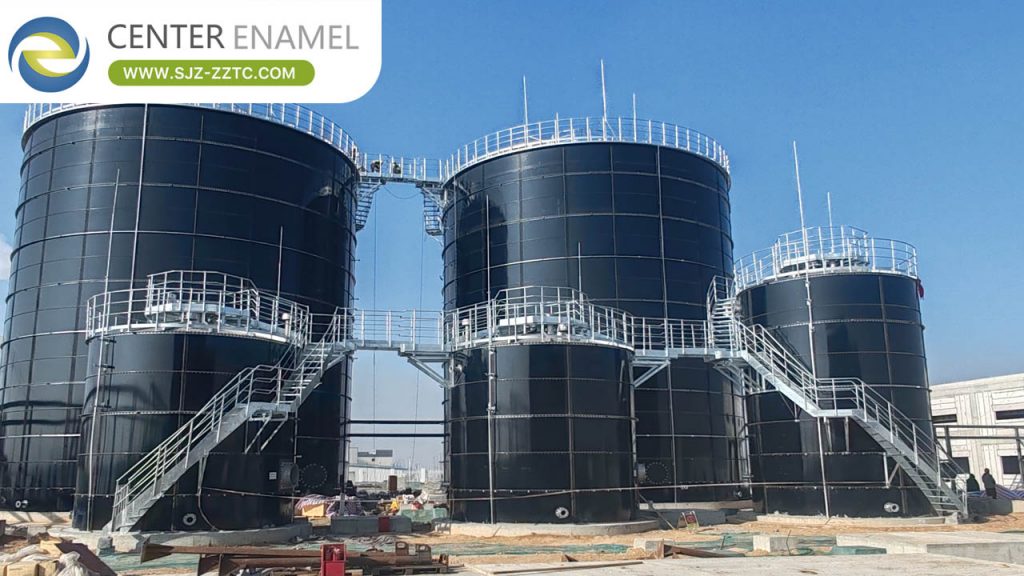
Pharmaceutical Wastewater Treatment in Jiangdong (Xiaoshan, Hangzhou, China, 2019). A high-salinity pharmaceutical effluent plant using 6 granular-sludge anaerobic reactors (12.66 m x 24 m each, 1,000 m3/day) that cut COD from 11,200 to 3,024 mg/L - at least 70 percent removal - under salinity up to 6,000 mg/L, a delivered effluent solution for a genuinely tough stream.
| Project | Pharmaceutical Wastewater Treatment in Jiangdong |
| Location | Xiaoshan, Hangzhou, China |
| Industry | Pharmaceutical / Industrial |
| Application | High-salinity pharmaceutical wastewater |
| Process | Granular sludge anaerobic reactor |
| Capacity | 1,000 m3/day, 6 reactor sets |
| Key result | COD 11,200 -> 3,024 mg/L, >=70% removal |
| Status | Delivered 2019 |
| Item | Influent (design) | Effluent |
| COD | 11,200 mg/L | 3,024 mg/L |
| SS | 185 mg/L | 148 mg/L |
| NH3-N | 110 mg/L | 99 mg/L |
| TN | 270 mg/L | 227 mg/L |
| Salt | < 6,000 mg/L | monitor |
About Shijiazhuang Zhengzhong Technology Co., Ltd (Center Enamel)
Shijiazhuang Zhengzhong Technology Co., Ltd (Center Enamel) manufactures the GFS tankage behind effluent solutions: enamel fused at 820-930 C gives an inert barrier against corrosive, high-strength liquors, engineered to ISO 28765 and AWWA D103, shipped flat-pack and assembled on site. The anaerobic stage that does the COD work sits inside these tanks.
Build the effluent solution from the measured pollutant profile: anaerobic for COD, nutrient removal for N/P, polishing to the limit. Prove it with inlet-outlet data. Send your effluent profile and we will design the train and tankage.
Frequently Asked Questions (FAQ)
Q1: How do you treat a tough effluent?
A: Characterize the inlet, then match anaerobic, nutrient removal, and polishing to the pollutant profile.
Q2: How do you cut high COD?
A: Anaerobic digestion removes bulk COD and recovers energy, then polishing closes the gap.
Q3: What removes nitrogen and phosphorus?
A: A biological nutrient-removal stage such as an anoxic-oxic or A2/O train.
Q4: How is compliance proven?
A: With measured inlet-to-outlet data, as in the Jiangdong COD 11,200 to 3,024 mg/L result.
Q5: What tank sizes are available?
A: GFS tanks from 200 m3 to 60,000 m3.
Q6: What standards apply?
A: Tanks are built to ISO 28765 and AWWA D103.
Suggested CTA
Send your effluent COD, flow, and limit. We will design an effluent solution with anaerobic GFS tankage.